If you’re a nature lover or hiker looking for powerful waterfalls near Zurich, the hike to Seerenbach Falls should absolutely be on your list. For me, it’s a place I keep returning to — almost like a seasonal ritual.
It’s especially magical in spring, when the snowmelt turns the Seerenbachfälle and the Rinquelle spring into a roaring, almost primal force of nature. The sound alone is unforgettable: thunderous, wild, and completely impossible to ignore. And when you stand in front of it, you don’t just see and hear it — you feel it.
My route usually starts in Weesen, where I walk along Lake Walensee through Betlis before hiking up to the impressive Seerenbach Falls. From there, I continue to the car-free village of Quinten, where palm trees and vineyards give the place an almost Mediterranean flair.
This hike rewards you with towering cliffs, powerful cascades, and some of the most spectacular lake views in eastern Switzerland.
In this post, I’ll walk you through the hike step by step — what you’ll see along the trail, how to get there, and where to eat or even stay overnight in Quinten.
Trail Guide: Key Sights and Sections of the Hike
From Weesen to Lago Mio
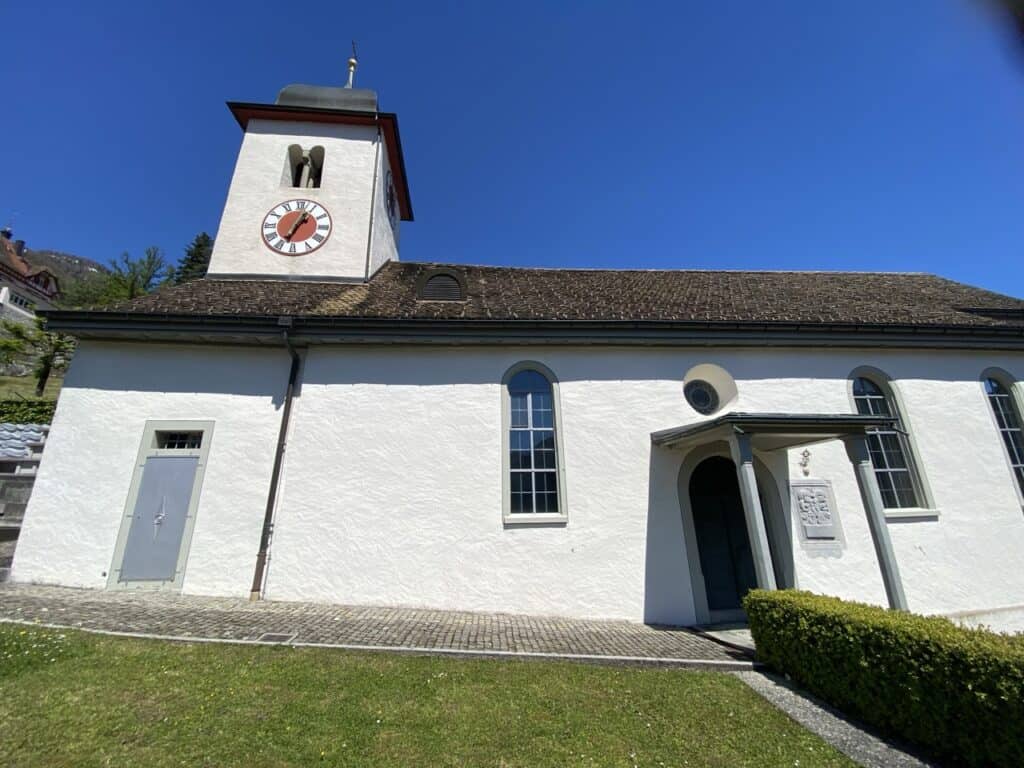
The hike to the Seerenbach Falls begins in Weesen, right at the bus stop Post. But before setting off, it’s worth taking a little time to explore Weesen itself. A short detour leads up to the small Büel Chapel (Büelkirche), perched on a hill above the village. It’s a charming spot — and the views over the lake alone make the climb worthwhile.
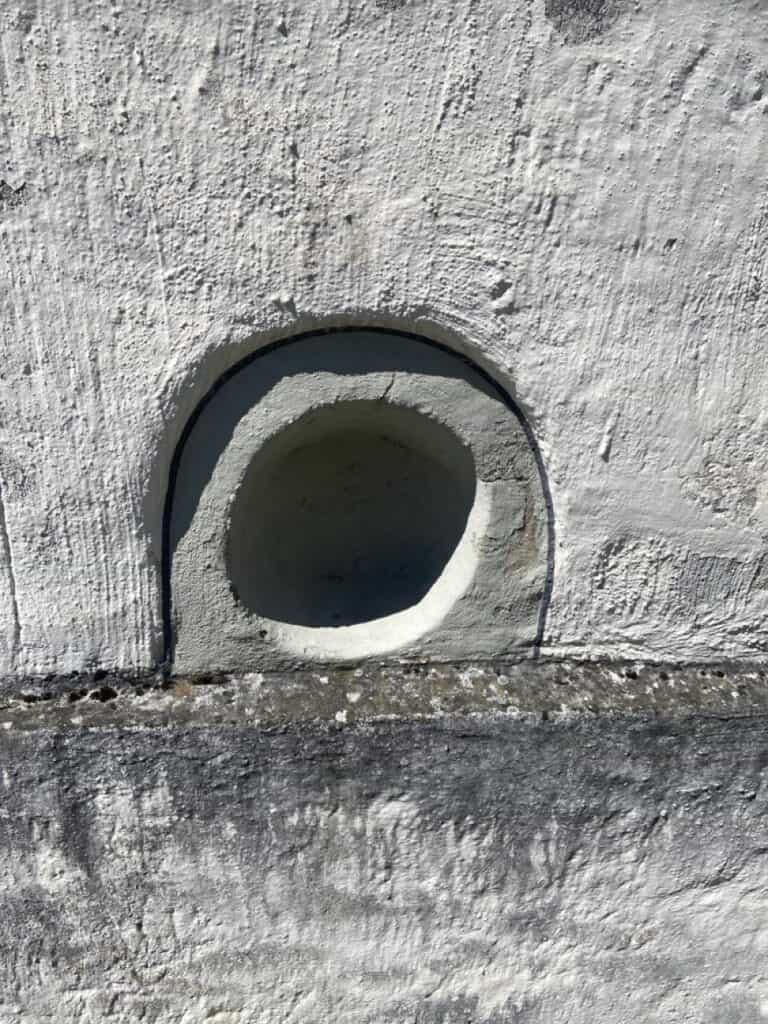
As you walk around the outside of the chapel, you might notice a small, carefully plastered and painted hole in the wall — the famous Kopfwehloch (literally “headache hole”). Of course I had to try it and stuck my head inside… but since I didn’t actually have a headache, I can’t really report on whether it works!
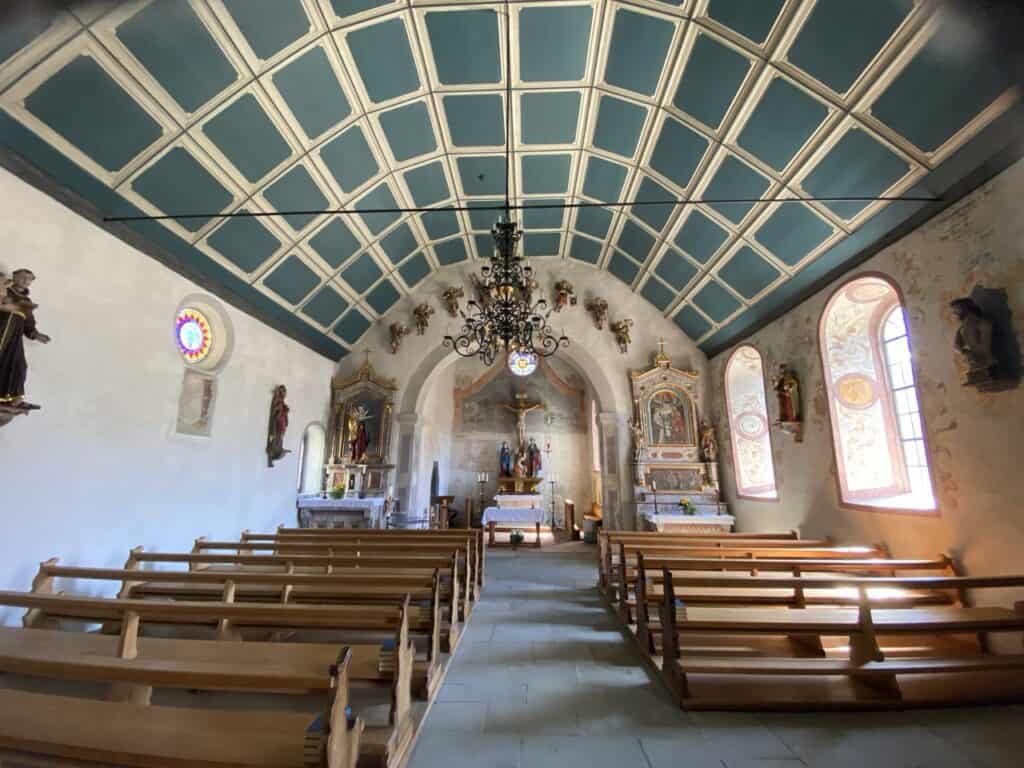
Still, there’s something undeniably special about this little chapel. Standing near the altar, I felt a deep sense of calm wash over me. It’s one of those quiet places that almost invites you to slow down for a moment — to breathe, recharge, and simply take in the atmosphere. Give it a try yourself. Maybe you’ll feel it too.
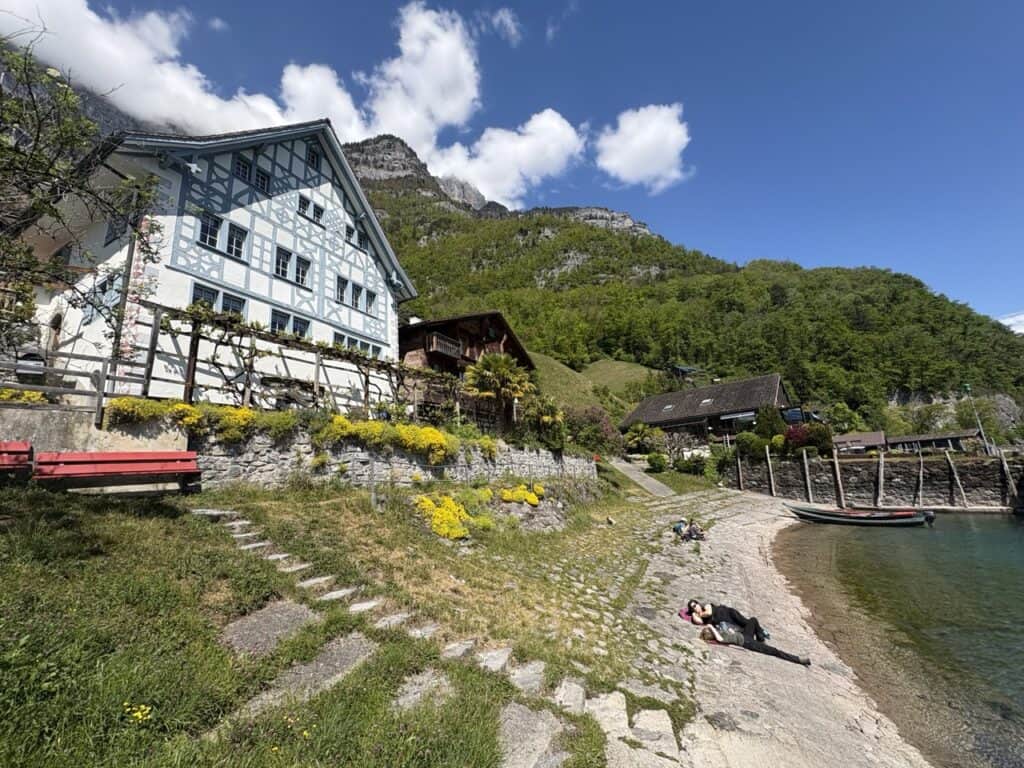
Once you’ve soaked in the views and the atmosphere, head back down to the bus stop and follow the trail along the lake. This stretch is beautiful in its own quiet way. The path hugs the shoreline, with plenty of benches that invite you to pause for a moment and enjoy the scenery. If you’re hiking with kids, there’s also a great adventure playground right at the lake – a perfect little stop before continuing towards Betlis.
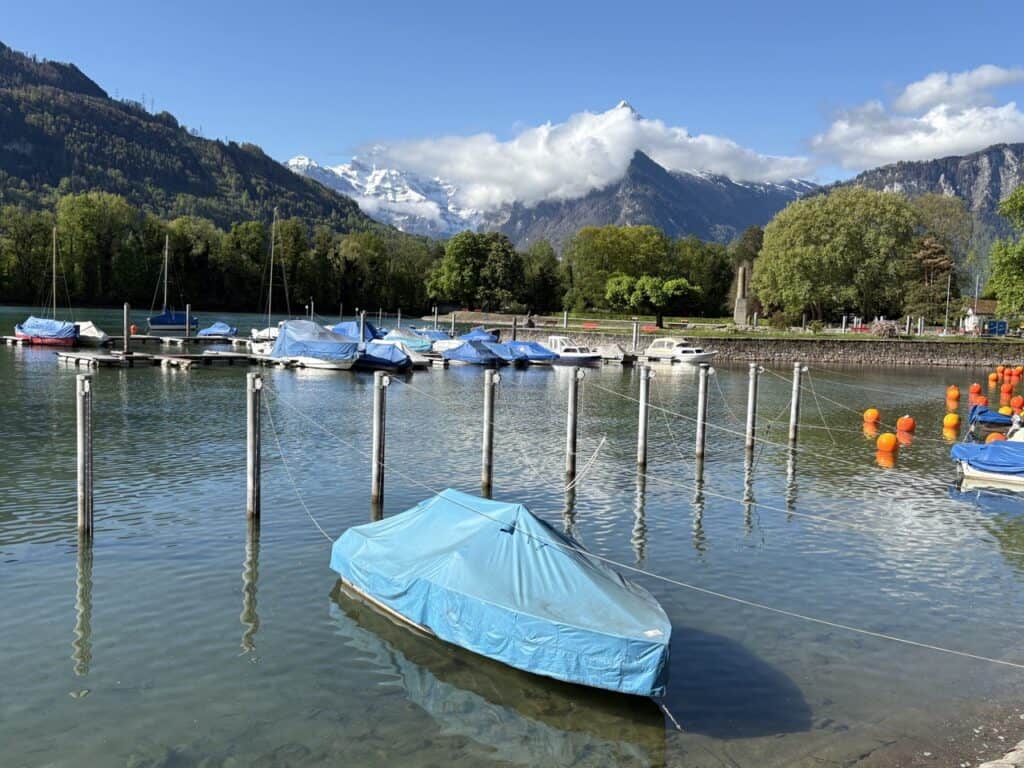
The trail eventually winds through a quiet residential area until you reach the main road that traces the shoreline of the lake.
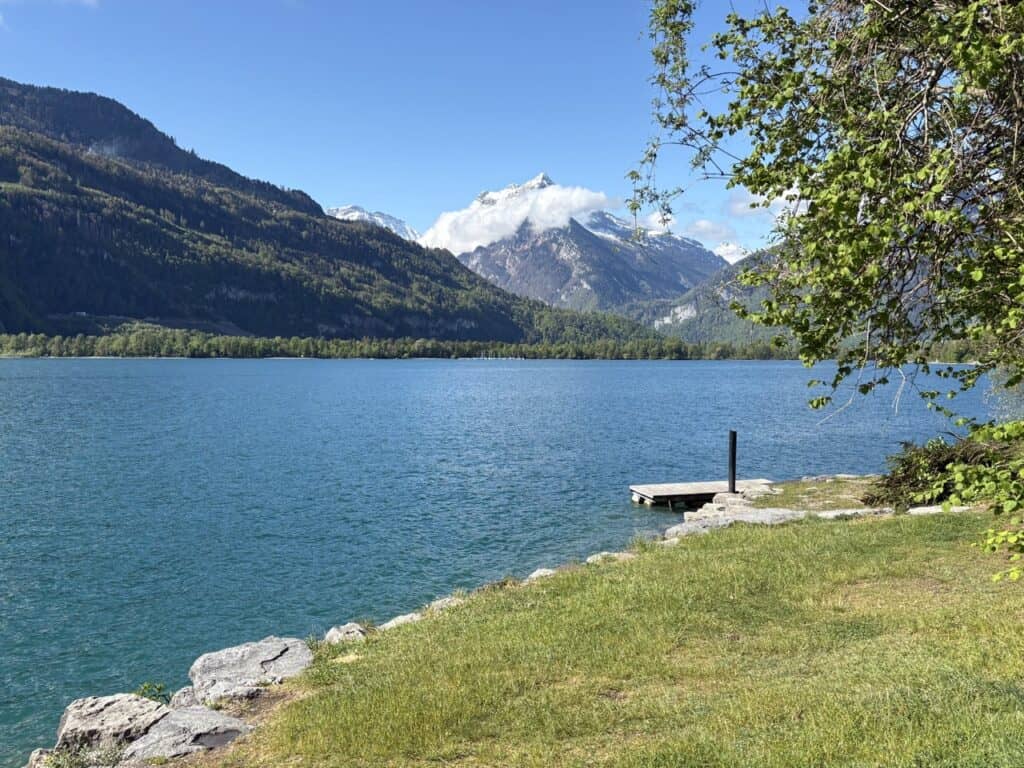
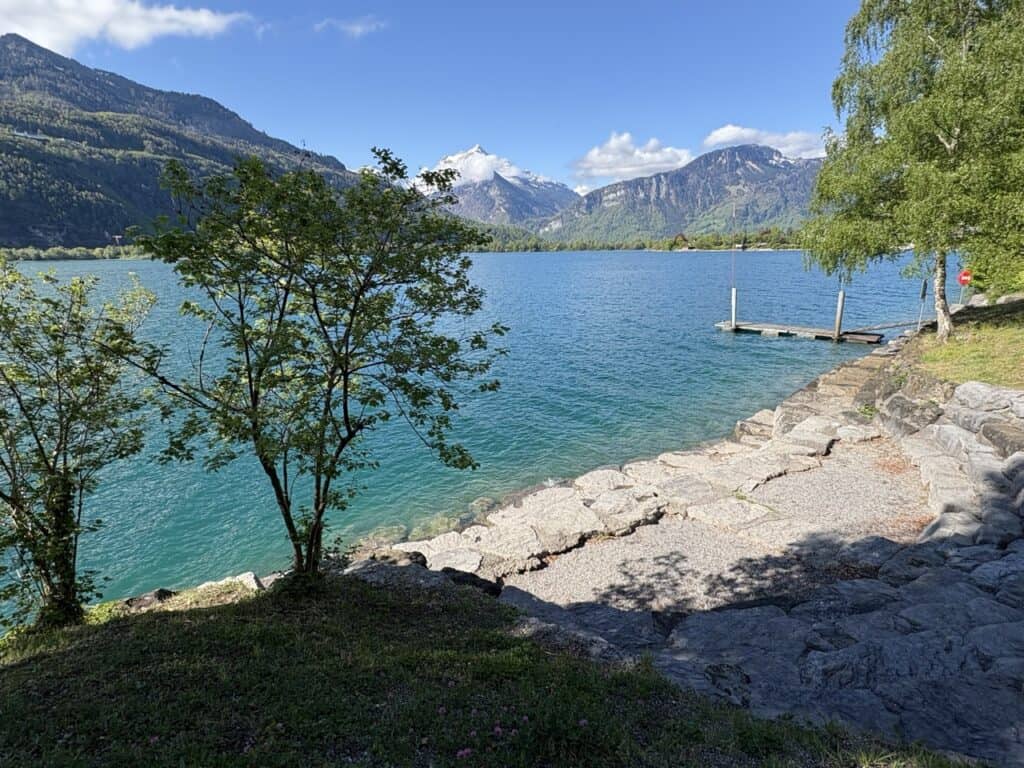
Before long, you’ll come across Lago Mio, a little beach bistro perched right by the water. One of those places where it would almost feel wrong not to stop. Coffee, cake, the shimmering Walensee at your feet, and across the water the rugged peaks of the Mürtschenstock rising into the sky — yes please.
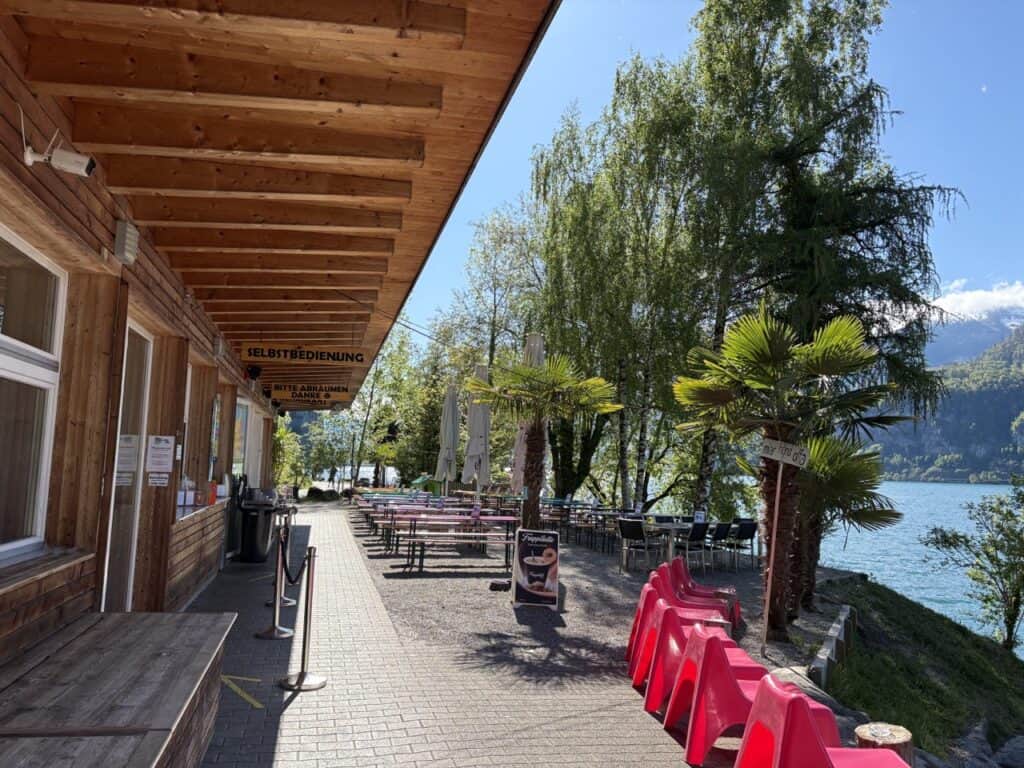
I happily took my first break here: a coffee and a Mandelgipfel (almond croissant), enjoyed slowly with my face turned towards the sun and my thoughts already drifting ahead to waterfalls. Since I visited in April, it was still far too cold for a swim. But if I return in summer, I’m definitely packing my bathing suit — this feels like one of those places where I could easily spend an entire day just soaking up the lake and the mountain views.
From Lago Mio to Betlis
From Lago Mio, the route continues along the Betliserstrasse, a narrow but asphalted road hugging the shoreline of Lake Walen. Here, hikers and cars briefly share the way — but thankfully, traffic is limited. The road is only one lane wide and regulated by time slots. Towards Betlis, cars are allowed to drive between xx:00–xx:05 and xx:30–xx:35; in the opposite direction towards Weesen, traffic flows 15 minutes before or after the full hour. It sounds more complicated than it feels — and in practice, it’s surprisingly peaceful.
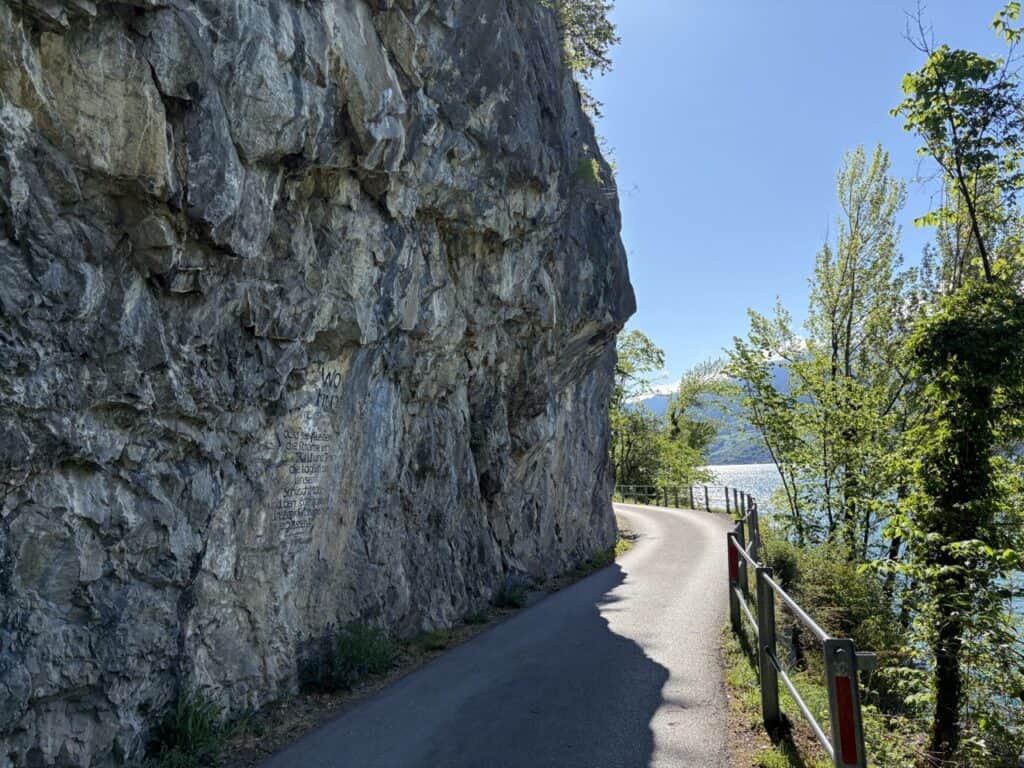
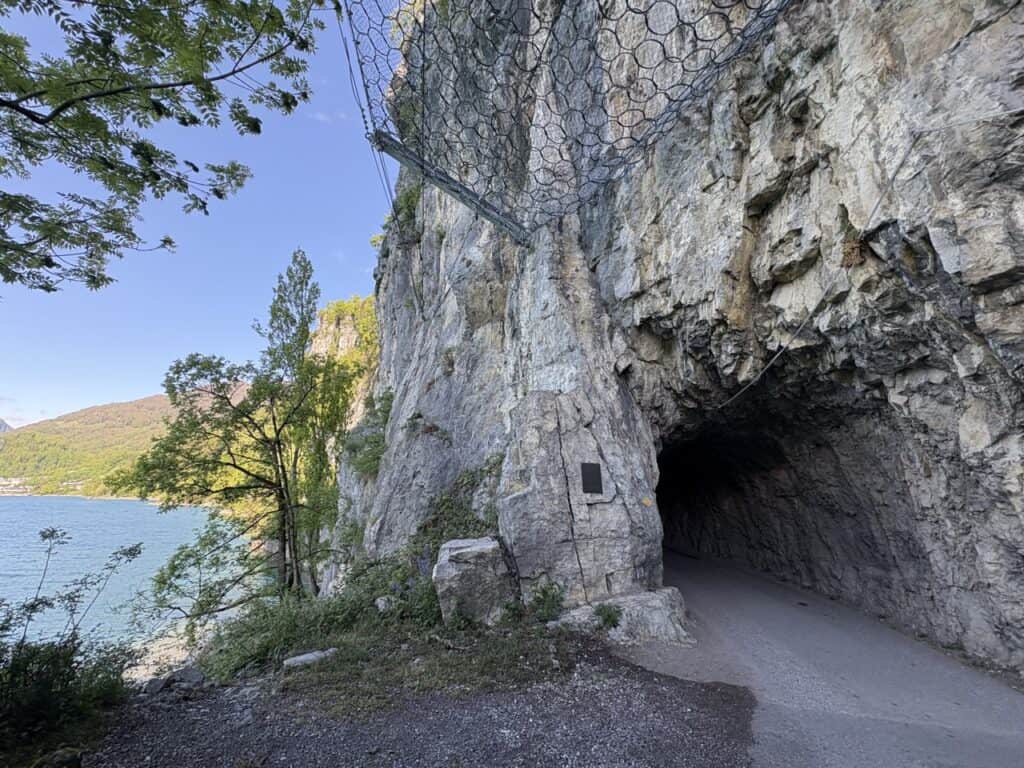
Where the rock face drops too steeply towards the lake and walking would otherwise require iron hooks and ropes, someone had the brilliant idea of carving short tunnels directly into the rock. Practical, a little adventurous, and honestly quite fun. I always love when infrastructure blends into the landscape like this, rather than fighting it.
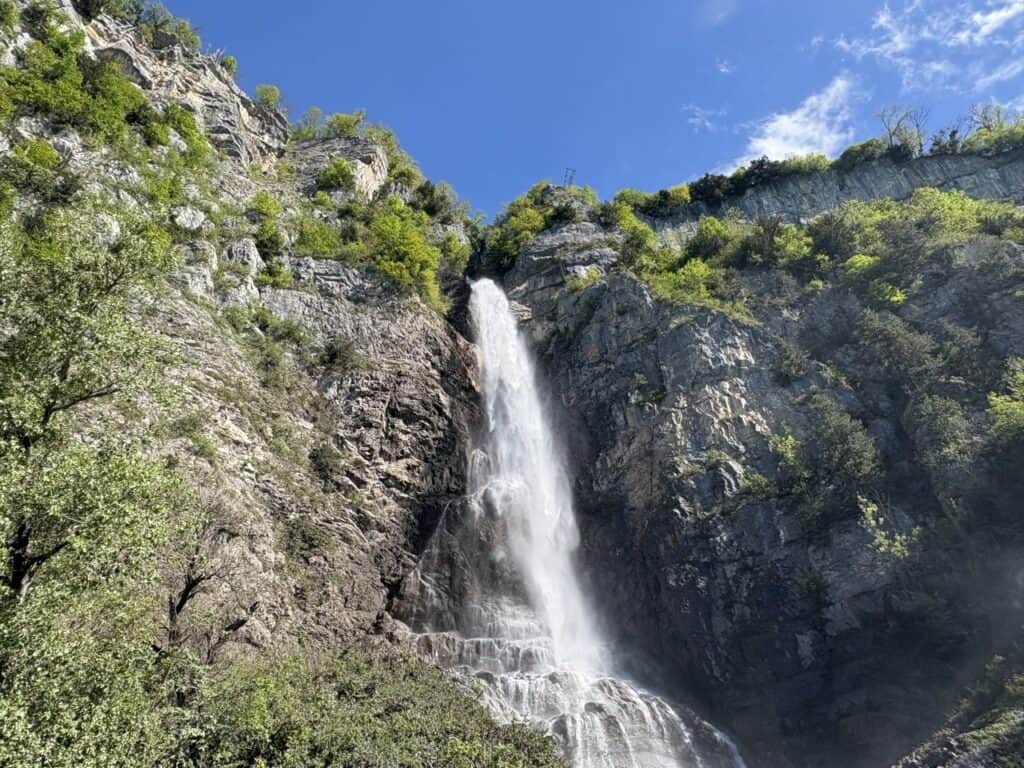
Not long after, Fallenbach makes its appearance — a first, gentle hint of what’s still to come. A teaser waterfall, if you like. At this point, you know: yes, today will be a good water day.
Upper or Lower Betliserstrasse? A Choice to Make
At Talegg, it’s decision time: Upper or Lower Betliserstrasse?
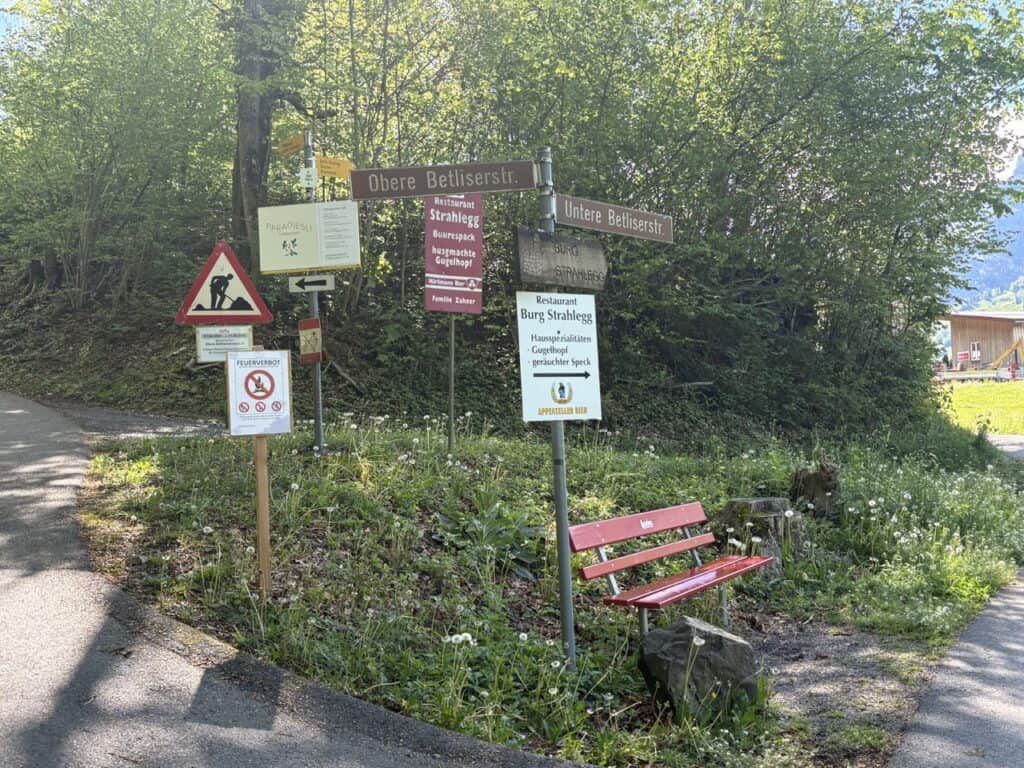
If you take the upper route, you’ll soon reach Restaurant Paradiesli — and the name is no exaggeration. From here, the views over Lake Walen and the pre-Alpine panorama with the Kerenzerberg and Mürtschenstock are simply beautiful. It’s the perfect spot for another break, maybe lunch, maybe just a long look.
The alternative is the Lower Betliserstrasse, which I chose this time. This route takes you through Hinterbetlis, past the atmospheric ruins of Strahlegg Castle, and offers another opportunity to refuel at Restaurant Burg Strahlegg. Different path, different mood — but equally rewarding.
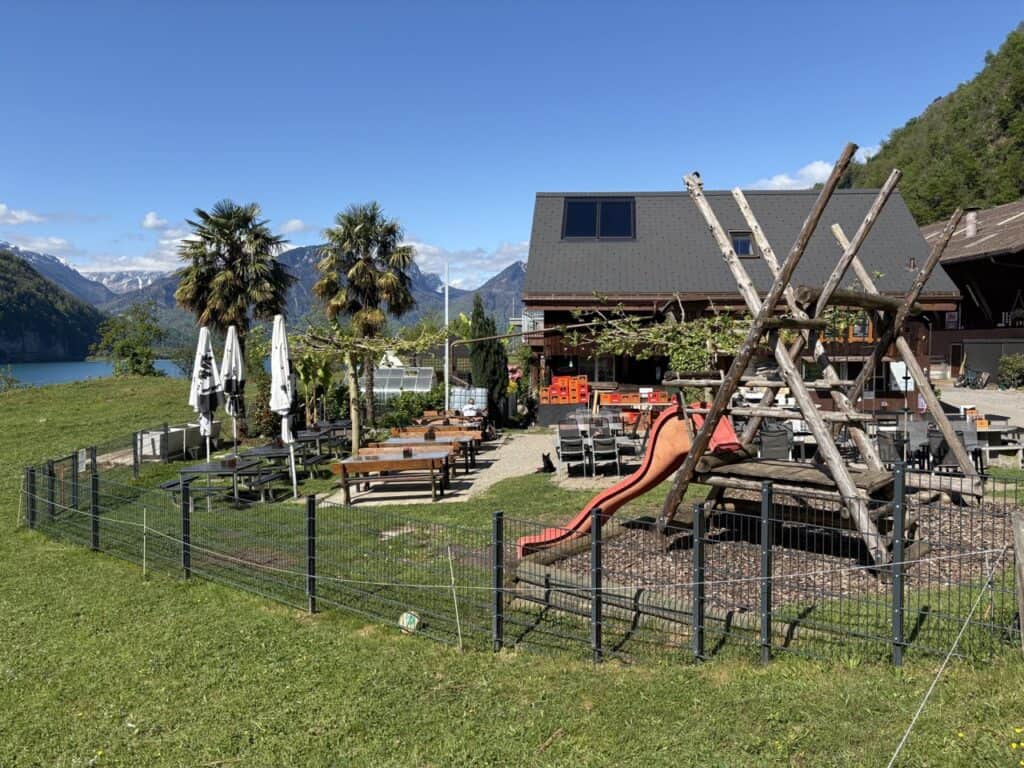
The Picturesque Hamlet of Betlis and Its Chapel
If you follow the lower road, the hiking trail towards the Seerenbach Falls leads you past flower-filled meadows and straight by the ruins of Strahlegg Castle. For a long time, the ruin was thought to date back to the Middle Ages. However, extensive research revealed something even more fascinating: the watchtower was most likely built by the Romans in the 1st century BC.
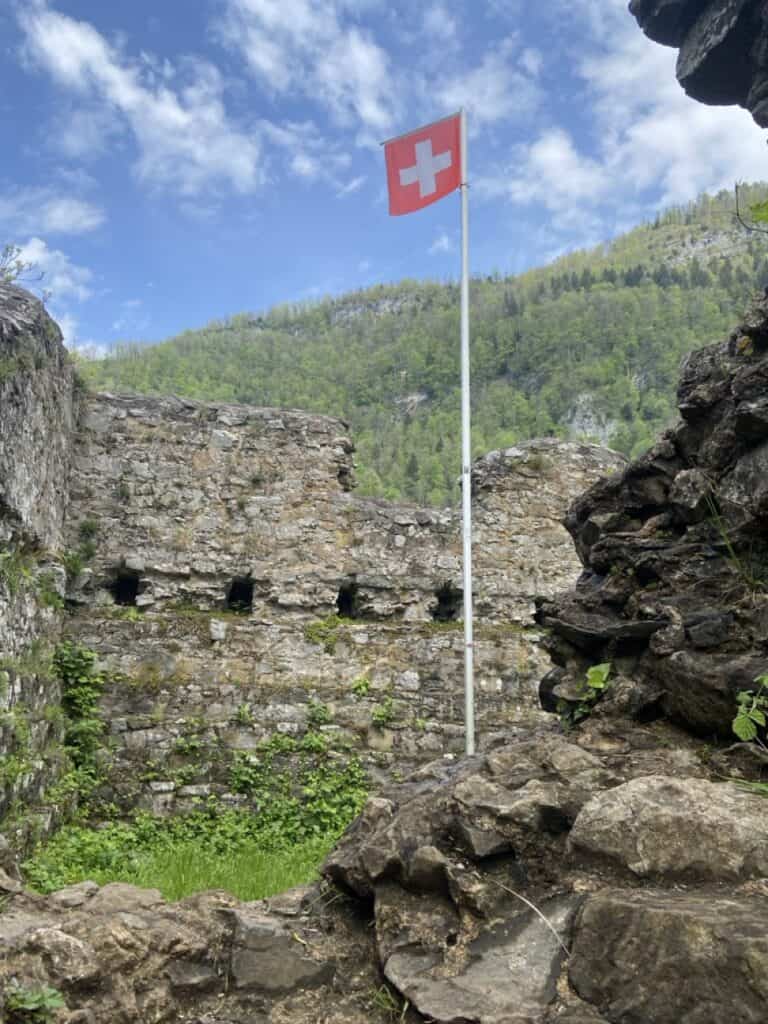
Together with lookout posts on the Biberlikopf near Ziegelbrücke and in Voremwald on the Kerenzerberg, the tower in Betlis formed part of a visual communication network. The square structure, with walls over 2 metres thick at the base, was at least two storeys high and featured a walkway. Thanks to the extraordinary strength of its mortar, the ruins have survived all these centuries — quietly holding their ground above the lake.
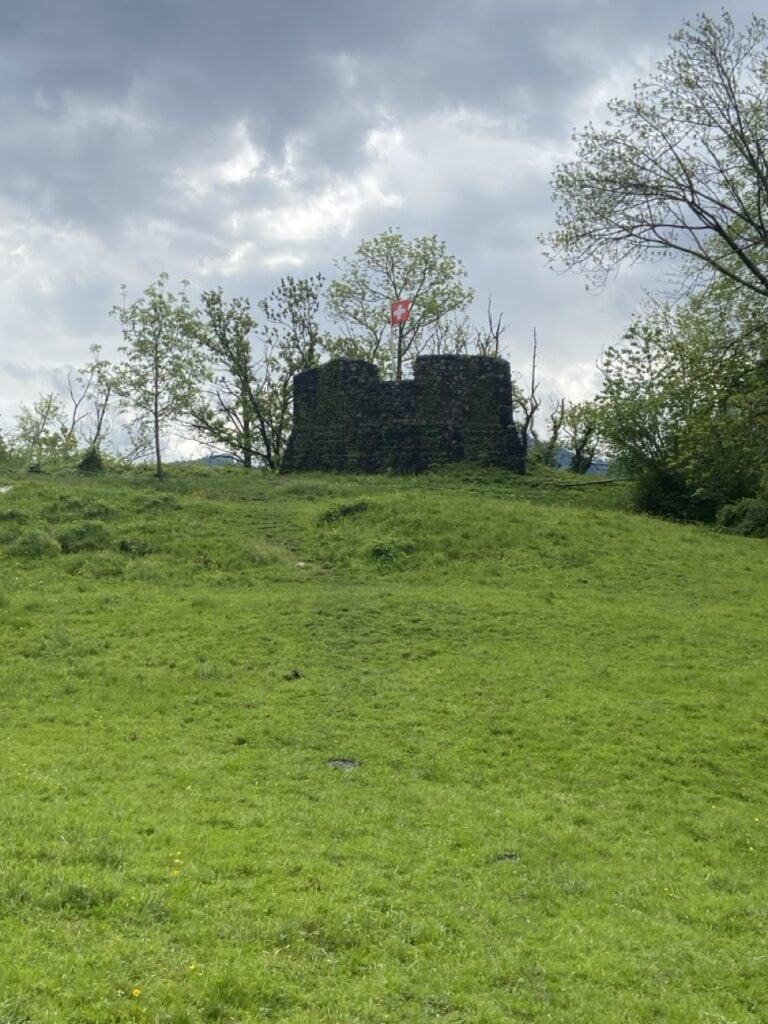
Right next to the castle ruins is a picnic area, and that’s where I stopped for lunch. Simple food, a bit of rest, and a lot of gratitude for places that invite you to pause.
Re-energised, I continued on until I reached the Betlis Chapel, romantically nestled between mountain and lake. The original chapel stood here as early as 1300, dedicated to Saint Nicholas of Myra. Over time, it was undermined by the water and eventually abandoned and dismantled in 1773. The charming chapel you see today was rebuilt in 1889 and dedicated to Our Lady of Perpetual Help, then fully restored in 2002.
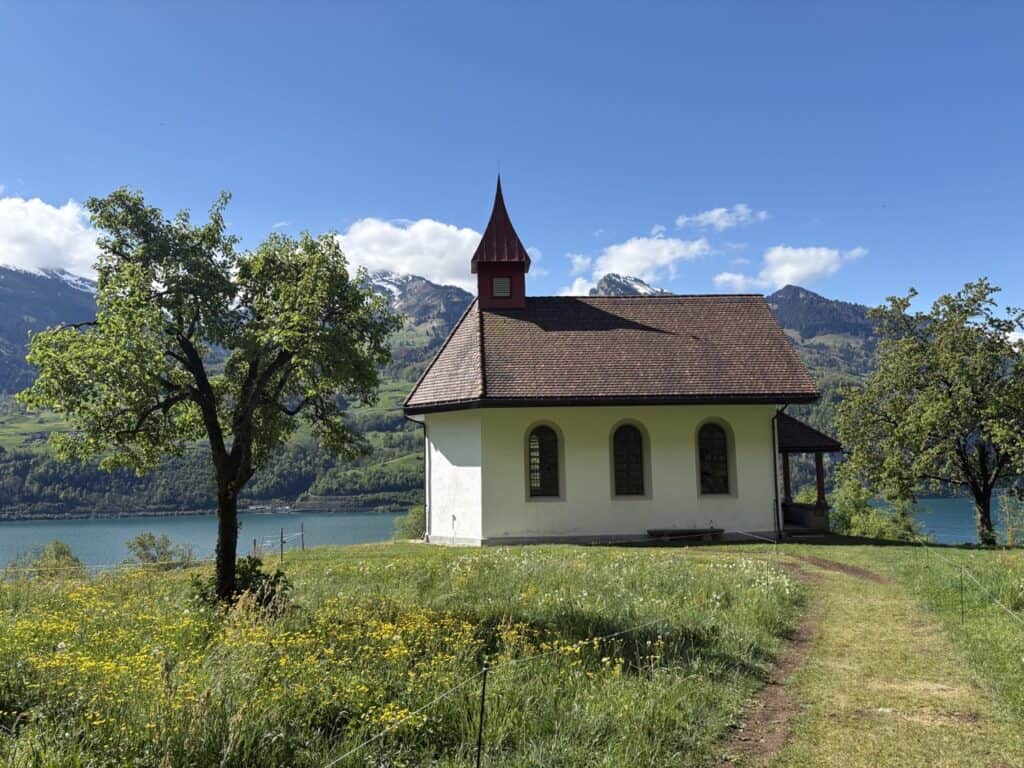
Because of its idyllic setting, the chapel has long attracted couples wanting to get married here — so many, in fact, that the municipality of Amden eventually had to step in. Today, only people with a direct connection to Betlis or Amden are allowed to marry here. So yes… you can probably let go of that spontaneous lakeside wedding idea right now.
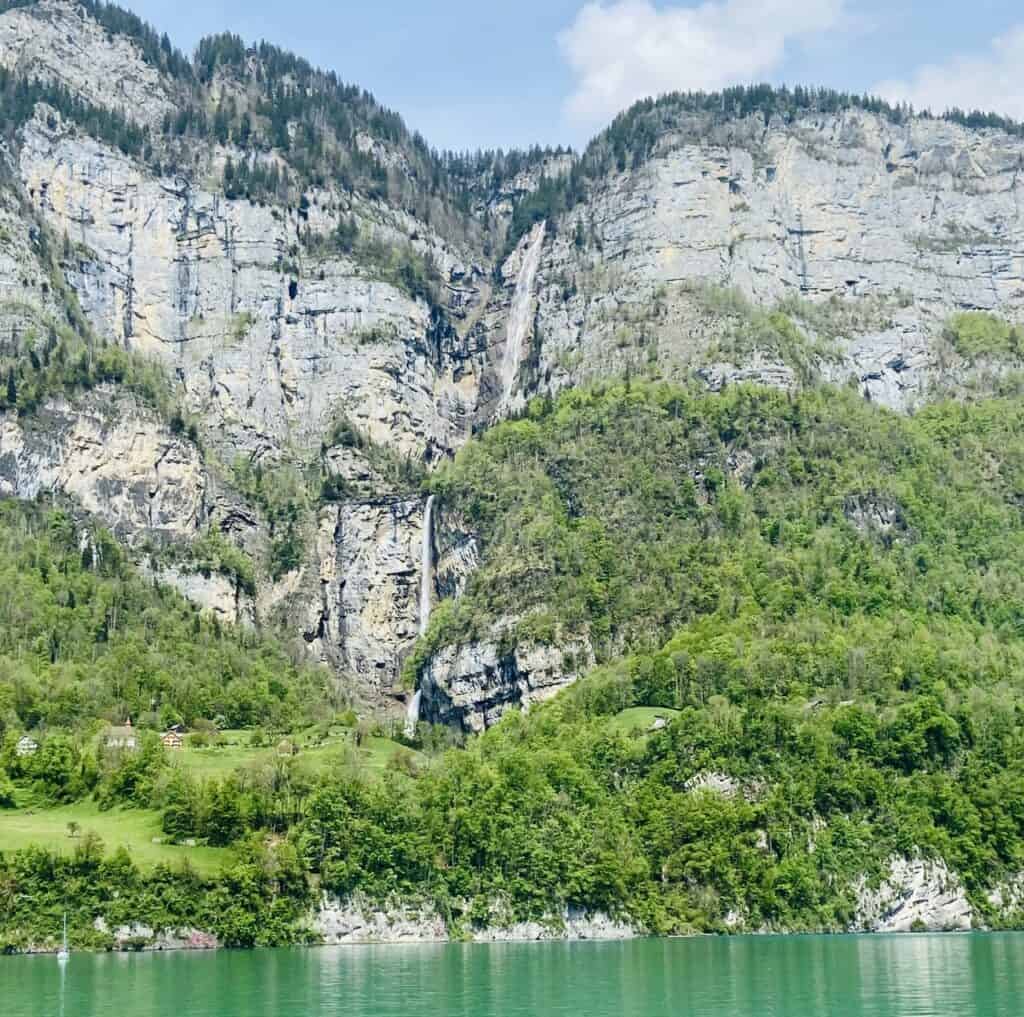
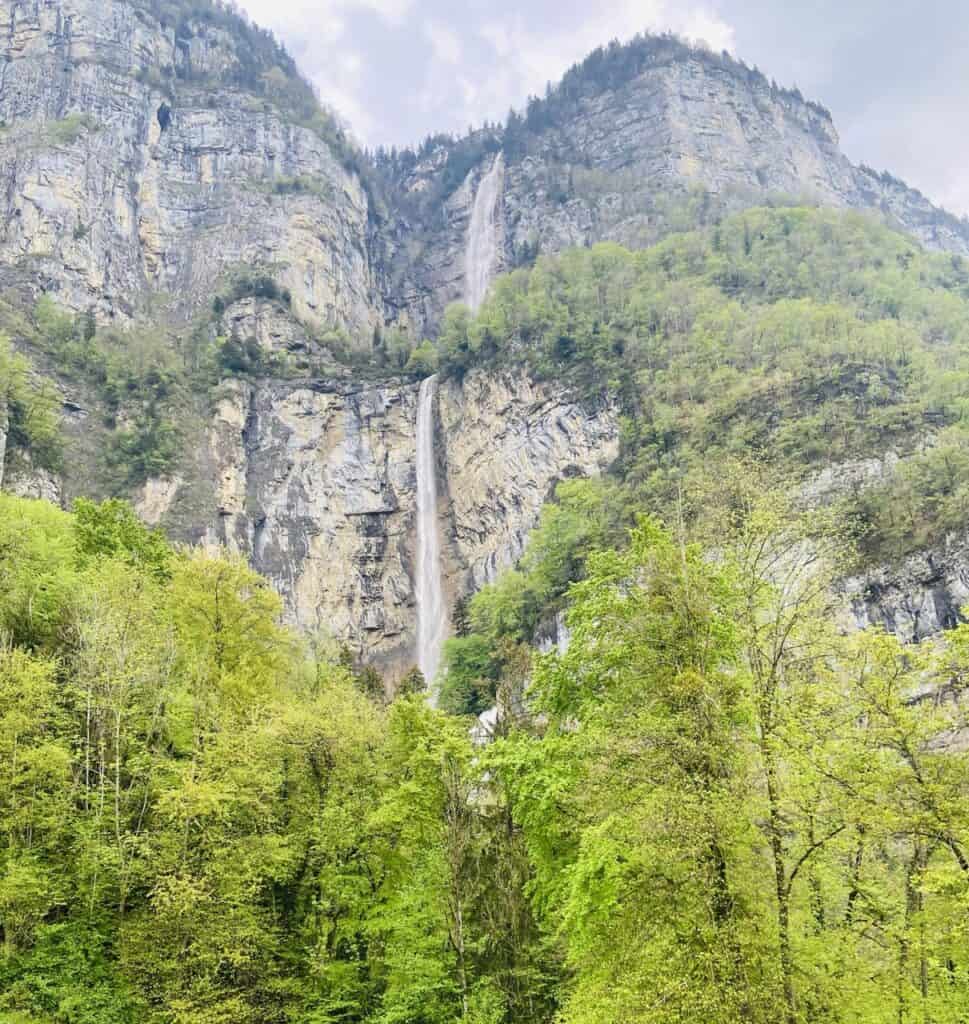
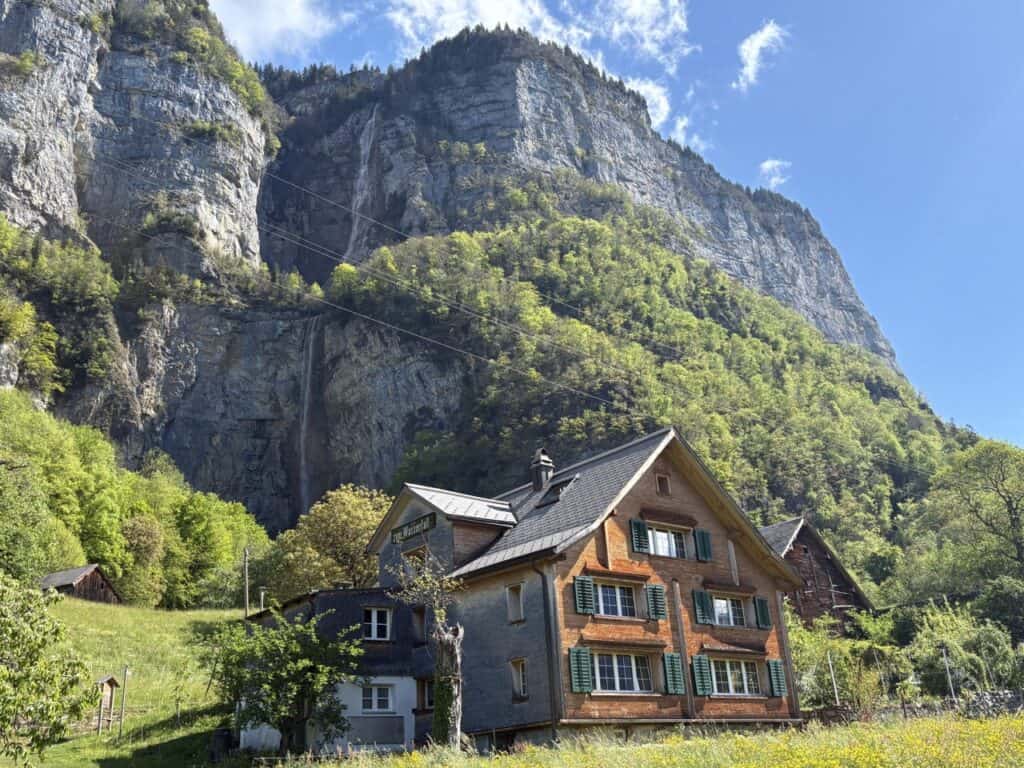
From the chapel, you can hear it for the first time: the distant roar of the Seerenbach Falls. And from here, you also get a stunning view of all three tiers of the waterfall — a moment that always gives me goosebumps.
From the Betlis Chapel to the Seerenbach Falls
Just after the chapel, the path branches off to the left and climbs up towards the third tier of the Seerenbach Falls. The middle cascade alone plunges 305 metres, making it one of the highest free-falling waterfalls in the world. Together, the three stages measure almost 600 metres, which makes the Seerenbach Falls one of the highest waterfalls in Europe — and the highest in Switzerland.
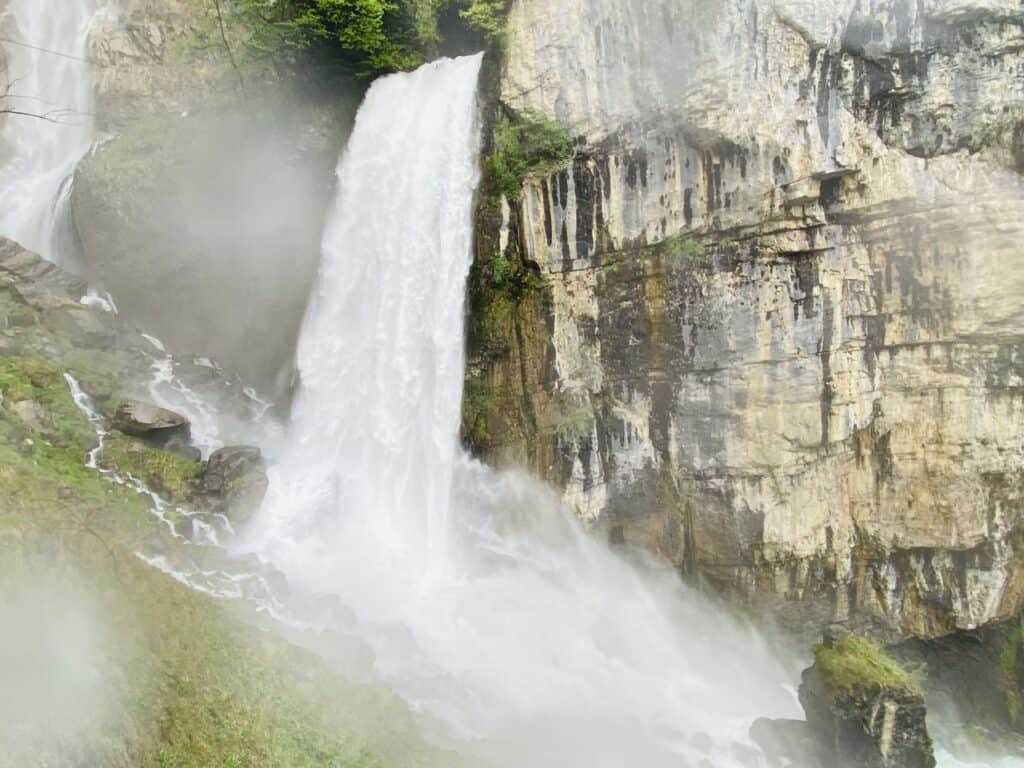
Standing on the viewing platform at the foot of the third cascade, getting wet is almost unavoidable — and honestly, part of the magic. The closer I move towards the falling water, the more I feel the icy spray on my skin. It thunders and roars through the gorge, powerful and untamed.
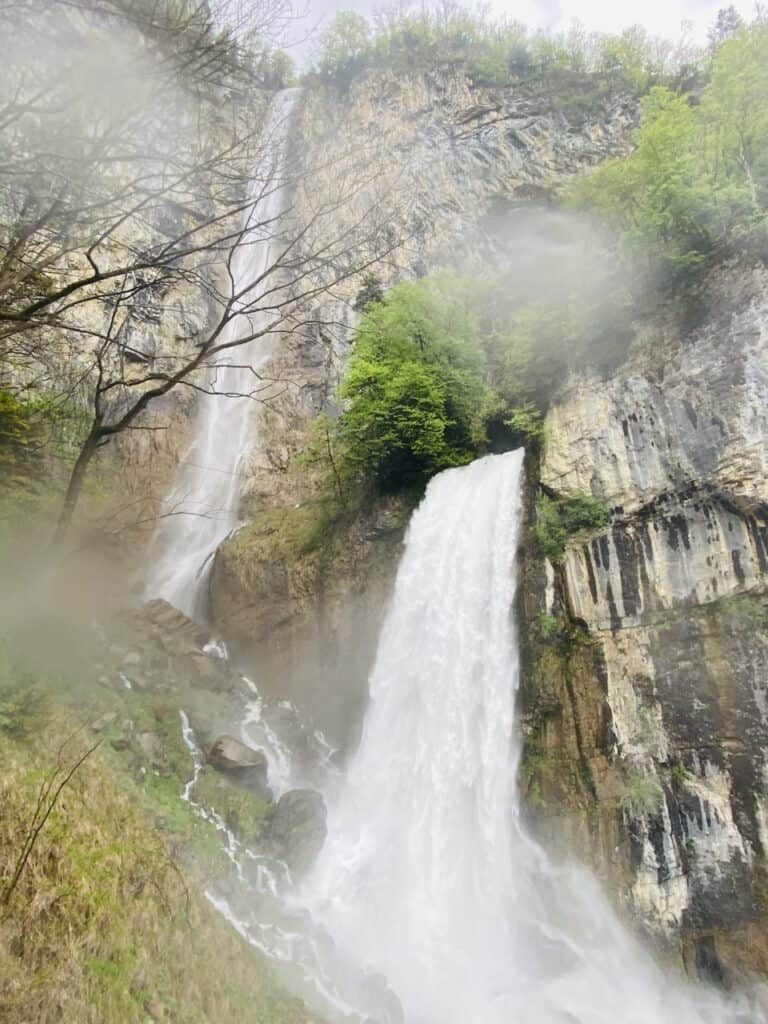
Interestingly, much of the spray doesn’t actually come from the Seerenbach Falls themselves, but from the Rin Spring (Rinquelle). Just a few metres away, it suddenly bursts out of the rock face, shooting downwards from about 50 metres above the ground. I spread my arms, close my eyes, and let the cold mist wash over me. Refreshing. Energising. Alive.
The Rin Spring originates in the area of the 190-metre-high lower cascade and is part of one of the largest underground river systems in Europe. Several diving expeditions have explored the Rin Cave, pushing more than 1,000 metres deep into the mountain. During heavy rain and snowmelt, an artificial tunnel acts as a flood overflow for the underground river — and around 40% of the spring’s water flows underground directly into Lake Walen.
Standing here, surrounded by water, rock, sound, and movement, it’s impossible not to feel small — and incredibly alive at the same time.
Hiking from the Seerenbach Falls to Quinten
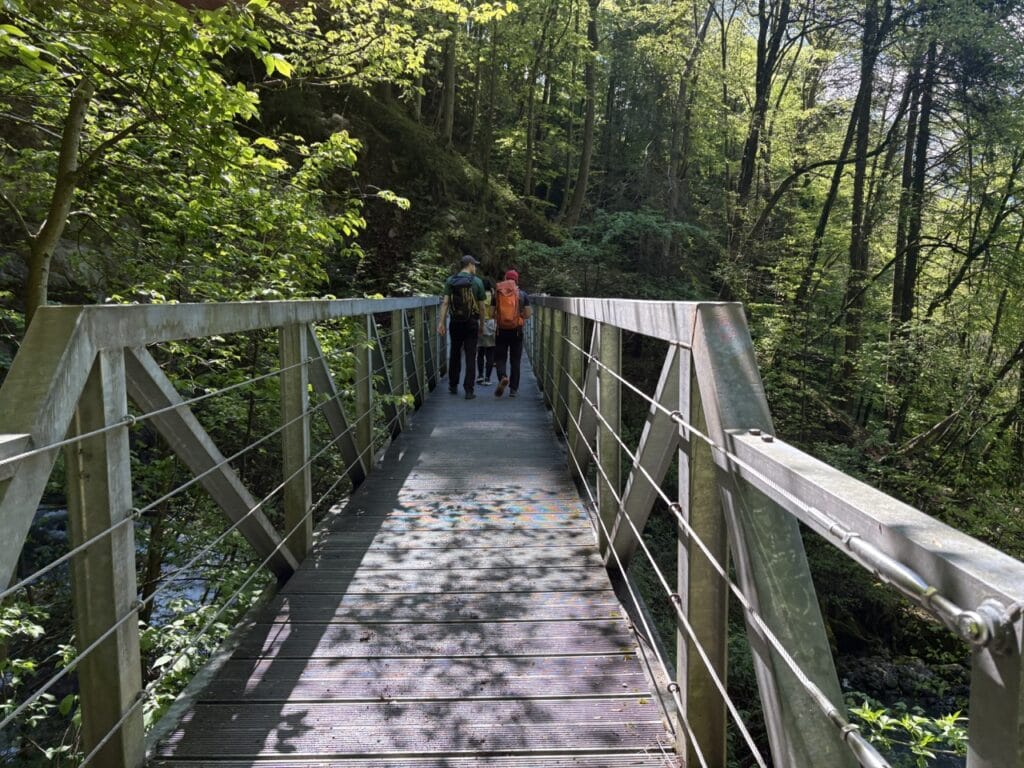
Just behind the Seerenbach Falls, the trail veers into a shady forest leading towards Quinten. The path starts with a gentle descent — over tiny wooden bridges, past trickling streams, and even more hidden waterfalls. One of the most memorable moments is crossing the bridge directly over the Seerenbach. A sudden icy gust of air rushes through the narrow gorge, refreshing at first, then surprisingly chilly.
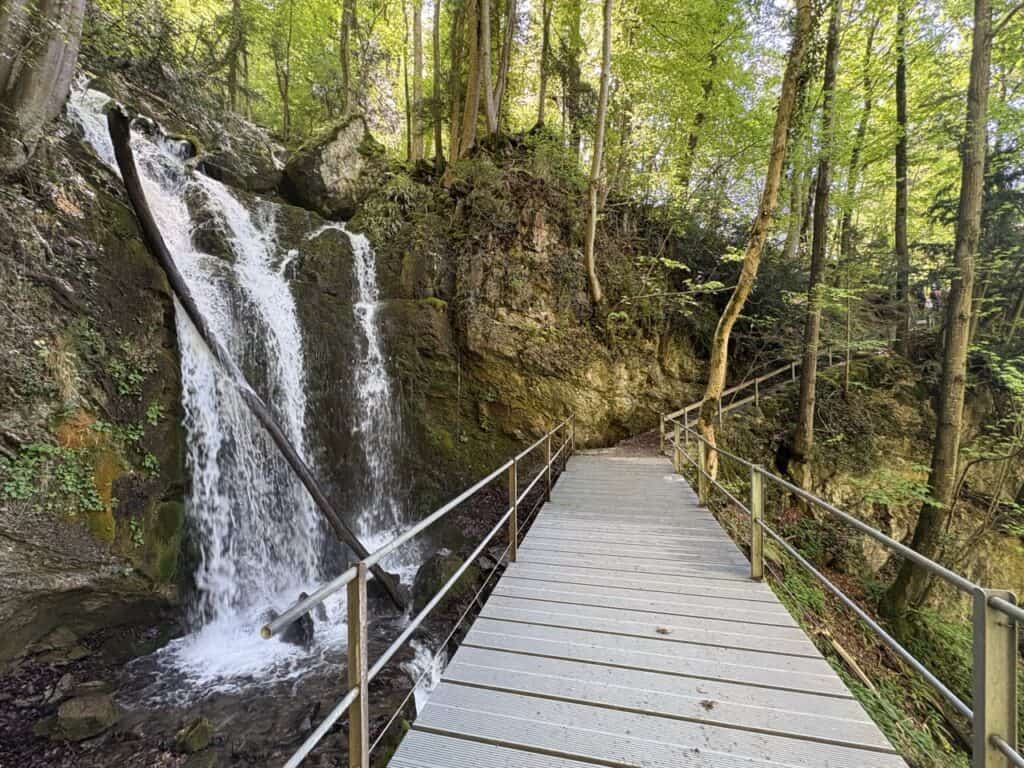
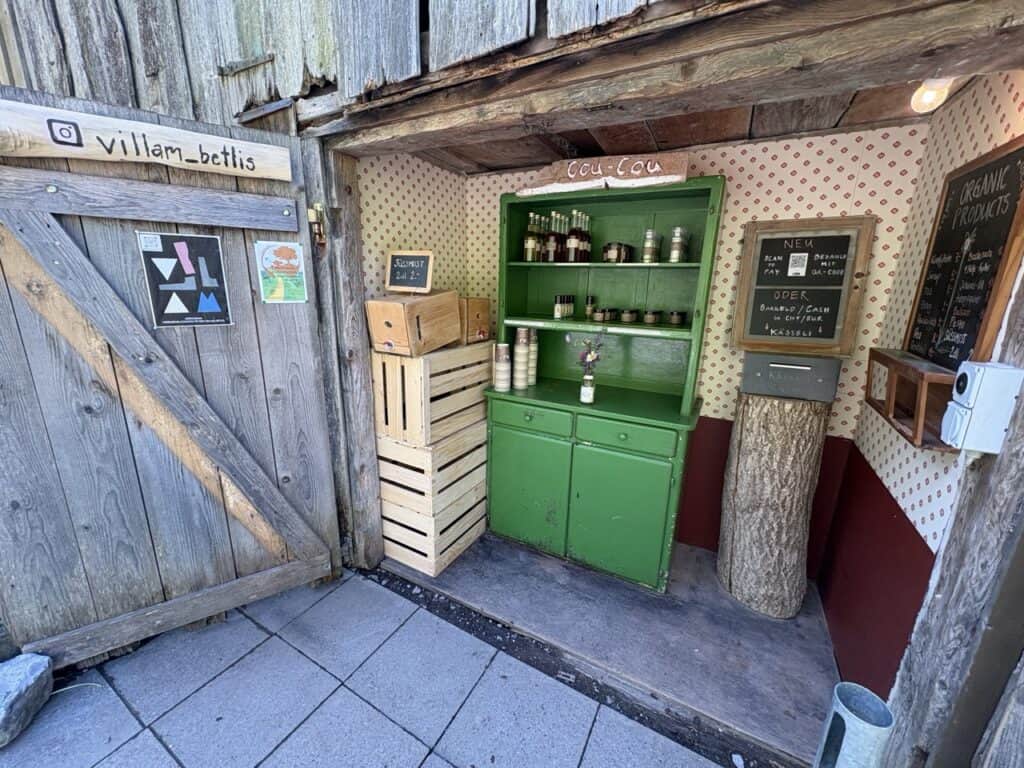
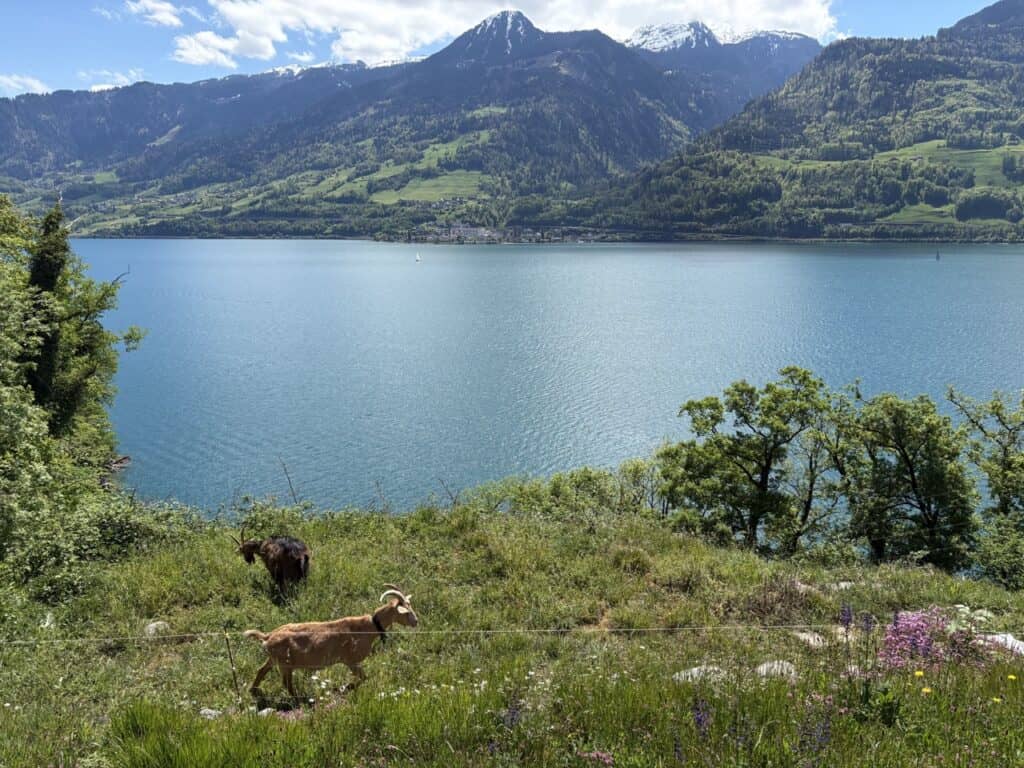
Once the forest opens up, the panorama over the opposite mountains of Lake Walen unfolds — breathtaking. The trail meanders past scattered houses and cherry trees, and along the way, small self-service stands offer chilled drinks, fresh apple juice, and local specialities. A simple gesture, but oh-so welcome for weary hikers — the perfect energy boost before the next climb.
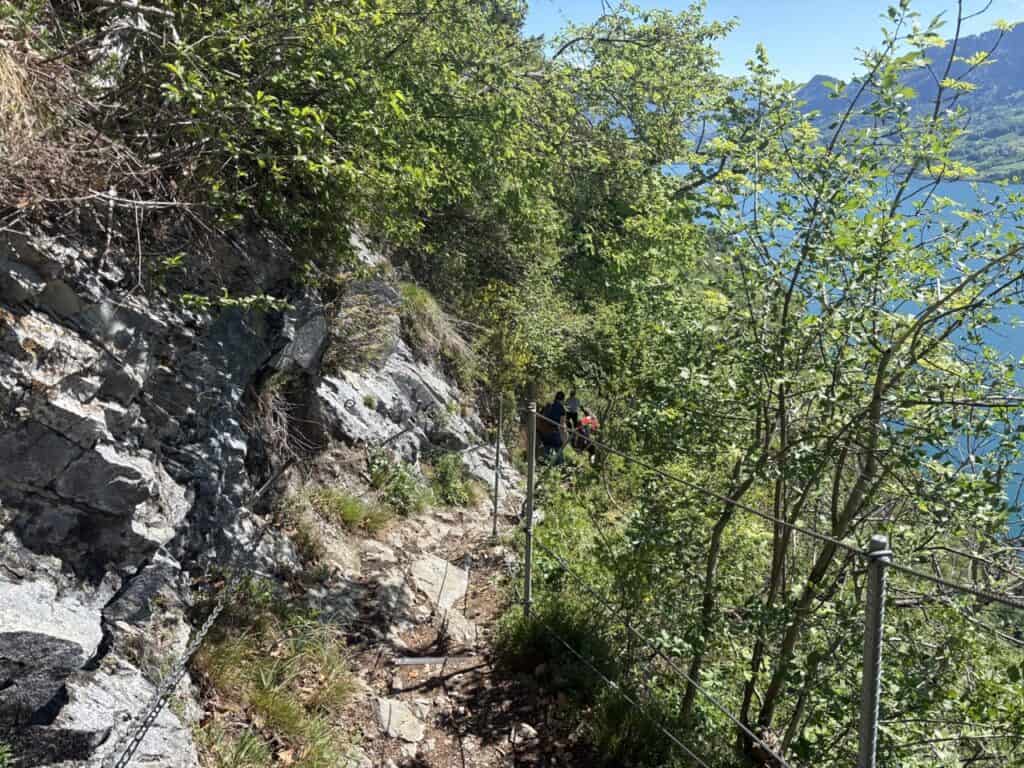
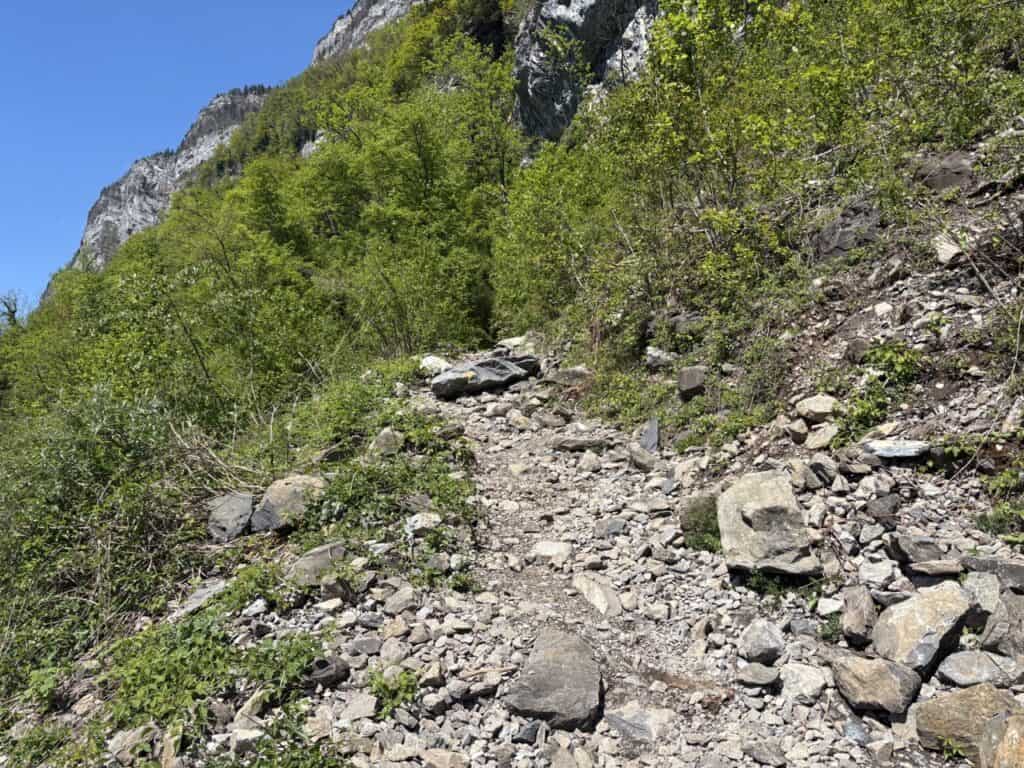
The path climbs once more, then drops steeply towards Quinten. And if you’re looking forward to an easy downhill stroll… think again. The descent is steeper and rockier than the ascent, with sections right along the hillside, often protected only by ropes or chains. On the right, taut guide cables mark the edge — a subtle reminder for anyone who isn’t entirely comfortable with heights. Personally, I didn’t mind, but I was grateful for the ropes on such a rough, uneven, sometimes slippery trail. About an hour later, the first houses of Quinten appear on the horizon — a welcome sight after a little adrenaline rush.
Quinten on Lake Walen — the Riviera of Eastern Switzerland
As the path levels out, the vegetation shifts almost magically. Suddenly, you’re walking through a sea of wildflowers and vineyards — the first hints of Quinten at 434 meters above sea level. Nestled on a narrow peninsula, the village is framed by the sheer cliffs of the Churfirsten and the tranquil waters of Lake Walen. From here, the view over the vineyards is simply breathtaking.
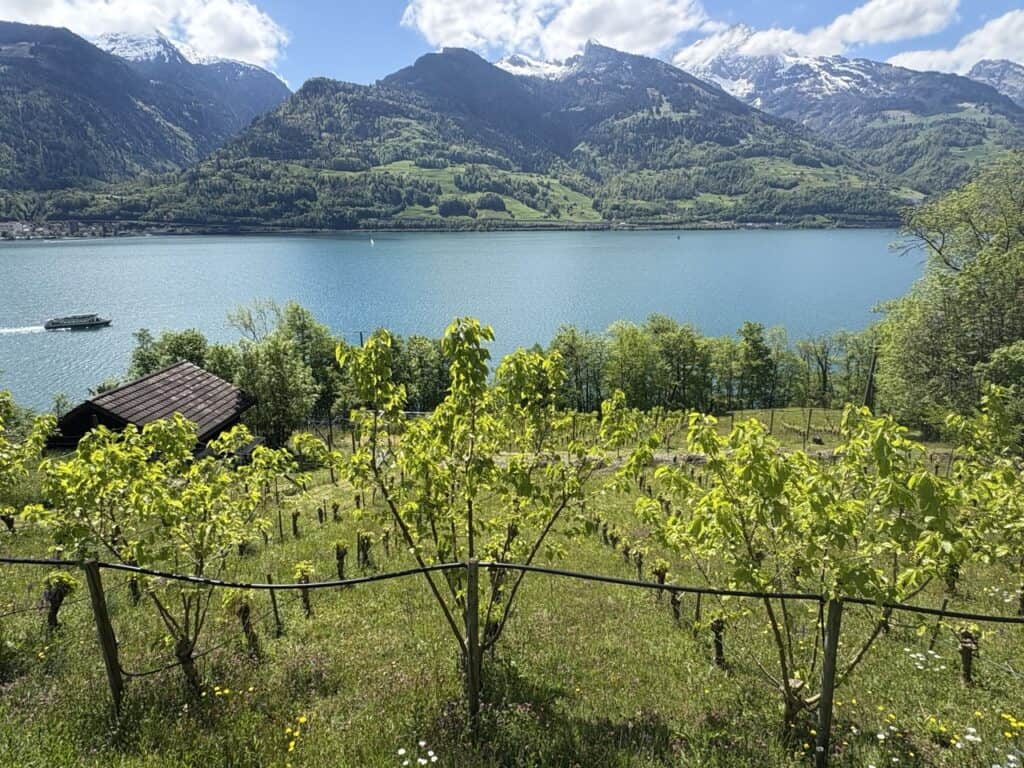
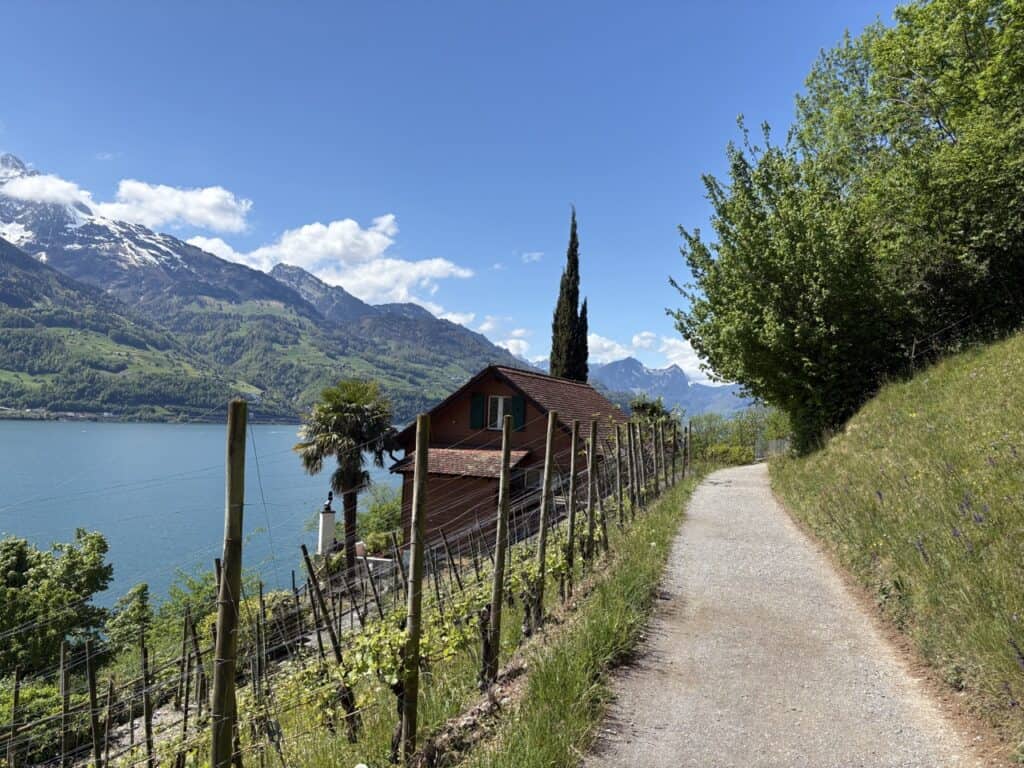
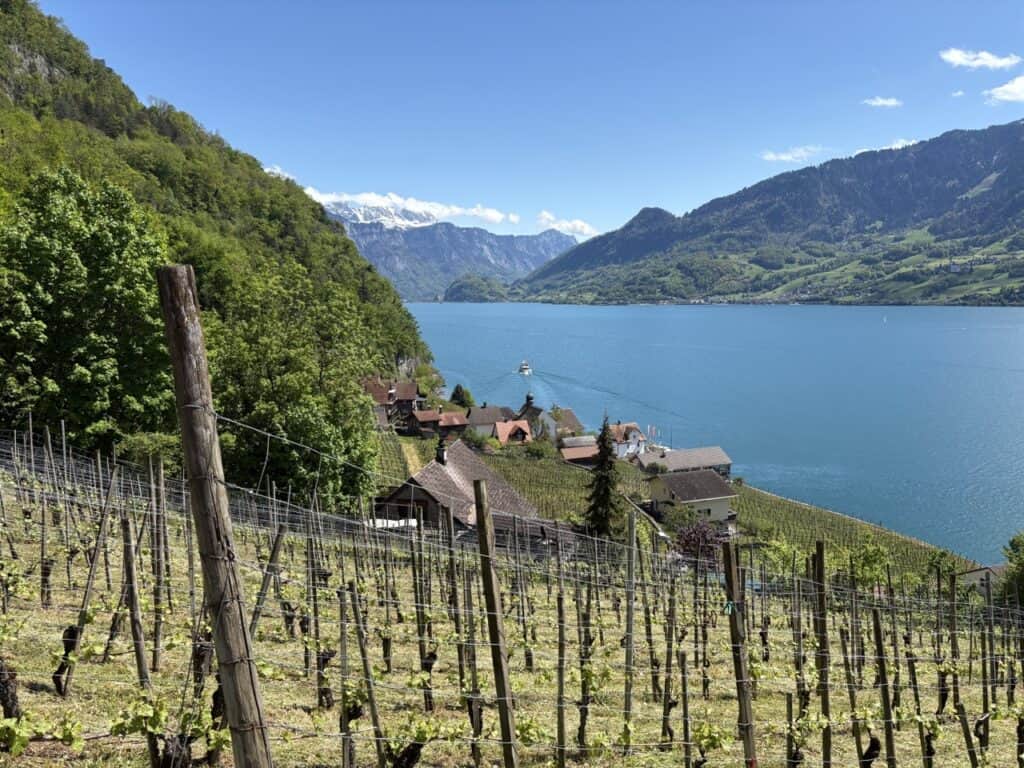
Thanks to its location, Quinten enjoys an unusually mild, almost Mediterranean climate. Wine grapes thrive here, and you’ll even find figs, kiwi, and other southern fruits growing naturally. It’s no wonder this stretch of lakefront has earned the nickname the Riviera of Eastern Switzerland.
Quinten is completely car-free. No roads lead here — access is only by foot along hiking trails or by boat. And that, for me, is part of its magic. The village counts about 40 residents, yet even on a sunny weekend, it’s alive with day-trippers eager to soak in its beauty.
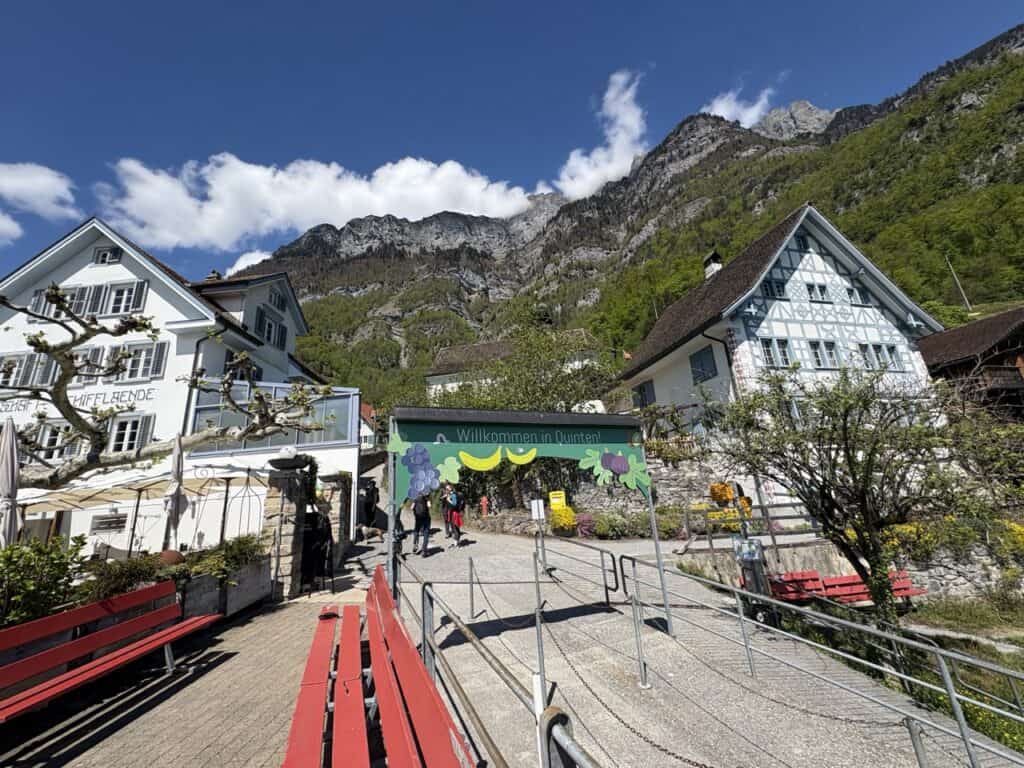
Discovering Quinten: Culture, Cuisine, and Local Flavours
If you want to see something truly unique in Quinten, check out the Raupenhotel. Here, silk worms are carefully raised, and guided tours show how real silk is made. In 2026, tours are scheduled to start again in April, but they’re by appointment only, so be sure to book ahead: 077 425 67 90, Frau Saxer.
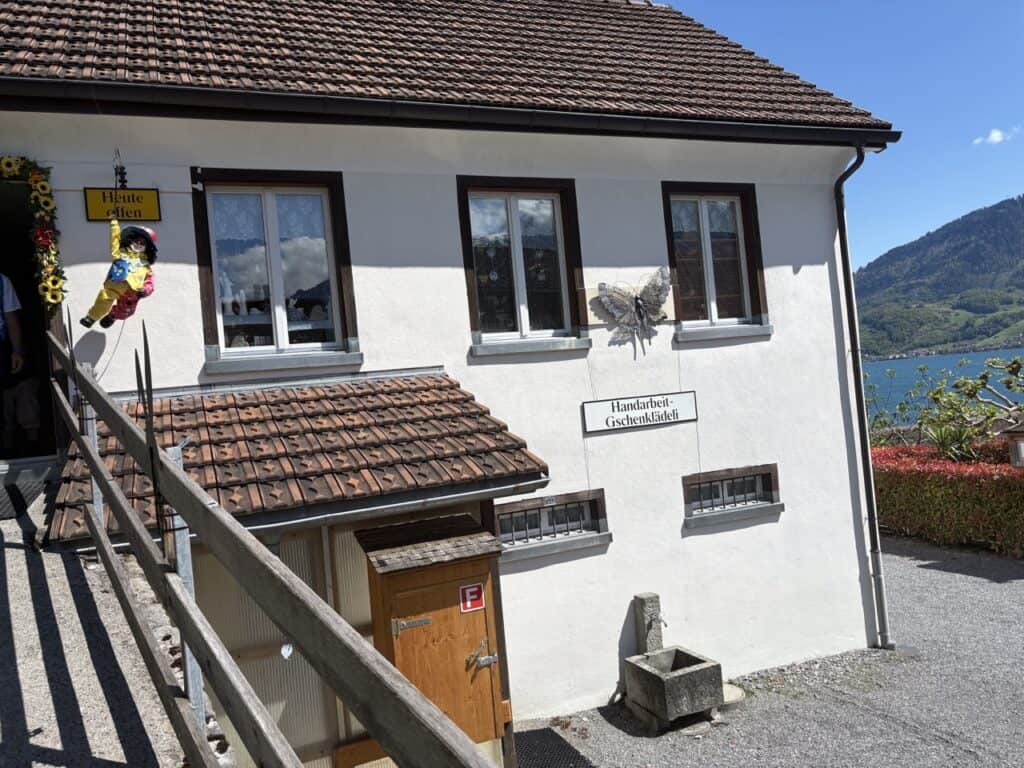
The village also offers three excellent restaurants, a cozy cellar shop with homemade specialties, and a gift store where you can pick up some original souvenirs for friends or family.
And if you’re in Quinten, you must try a “Purlymunter” — an iced tea brewed from roasted mulberry leaves from the sunny side of Lake Walen, sweetened gently with birn syrup, combined with sparkling pear juice and fragrant alpine herbs in Bio Suisse quality. 100% regional, no refined sugar, no artificial additives. Available at self-service stands or in the bistro — a perfect way to refresh after the hike.
Practical Info: Duration, Difficulty, and Transport
How long does the hike take?
Weesen to Betlis: ~1 hour including a few easy photo stops, 160 m elevation gain, ~4 km.
Weesen to Quinten: ~3 hours, 200 m total ascent. First hour on asphalt, then natural paths. Seerenbach Falls reached after ~1.5 hours.
Difficulty: Mostly easy, but the descent to Quinten requires sure-footedness.
How to Get to Weesen
Train to Ziegelbrücke, then bus 650 to Weesen and then hike to Betlis, the Seerenbach Falls and Quinten. Alternative for those who don’t want to hike or just want to hike a shorter route: take the boat from Weesen to Betlis and Quinten.
How to Get Back from Quinten
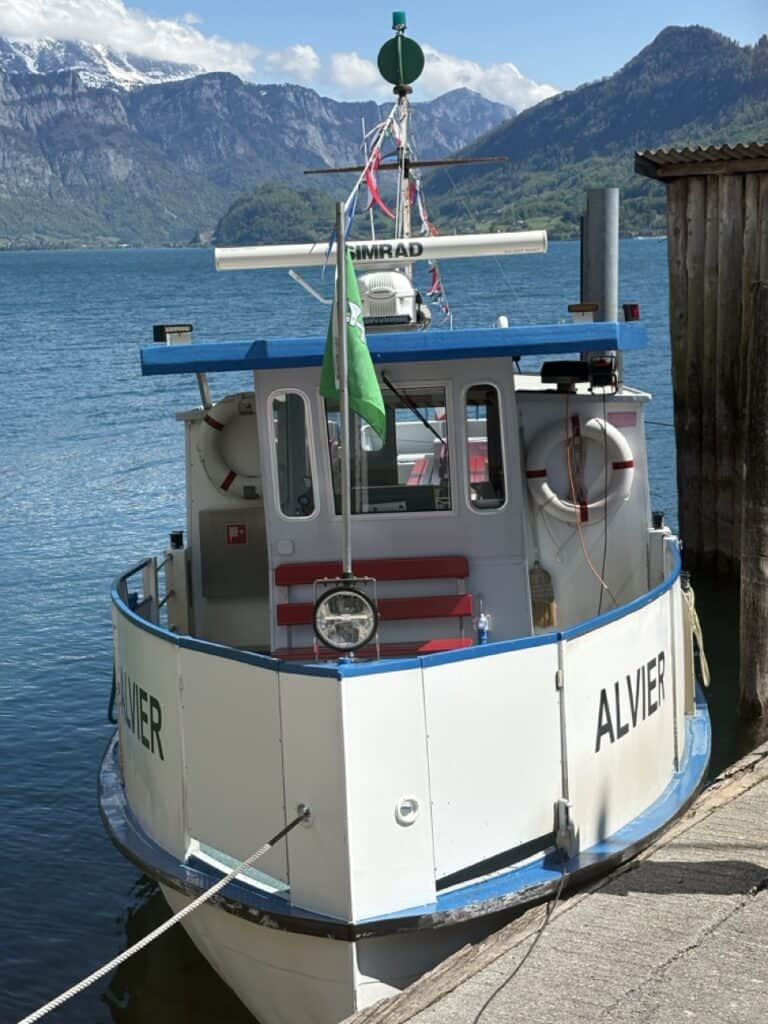
Ship to Murg, then train via Ziegelbrücke to Zurich. ~10-minute crossing, tickets at the Quinten dock (half fare/GA and Swiss Travel Pass not accepted). Please go to their website for current prices and the boat timetable.
Best Time to Visit
Year-round; waterfalls at peak after heavy rain or spring snowmelt; weekends busier.
Where to Eat
Here are some of my favorite spots along the way:
Weesen
- Fischerstube Weesen – Fresh fish and lake views, perfect for a relaxed lunch.
- Restaurant Flyhof – Cozy and traditional Swiss fare, with hearty options after a morning walk.
- Trattoria Walsensee – Italian-inspired dishes with a lakeside atmosphere.
- Brasserie du Lac – Casual spot for coffee, pastries, or light bites.
- Restaurant Elite – Classic Swiss dining with a touch of elegance.
- Lago Mio – My go-to for a morning coffee or sweet treat before hitting the trail.
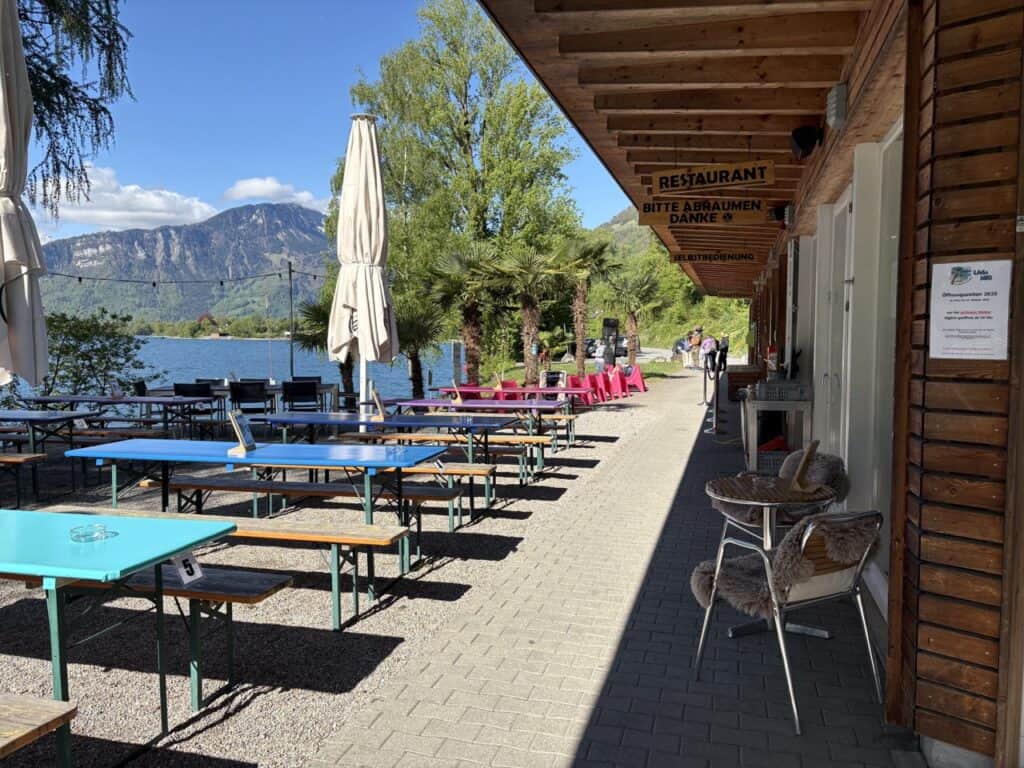
Betlis
- Landgasthof Paradiesli – Excellent spot for lunch with panoramic lake views; also offers rooms if you want to stay.
- Restaurant Burg Strahlegg – A charming place to pause near the castle ruins and refuel.
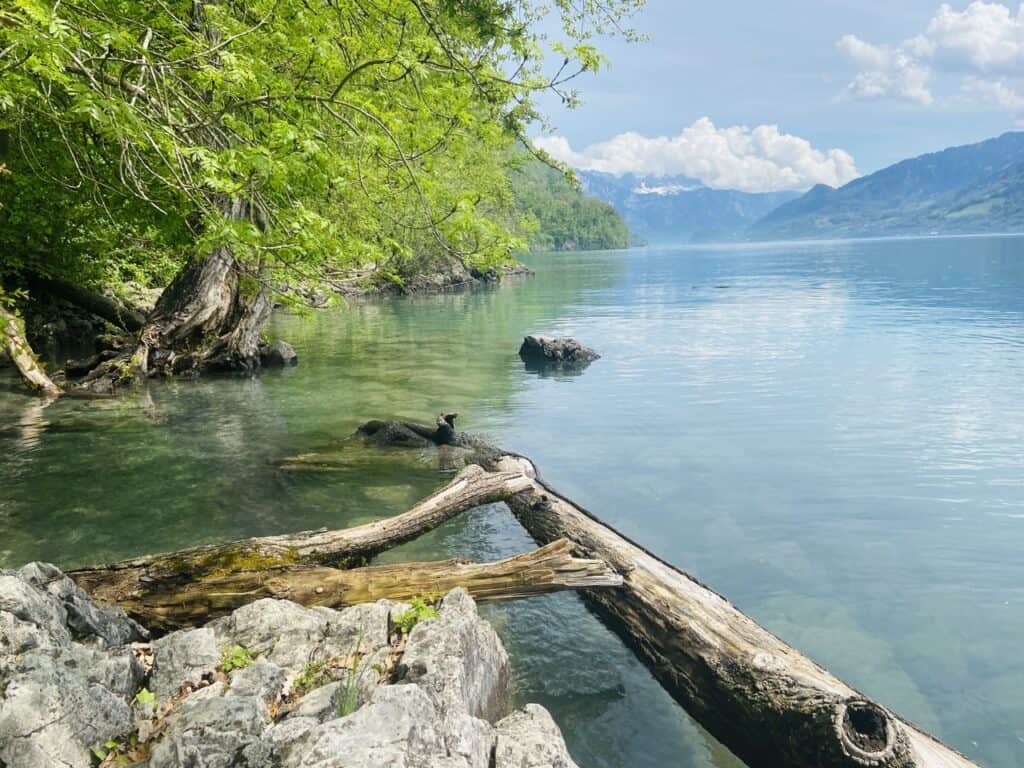
Quinten
- Restaurant Schifflände – Lakeside dining with fresh, local ingredients.
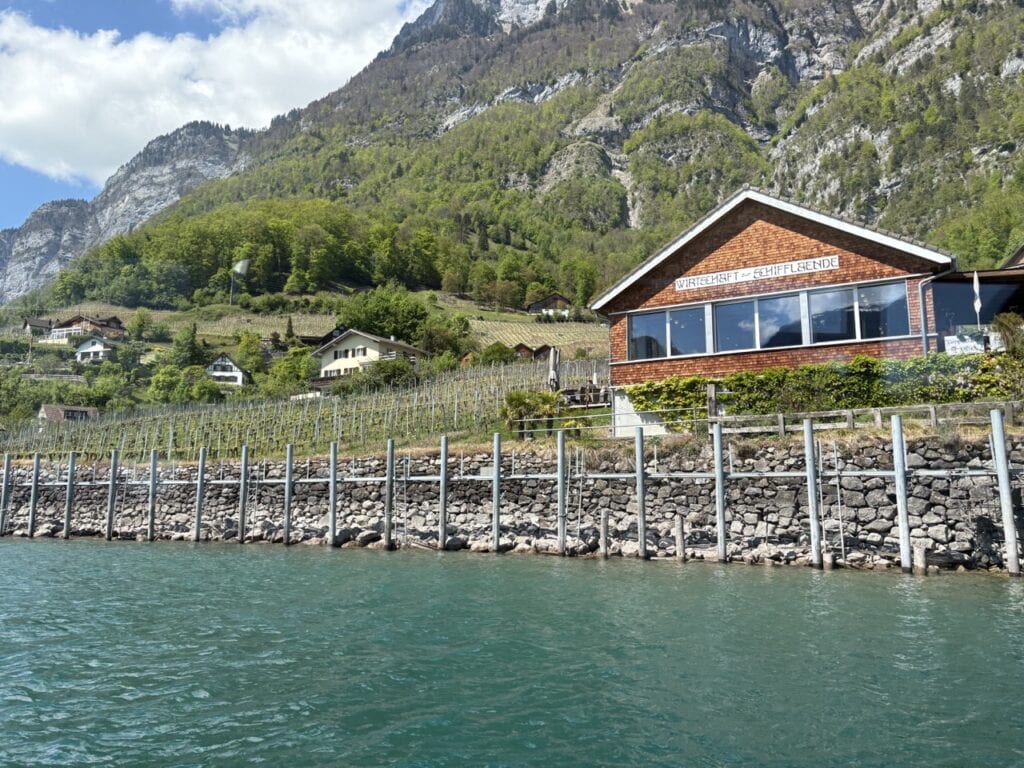
- Restaurant Seehus – Rustic charm and delicious regional dishes.
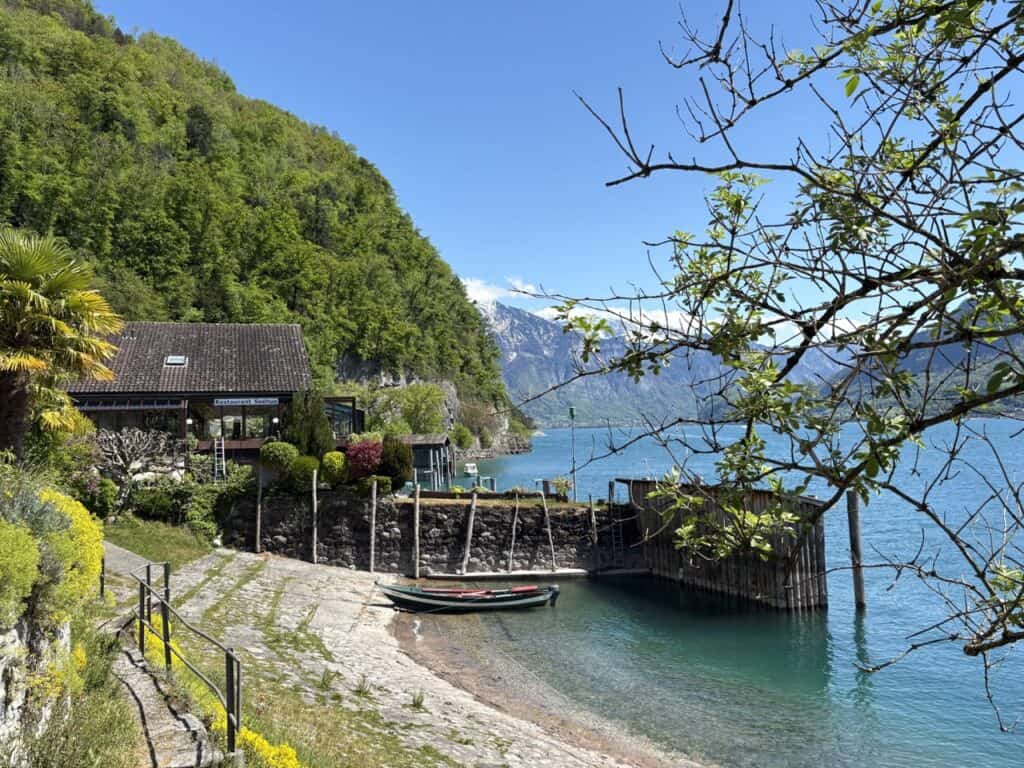
- Restaurant Tremondi – Ideal for a relaxed meal and also connected to the B&B.
Where to Sleep
If you want to turn this hike into a slow travel experience, here are two top options:
- Landgasthof Paradiesli (Betlis) – Cozy, lake-view rooms perfect for a night after hiking to the falls.
- B&B Tremondi (Quinten) – A charming, family-run option right in the car-free village, combining comfort with that slow-living vibe.
Final Thoughts
Standing in Quinten, watching the sunlight dance across the vineyards and the turquoise water of Lake Walen, I can’t help but feel grateful for days like this. Hiking from Weesen, past coffee stops, cherry trees, and cascading waterfalls, all the way to this car-free paradise, reminds me why I travel slowly — to notice the small details, to feel the air, the spray of the falls, and the rhythm of the land beneath my feet. Every waterfall, every forest path, every viewpoint along the way is more than a sight — it’s a moment of pure energy and calm, a chance to reconnect with nature and with yourself.
And the Seerenbach Falls aren’t the only treasures around here. If you’re eager to extend your adventure, the nearby Talalpsee offers a peaceful alpine lake hike with stunning mountain reflections. The Berschis Falls are perfect for a shorter excursion that still delivers the thrill of rushing water. And for something completely different, the Paxmal — a fascinating monument filled with art and symbolism — invites quiet contemplation amidst beautiful views of the valley.
Whether it’s waterfalls, lakes, or contemplative monuments, the Walensee region never fails to remind me why slow, mindful travel is worth every step. So lace up your boots, pack your curiosity, and let the journey guide you — because sometimes the best stories are found between the trailhead and the next breathtaking view.