When people hear the word “fondue,” they immediately think of Switzerland and imagine dipping bread into a bubbling pot of melted cheese. And yes, cheese fondue absolutely deserves its fame. But Swiss food culture has a few more quiet treasures that don’t always get the spotlight.
I’ll start with a little confession: I’m not a big meat eater. Most of the time, I happily eat vegetarian and don’t miss meat at all. But once or twice a year — usually around Christmas or New Year’s — I find myself sitting around a table with family or friends, a fondue pot gently simmering in the middle, and I make an exception.
That’s where Swiss meat fondue comes in — more specifically, Fondue Chinoise and Fondue Bourguignonne. These two dishes may not be as internationally famous as their cheesy cousin, but here in Switzerland they are deeply loved, especially during the colder months.
For me, meat fondue isn’t really about the meat. It’s about slowing down, sharing time, and letting the evening unfold naturally. It’s laughter between dips into the pot, long conversations, and that cozy winter feeling that makes you forget about the clock. So let me take you along into this lesser-known side of Swiss fondue culture.
What Is Swiss Meat Fondue?
Swiss meat fondue is a communal table meal where small pieces or thin slices of meat are cooked directly at the table — either in a pot of simmering broth or in hot oil. Everyone has their own fondue fork, the pot sits in the center, and the meal unfolds slowly, one bite at a time.
Unlike restaurant dishes that arrive fully plated, meat fondue asks you to participate. You cook your own food. You wait. You talk. You pay attention. And somehow, that changes the entire experience.
In Switzerland, meat fondue is traditionally enjoyed in winter, especially during the festive season. It’s common for families to gather around the table on Christmas Eve or New Year’s Eve, with sauces lining the table, fries, pickles and preserved vegetables within reach, and no real plan for how long the meal will last.
There are two main types of Swiss meat fondue:
- Fondue Chinoise, where thinly sliced meat is cooked in a flavorful broth
- Fondue Bourguignonne, where cubes of meat are cooked in hot oil
Both are deeply rooted in Swiss home cooking, and both reflect something very Swiss: the love of shared meals, simplicity, and taking time for each other.
Fondue Chinoise: The Swiss Hot Pot
Imagine a cozy Swiss chalet during the holiday season. Snowflakes gently falling outside, a crackling fireplace, and friends gathered around a steaming pot of broth. That’s Fondue Chinoise for you!
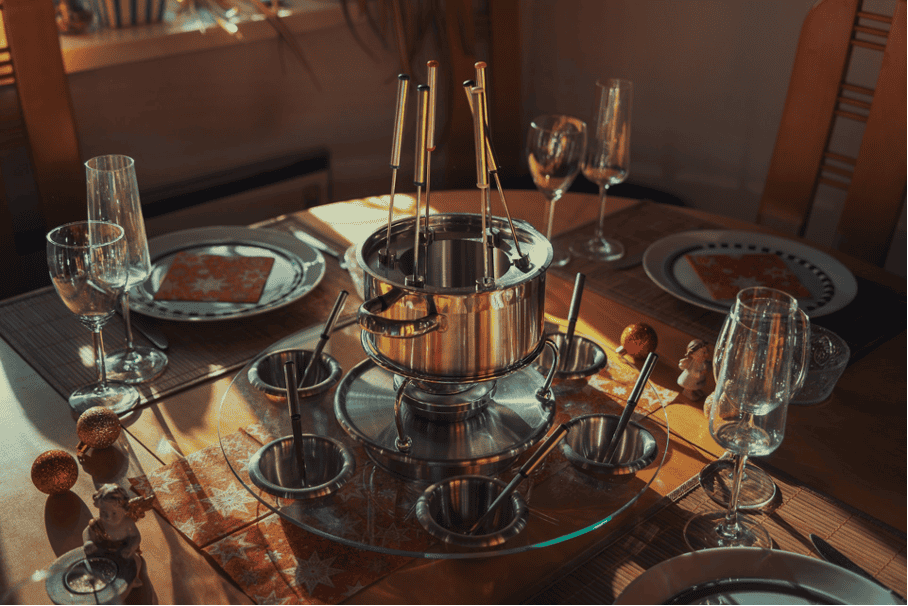
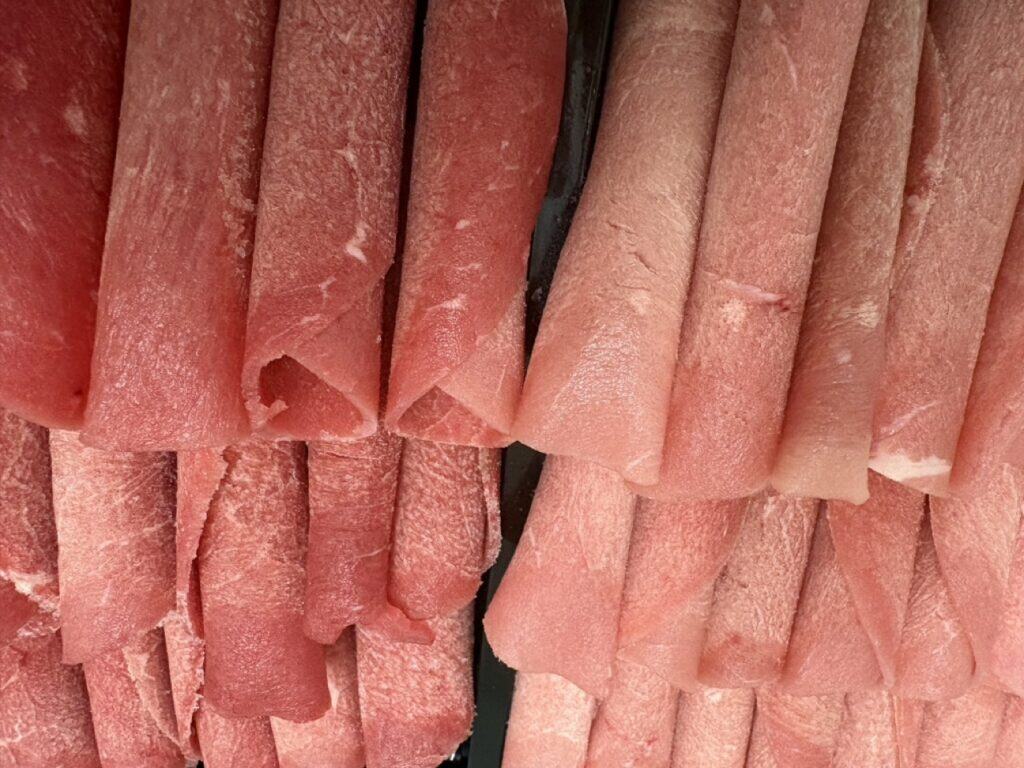
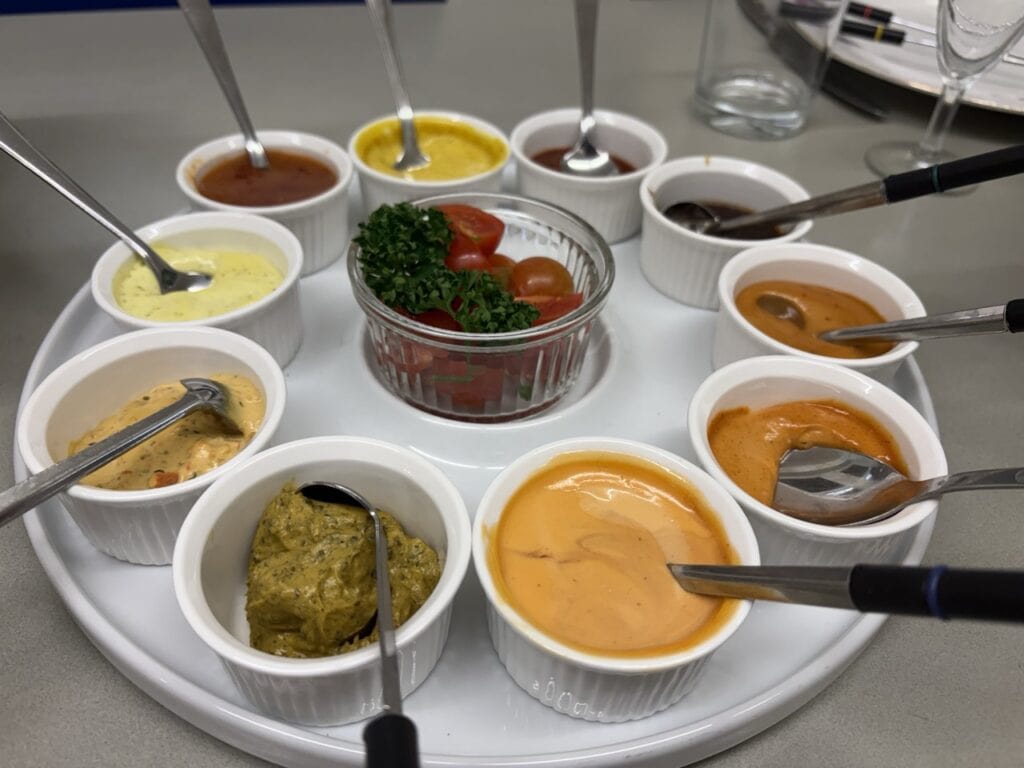
Fondue Chinoise is all about thinly sliced meat — usually beef, pork, veal, or chicken — gently cooked in a simmering, flavorful broth. The meat is speared onto a fondue fork and dipped into the hot broth, cooking in seconds. It’s often served with an array of dipping sauces, from garlic aioli to tangy curry or spicy chili, and French fries and salads as a side.
The broth, usually made with vegetables, herbs, and spices, grows richer and deeper as the evening goes on. By the end, it’s infused with all the meat flavors, and honestly, my favorite moment is sipping that savory broth as the final course. It feels comforting. Like a warm hug in a bowl!
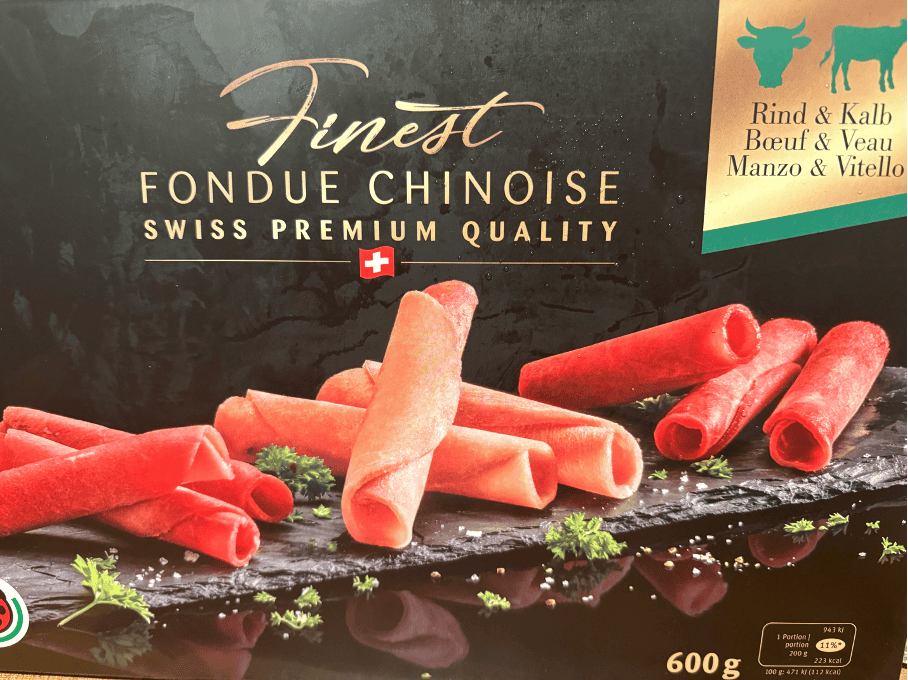
Despite the name, Fondue Chinoise isn’t actually Chinese — at least not in the traditional sense. The idea was inspired by the Chinese hot pot, where thin slices of meat are cooked in a communal pot of broth at the table. The concept made its way to Switzerland sometime in the mid-20th century, likely through travel and cultural exchange, and was adapted to Swiss tastes.
Compared to a traditional Chinese hot pot, the Swiss version is usually milder and less spicy, with fewer ingredients in the broth and more emphasis on sauces.
Today, Fondue Chinoise is one of the most popular meals for Christmas and New Year’s Eve. Almost every supermarket sells ready-made meat platters and sauces in December, and many families have their own secret broth recipe that’s been refined over decades. It’s festive without being heavy, indulgent without being rushed — a meal that invites you to linger.
Fondue Bourguignonne: A Carnivore’s Delight
For those who prefer something a bit more indulgent, Fondue Bourguignonne is the way to go. Originating from the Burgundy region of France but embraced wholeheartedly by the Swiss, this fondue involves cooking pieces of meat (usually beef) in hot oil.
Guests skewer their meat and plunge it into the sizzling pot, where it cooks to perfection. The meat is then dipped into a variety of sauces—think creamy herb, tangy mustard, or classic tartar. Some daring souls even experiment with fruit-based sauces for a unique twist.
Fondue Bourguignonne is perfect for social gatherings and special occasions. The communal pot fosters conversation and laughter, while the sizzling oil adds a bit of excitement (and the occasional splash—watch out!).
A Vegetarian Twist on Fondue Chinoise
Even though Fondue Chinoise is traditionally all about meat, modern fondue tables are becoming more inclusive. Many families now add mushrooms, marinated tofu, vegetables like broccoli, cauliflower, zucchini, carrots and leek to the pot.
Just like the classic version, it’s all about the sauces — garlic, cocktail, soy, curry, chili etc. — and that cozy, communal feeling around the table.
For me, this vegetarian fondue keeps the spirit of Fondue Chinoise alive: slow cooking, sharing, conversation, and warmth.
The Swiss Fondue Ritual
Whether you’re enjoying Fondue Chinoise or Fondue Bourguignonne, the experience is about more than just food. It’s about coming together, sharing stories, and slowing down to savor each bite. In true Swiss fashion, these fondues are often enjoyed over several hours, accompanied by good wine and even better company.
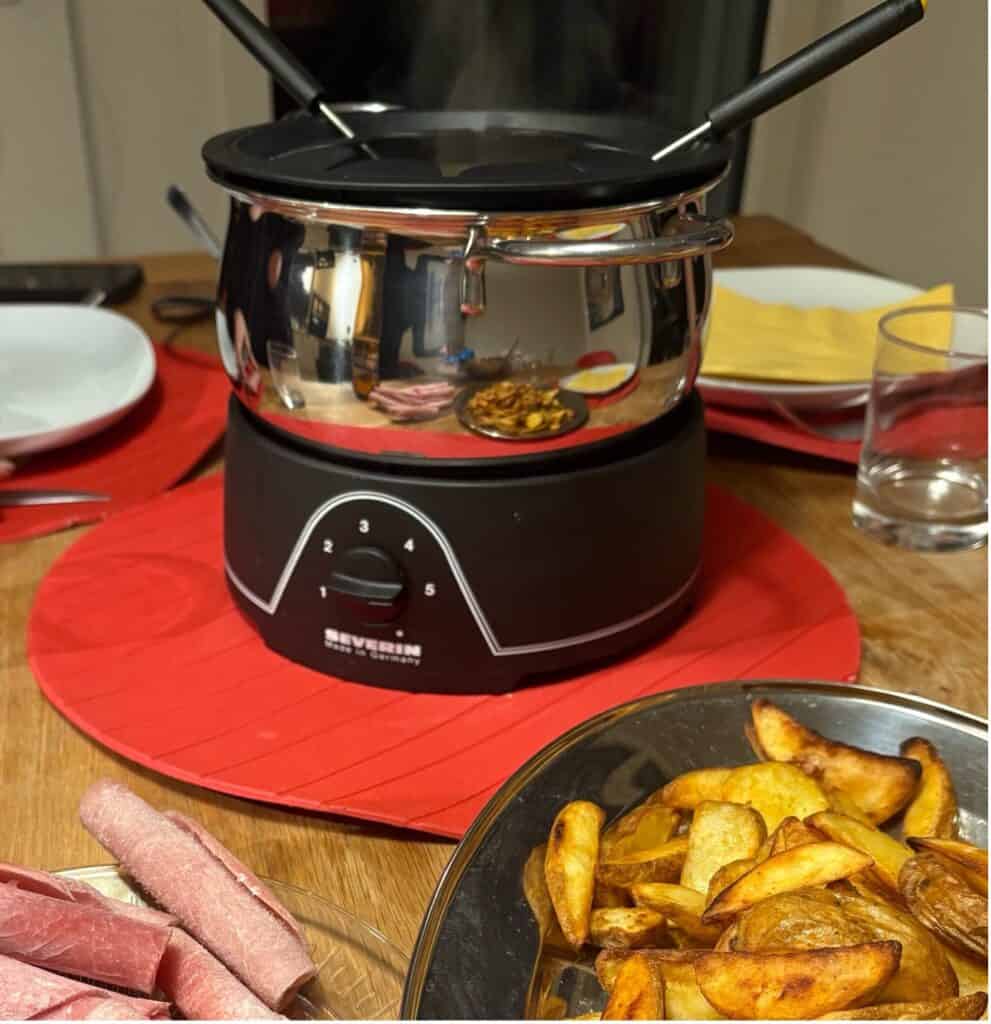
So next time you think of fondue, remember that Switzerland has more to offer than melted cheese. Whether you prefer tender meat cooked in a savory broth or sizzling oil, Swiss meat fondues are guaranteed to delight your taste buds and warm your heart.
If you’re curious to explore more of Switzerland’s food culture beyond the usual clichés, I invite you to keep wandering with me. You might enjoy my article on Swiss Cheese Fondue, where I dive into the most iconic fondue of them all, its rituals, and why it holds such a special place in Swiss hearts.