Looking for a classic Swiss day trip from Zurich that delivers postcard views without a marathon climb? Mount Niesen — the “Swiss Pyramid” — rises above Lake Thun in the Bernese Oberland and is one of those peaks that seems to wink at you from the train window, saying: “Come on up, the view’s worth it.”
Now, yes — you can hike all the way up if you’re feeling heroic (and have a strong relationship with uphill climbing). But if you’d rather skip the sweat, the historic funicular whisks you to the summit in just 30 minutes. On the top you’ll find crisp alpine air, sweeping lake views, and a perfect spot for a little mountain meditation.
And if, like me, you still want your legs to feel useful, I’ll show you a bonus option: a flat riverside walk from the base station at Mülenen to Wimmis, where dragonflies skim the water and the pace is as easy as the path itself.
Where on Earth is Mount Niesen?
Mount Niesen sits above Lake Thun in the Bernese Oberland, a region that feels like Switzerland showing off just a little — dramatic peaks, turquoise lakes, and villages that look too tidy to be real. The mountain is nicknamed the “Swiss Pyramid” because of its perfect triangular shape, which means it’s impossible to miss (and equally impossible not to take about 50 photos of).
How to Get to Niesen
One of the joys of living in Switzerland without a car is that the trains always have your back. From Zürich HB it takes just under two hours: first a smooth ride to Spiez, then a quick hop to the tiny station of Mülenen, which is about as unassuming a starting point for a mountain adventure as you’ll ever find.
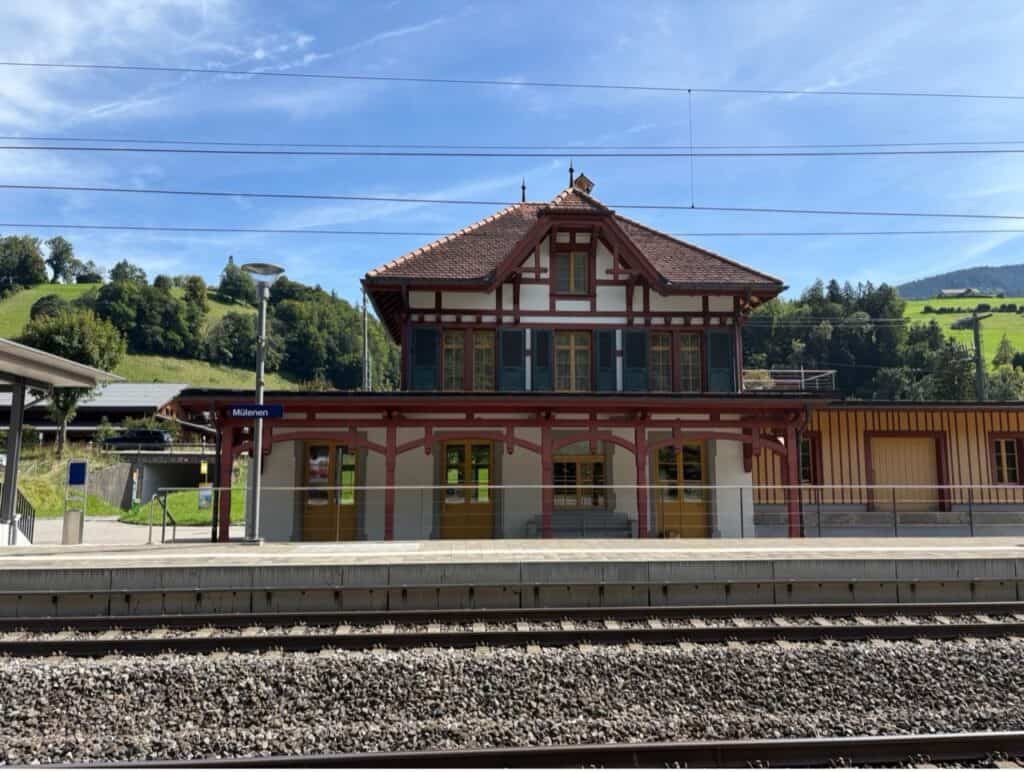
You step off the train, turn around — and voilà, the base station for the Niesen funicular is right there. No shuttle buses, no taxis, no “last mile” stress. Pure Swiss efficiency.
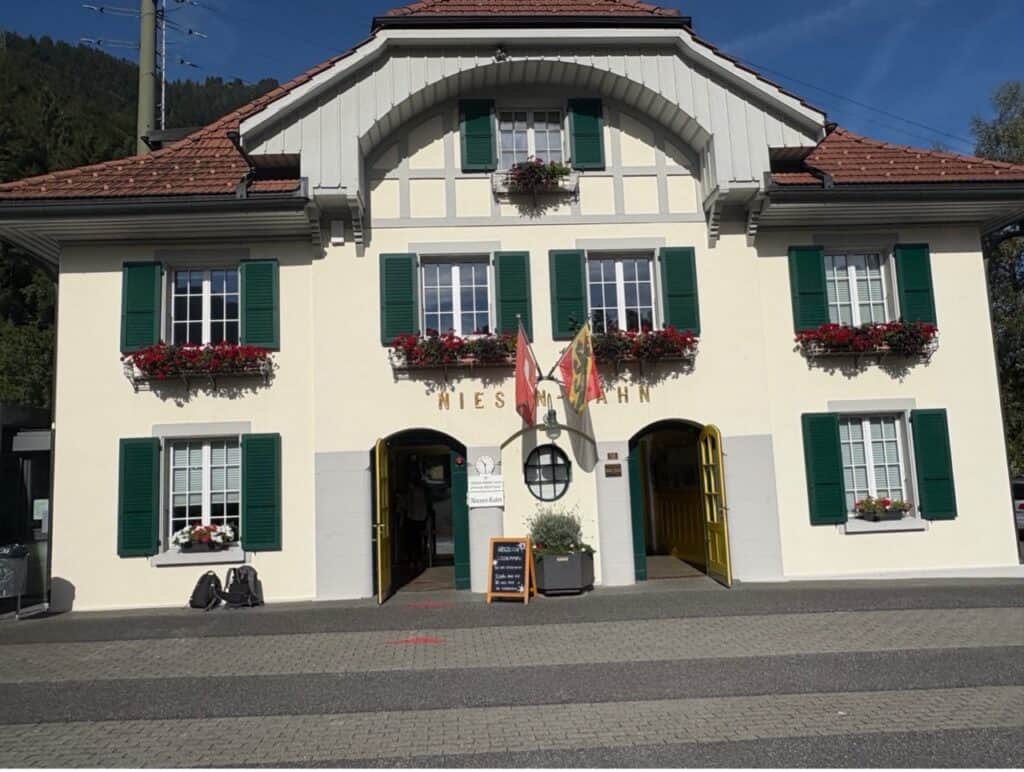
The Steep Ride Up
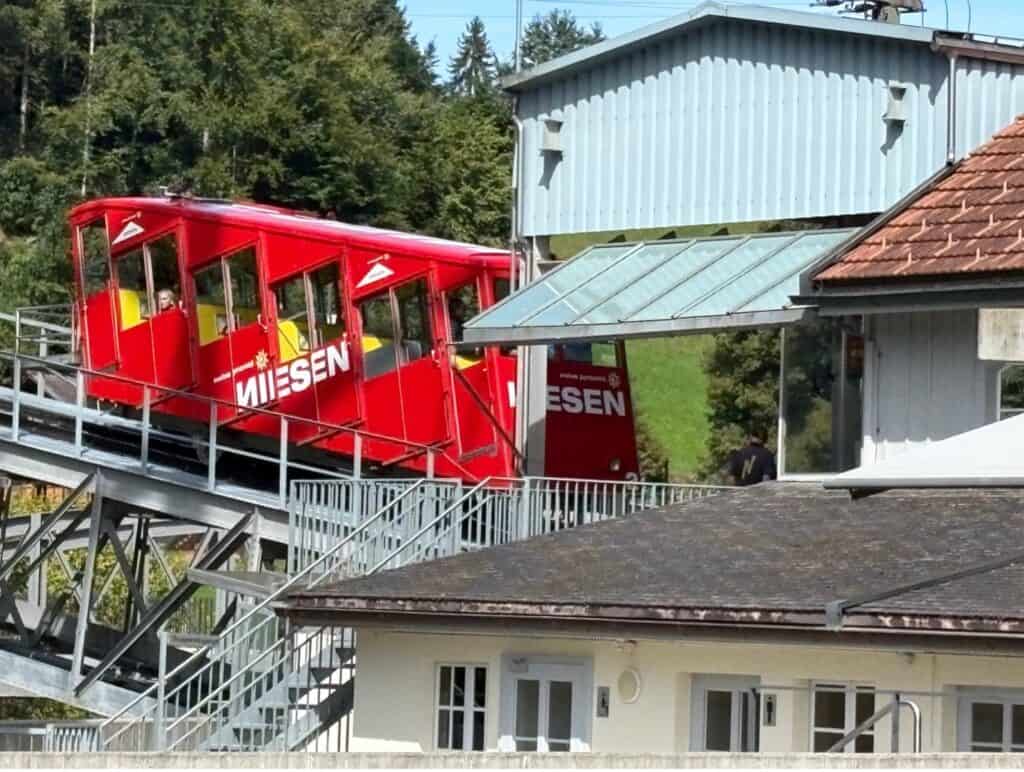
Now, let’s talk about that funicular. It’s not just steep — it’s seriously steep. In fact, it climbs a whopping 1,700 meters in just about 30 minutes, making it one of the longest funicular railways in the world. The track looks like it’s glued straight onto the mountainside, and as the carriage chugs upwards, you can’t help but wonder how on earth people managed to build such a thing back in 1910.
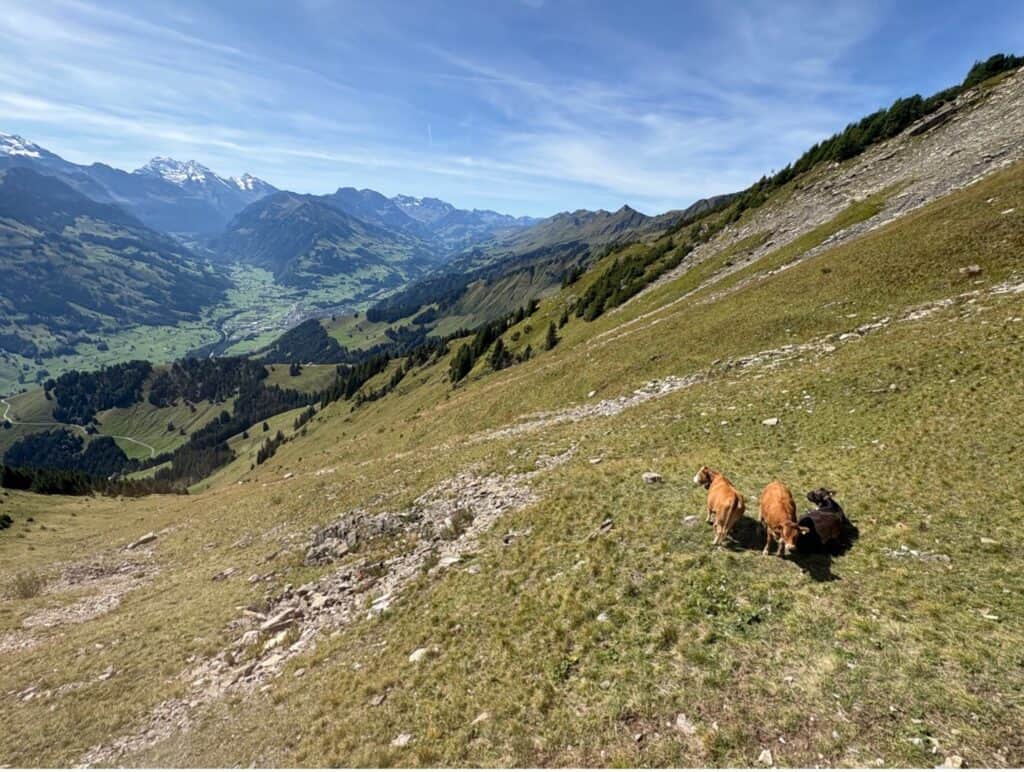
Speaking of which — a little history: the Niesenbahn funicular has been faithfully carrying hikers, day-trippers, and mountain dreamers for over a century. Alongside the tracks runs the Niesen staircase — the longest staircase in the world, with a casual 11,674 steps. Don’t worry, it’s normally closed to the public except for one race each year (for the kind of people who think “vertical marathon” sounds like fun). For the rest of us, sitting back in the wooden seats of the funicular and watching the valley shrink below is more than enough adventure.
At the Top of the Swiss Pyramid
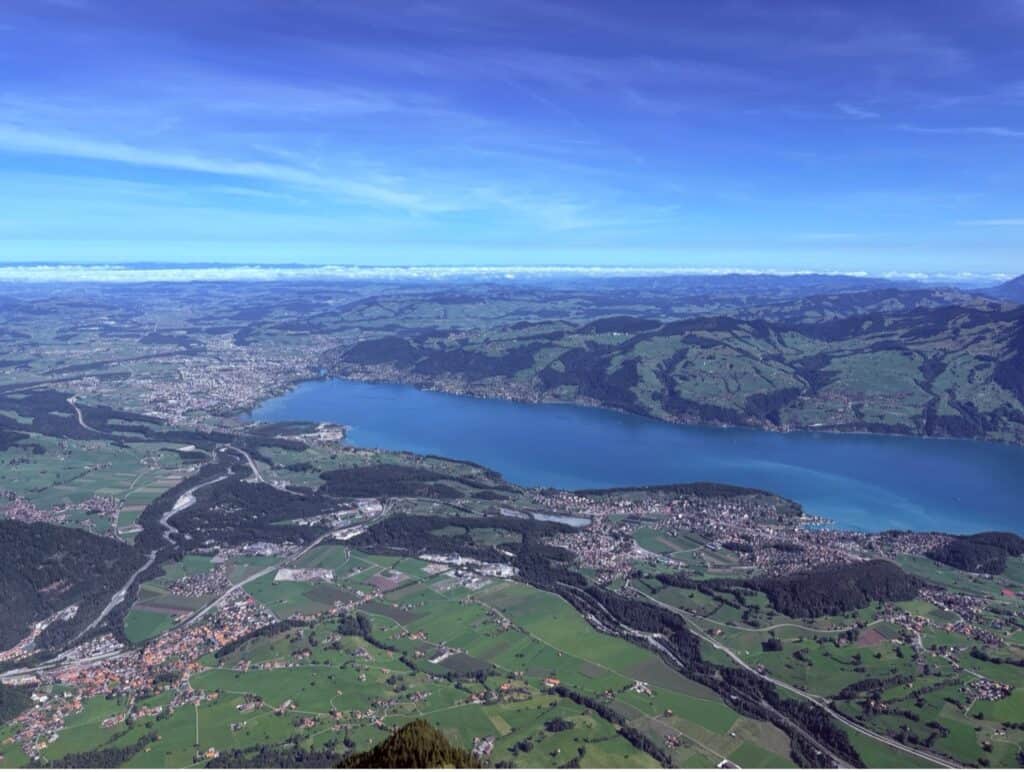
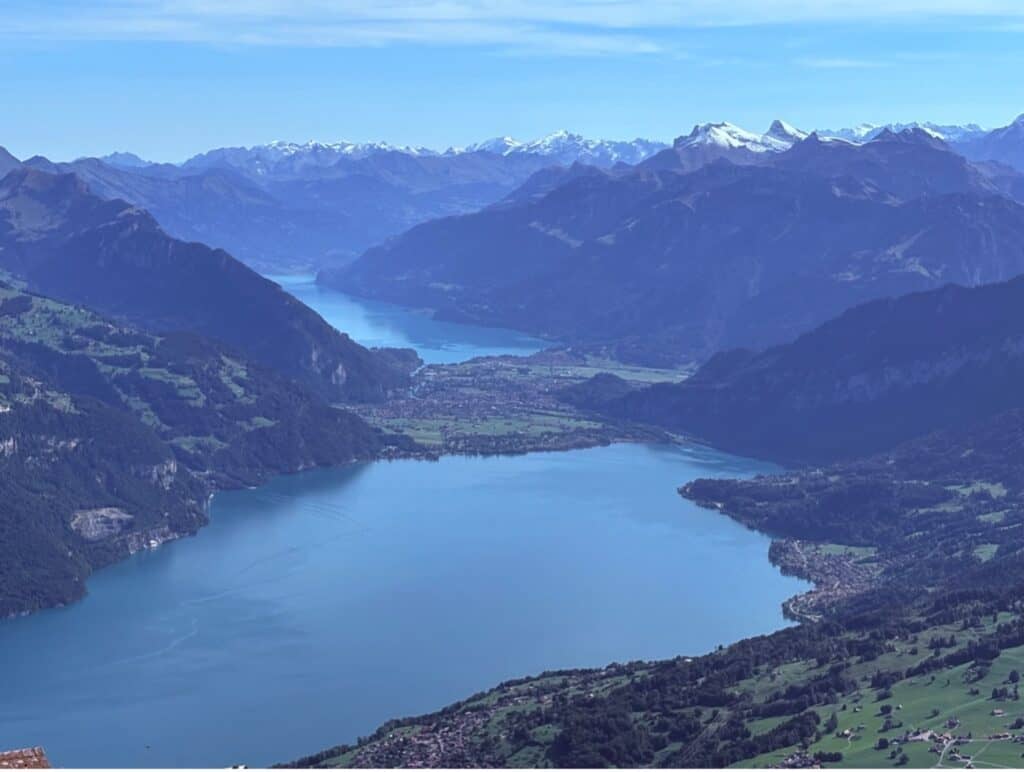
When you step out of the funicular at the summit, it feels a bit like you’ve been dropped onto a balcony built by the gods. The world suddenly stretches wide open in every direction. To the north, Lake Thun shimmers in that almost tropical turquoise, cradled by neat Swiss villages and gentle hills.
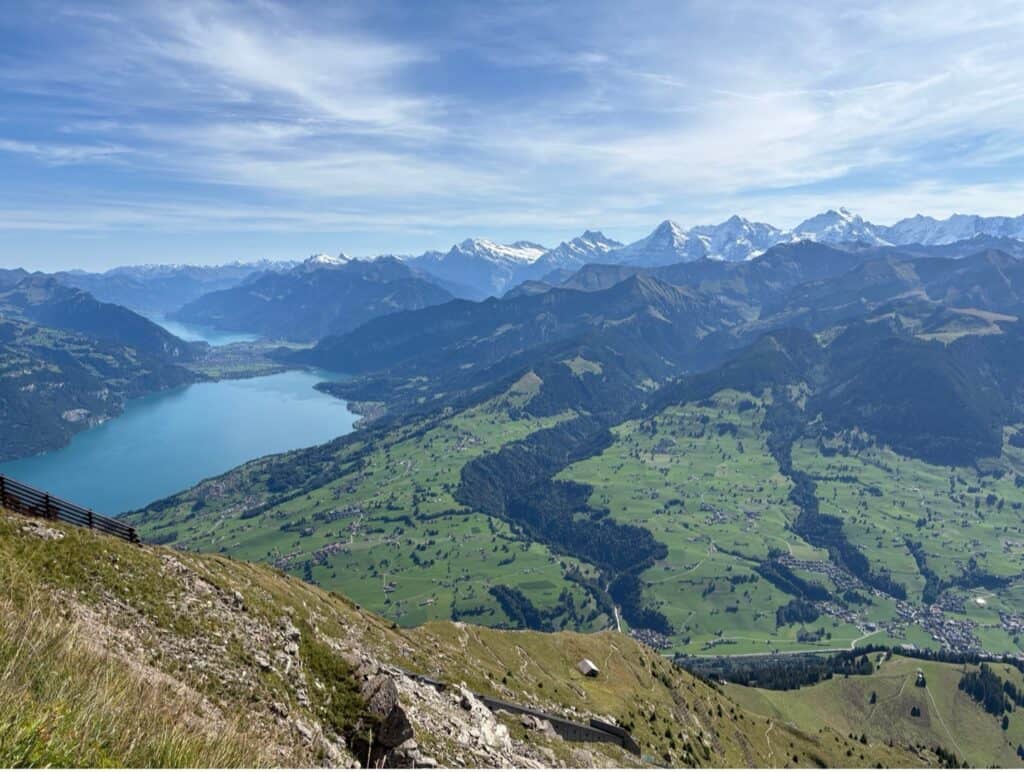
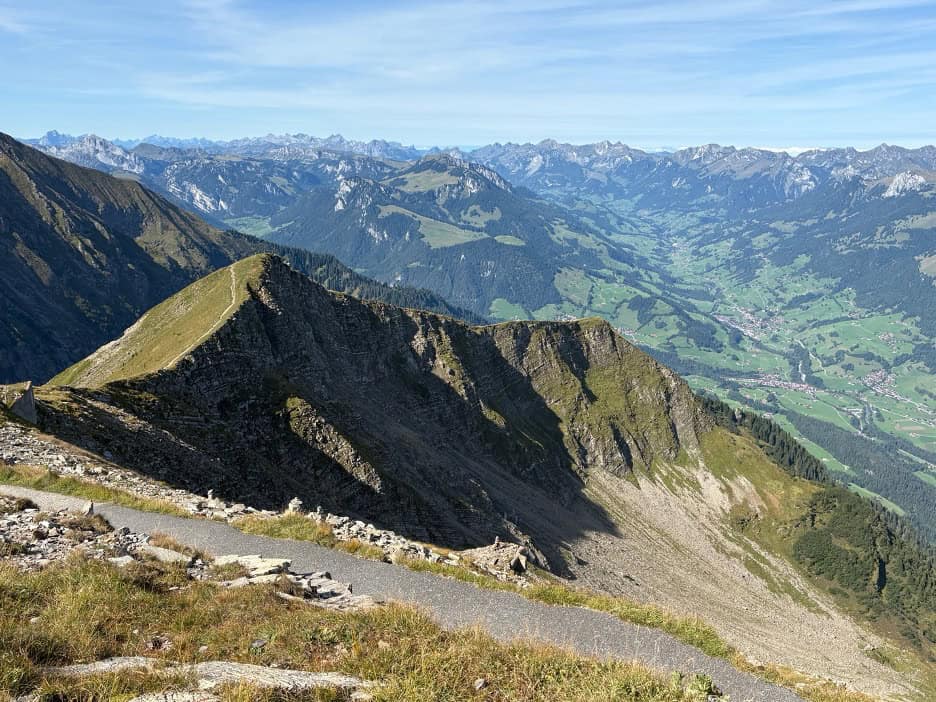
Look east and you catch the Jungfrau Region flexing its snowy muscles. Turn west and the jagged Diemtigtal mountains look close enough to touch. On a clear day, you can see far — really far. The kind of panorama where you find yourself spinning slowly in circles, pointing out peaks to yourself like a slightly dazed tour guide: “That must be the Eiger. Or maybe the Mönch. Wait… hang on…”
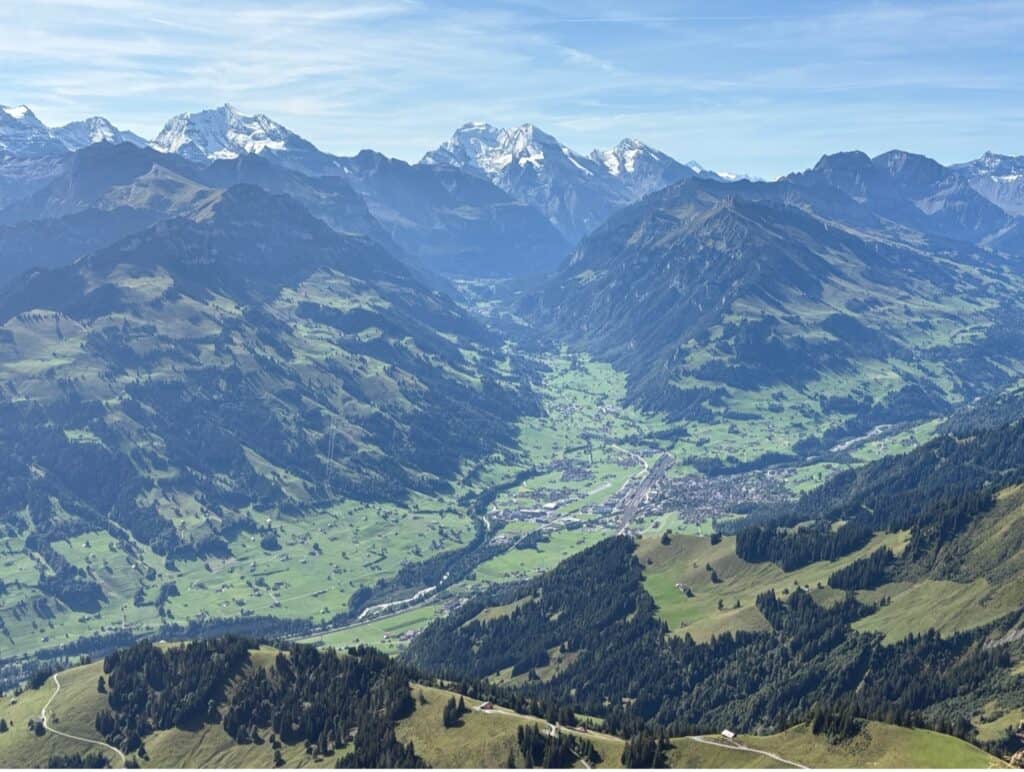
The atmosphere up there is a curious mix. There are hikers triumphantly arriving on foot, cheeks glowing from the 1,700-meter climb. There are families who came up for a gentle lunch with a view (the mountain restaurant does a fine rösti). And then there are people like me — somewhere in between, happy just to sit, breathe in the thin air, and let the silence of the high Alps sink in.
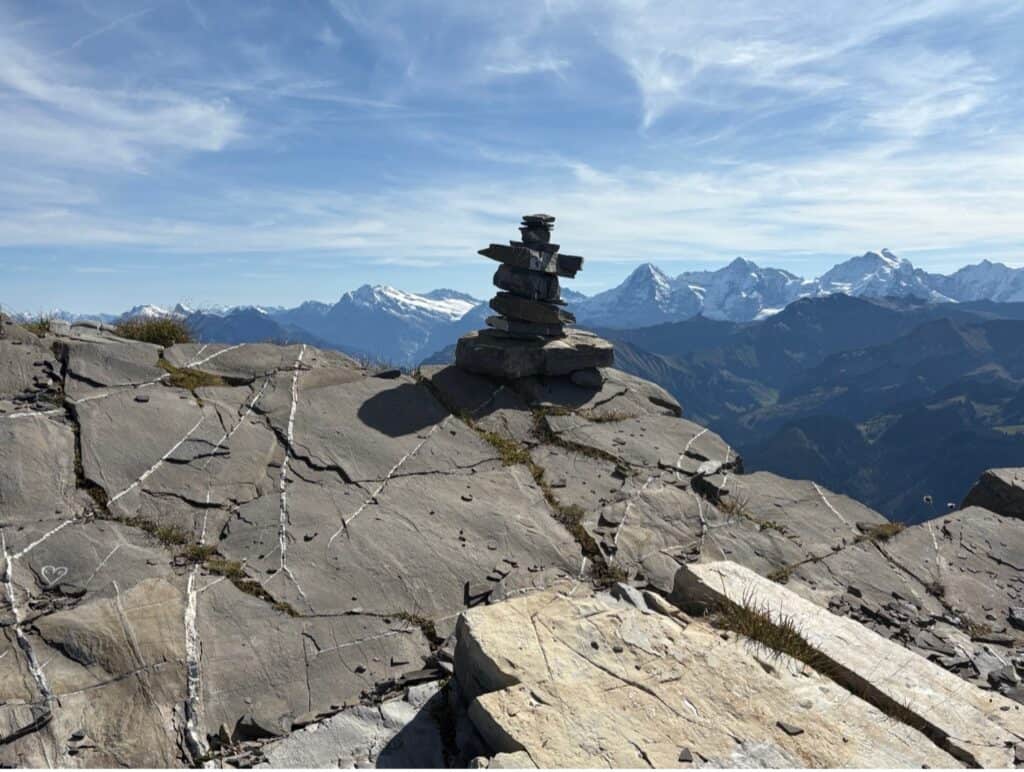
There’s a stillness at the top of Niesen that’s hard to put into words. Even with other visitors around, the sheer space and the sweep of the view invite you to go inward. It’s the kind of place where you suddenly remember to just stand still, listen to the wind, and watch clouds drifting like lazy travelers across the sky. A perfect mountain meditation spot — no yoga mat required.
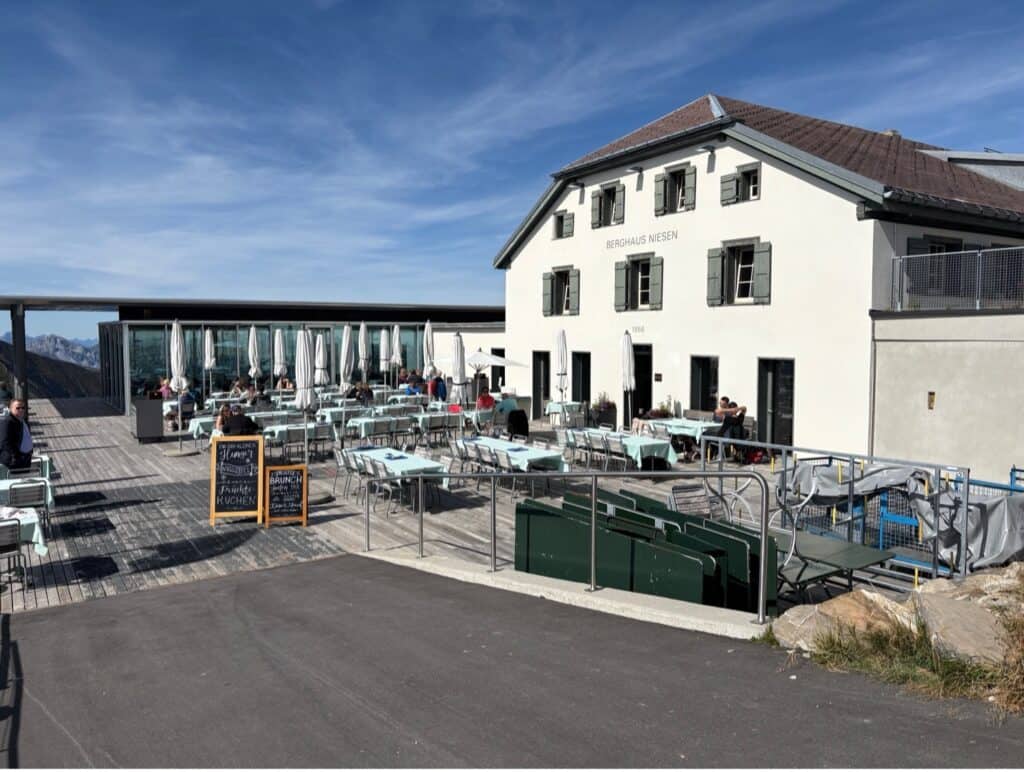
Hungry at the Top? Here’s Where to Eat on Mount Niesen
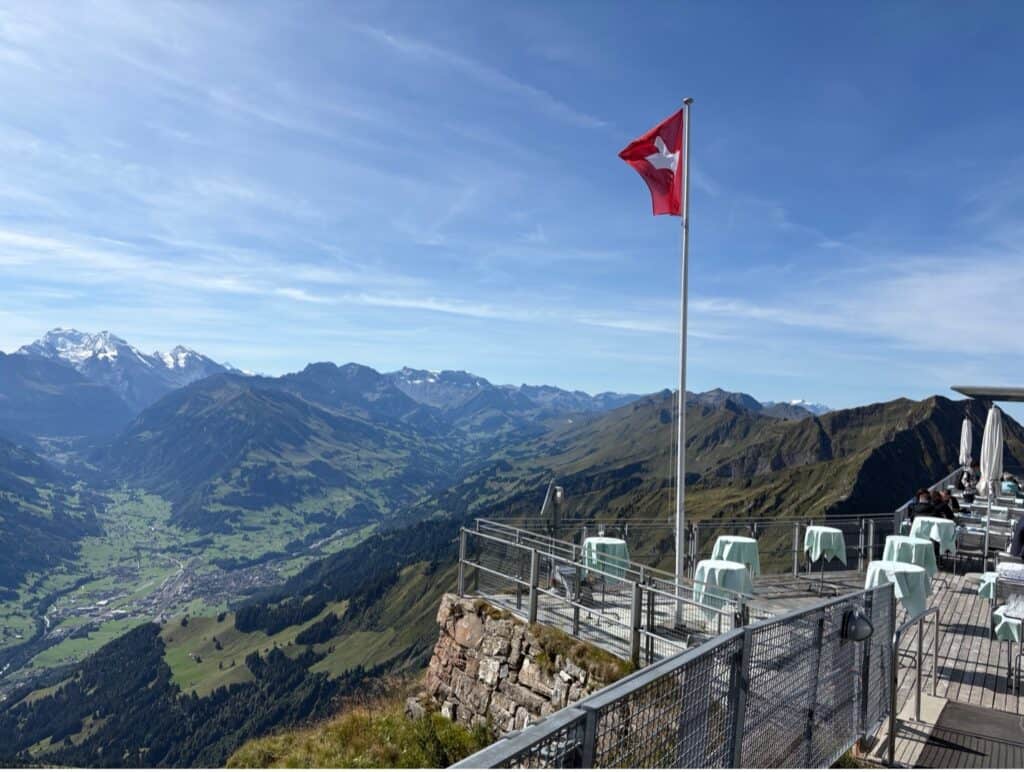
Of course, no great Swiss mountain is complete without a place to sit down, order something delicious, and stare dreamily into the distance — and Niesen doesn’t disappoint. The Berghaus Niesen Kulm, the summit restaurant, feels like it’s hanging right over the valley, with a wide terrace where you can linger over a coffee or reward yourself with rösti, soups, or something sweet.
For lighter moods, there’s also a little kiosk by the viewing platform. Perfect if all you want is an ice cream or a cold drink while wandering from one lookout to the next. I went for the kiosk option — because sometimes happiness is as simple as sitting on a bench with the sun on your face, a refreshing Rivella in hand, and an unobstructed 360° panorama that could make even the most hurried traveler pause.
Whether you linger at the restaurant terrace or perch by the kiosk, the mountain somehow invites you to slow down. No rush, no itinerary. Just you, the sky, and a view so wide it makes everyday worries feel blissfully tiny.
Nightfall on the Pyramid: Sleeping at the Top of Mount Niesen
If you’d like to experience Mount Niesen beyond a day trip, you can stay overnight at Berghaus Niesen Kulm. The mountain lodge offers an all-inclusive “Sunrise Arrangement”, which includes a return trip on the historic Niesenbahn funicular, a hearty dinner (either a Fondue Rustique meat fondue or a themed buffet on evening rides), overnight accommodation in a double room, and a generous Niesen brunch the following morning — all from CHF 204 per adult.
The Berghaus features 11 simple yet charming rooms, each with sweeping views over the Bernese Oberland. One double room includes a private bathroom, while eight double rooms and two twin rooms share common facilities. Though there are no balconies, the panoramic window views at 2,362 metres above sea level more than make up for it.
Back Down to the Valley
Eventually, though, the funicular pulls you gently back to earth. One last glance at those sweeping views, a slow descent through forests and meadows, and suddenly you’re back at Mülenen station — that tiny dot of a place where the great adventure began.
But I wasn’t ready to hop straight back on the train to Zürich. Instead, I let the day stretch out a little longer with a riverside walk along the Kander. From the base station it’s only a few steps to the riverbank, and soon you’re following a path that feels worlds away from the bustle of the summit.
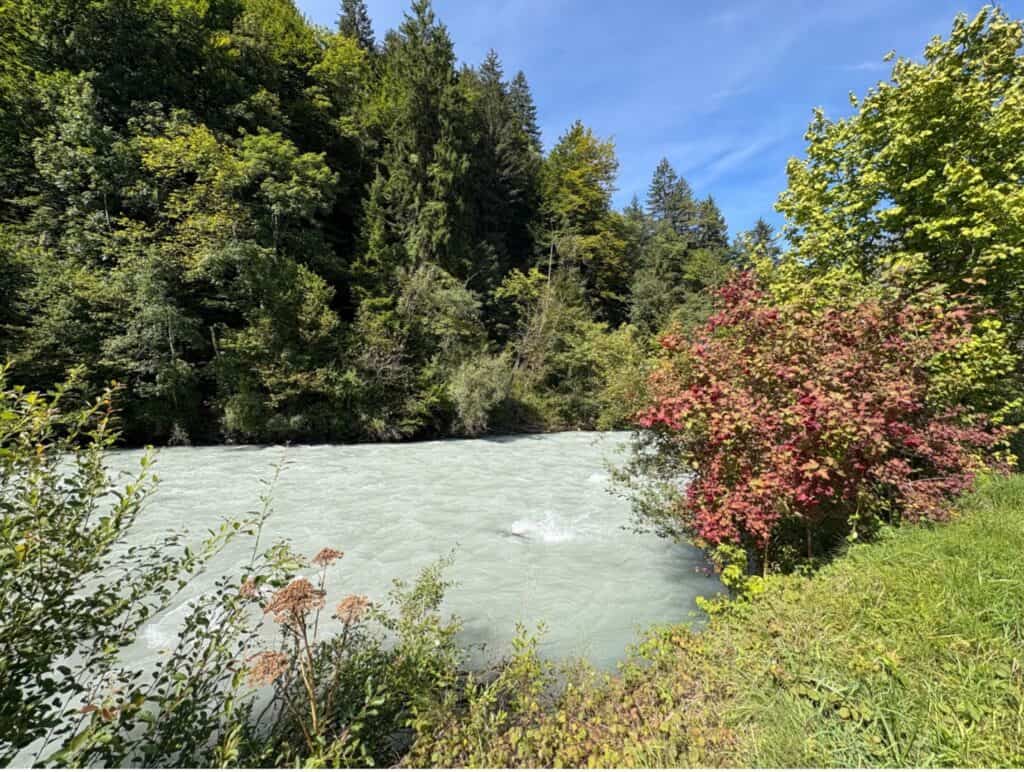
The hike from Mülenen to Wimmis is the very definition of gentle: flat, shaded in parts, with the river whispering alongside you the whole way. It’s the kind of trail where you notice little things — the sparkle of sunlight on the water, the way dragonflies skim just above the surface, the smell of pine as the breeze drifts through the valley. Families with strollers can manage it, joggers dash by, and slow walkers (like me, with my “mountain-high afterglow”) can just meander.
Reaching Wimmis, with its quiet charm and backdrop of cliffs, felt like the perfect bookend to the day: starting with the pyramid-shaped giant of Niesen, pausing in the sky for a while, then unwinding beside a river that has been carving its own path for centuries.
How to Make this Trip Happen
When & How Long
• Funicular Season (2025): Daily from April 26 to November 9, with possible extensions on beautiful days.
• First ride up: Around 8:00 AM from Mülenen — and then every 30 minutes (sometimes more frequently if it’s busy).
• Last descent: Usually around 17:45 from the summit, arriving in Mülenen by about 18:15. On selected Wednesday, Friday, and Saturday evenings you can stay later and catch extended rides until around 22:55.
Pricing (Round-Trip Mülenen ↔ Niesen Kulm) in 2025
| Ticket Type | Full Fare | Reduced (GA / Half-Fare / Swiss Travel Pass, Children 6–15.99) |
| Return trip | CHF 64.– | CHF 32.– |
| One-way | CHF 40.– | CHF 20.– |
| Hiking Ticket (3 funicular sections + 1 on foot) | CHF 51.– | CHF 25.50 |
| Afternoon Deal (after 15:30) | CHF 32.- | CHF 32.- / Kids CHF 16.- |
• Berner Oberland Pass? Travel up the Niesen is free.
Best Time to Visit
If you’re me — a slow, mindful traveler with a GA, Swiss Travel Pass or Half-Fare card — early morning or weekday mid-afternoon is perfect. The air is still cool, the mountain quiet, and the funicular carries you up gently, leaving lots of time for contemplative moments at the top.
Want a sunset and dinner moment? Target Wednesdays, Fridays, or Saturdays for those magical evening trips (and maybe a fondue with a view).
A Day that Stays With You
By the time I caught the evening train back to Zürich, I felt that gentle tiredness only a good day outdoors can bring — lungs still full of mountain air, shoes carrying a bit of riverside dust. Niesen had given me the kind of contrast I love most about slow travel: standing high above it all in the morning, letting the vast views put life into perspective, then later grounding myself with a quiet riverside walk, watching water flow endlessly toward the lake.
And the best part? I never touched a steering wheel. Just trains, funiculars, and my own two feet — a rhythm that feels perfectly in tune with this landscape. For me, that’s what makes days like this so memorable: not just the postcard views, but the way the journey unfolds at human speed, leaving space for pauses, laughter, and little discoveries.
For more inspiration on things to do around Lake Thun, read my blog post on the 11 best things to do at Lake Thun.
For more Bernese Oberland excursions with panoramic views, check out my guide to visiting Niederhorn.