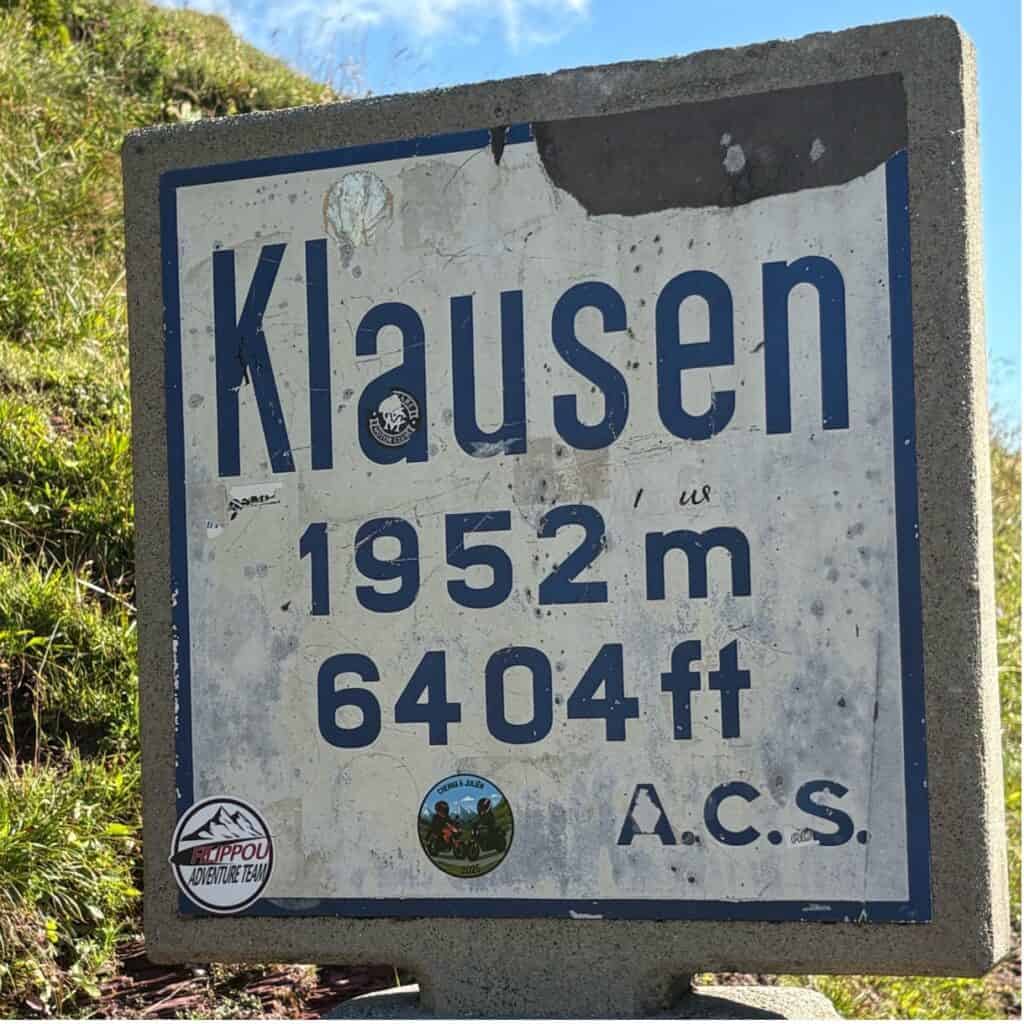
Sometimes, all it takes is a train ride, a bus, and a bit of curiosity to leave Zurich behind and end up somewhere that feels a world away. I don’t own a car (and in Switzerland, I truly don’t miss it), so every adventure I take starts and ends on public transport. This one led me to the Klausenpass — a mountain pass between Uri and Glarus — and from there, a short, easy hike to a tiny turquoise lake called Gletscherseeli, literally “little glacier lake.”
What I love about the Klausenpass is that it’s not just a road that gets you from A to B. It’s a ribbon of history, nature, and stories: post carriages once rattled over its curves, daring race drivers sped up and down it in the 1920s, and today it draws motorcyclists chasing perfect bends and hikers like me looking for quiet alpine moments.
In this post, I’m taking you with me to Klausenpass and on one of the best short hikes in Switzerland, leading to the beautiful Gletscherseeli. I’ll show you exactly how to get there by public transport, what to expect from the hike, and where to eat — or even stay overnight — if you decide this peaceful corner of Switzerland deserves more than just a day.
The Hike from Klausenpass to Gletscherseeli
Starting at Klausenpasshöhe (1,948 m), the hike is short but steady — about 45 minutes to an hour each way, depending on how often you stop to stare at flowers or catch your breath. With roughly 250 meters of elevation gain, it’s not overly long, but it does ask for sure footing, especially once the trail turns rocky near the top.
The route is considered moderate and while it’s well marked and family-friendly, good shoes really matter here. I was glad to have my hiking boots on, and trekking poles would be a smart addition — the loose gravel can be a bit slippery in places.
The best time to do this hike is between June and September, when most of the snow has melted and alpine flowers are in full bloom. If you’re craving a quieter experience, an early-morning start makes all the difference — just you, the mountains, and the Clariden north face towering quietly in the background.
The trail itself begins right next to the restaurant at Klausenpasshöhe. You can’t really get lost here — the path is clear, the hiking signs are unmistakable, and there are no tricky junctions. Perfect if, like me, you sometimes get distracted by flowers, cows, or your own daydreams.
At first, the path follows a small road to the left of the restaurant, climbing quite steeply uphill. This is the most demanding part of the hike, gaining about 100 meters of elevation right at the beginning. It’s one of those sections where your legs wake up faster than your brain, and you start huffing and puffing. I had to pause from time to time—not just to catch my breath, but also to admire the splendid view down toward Urnerboden, a high-altitude valley and Switzerland’s largest alp.
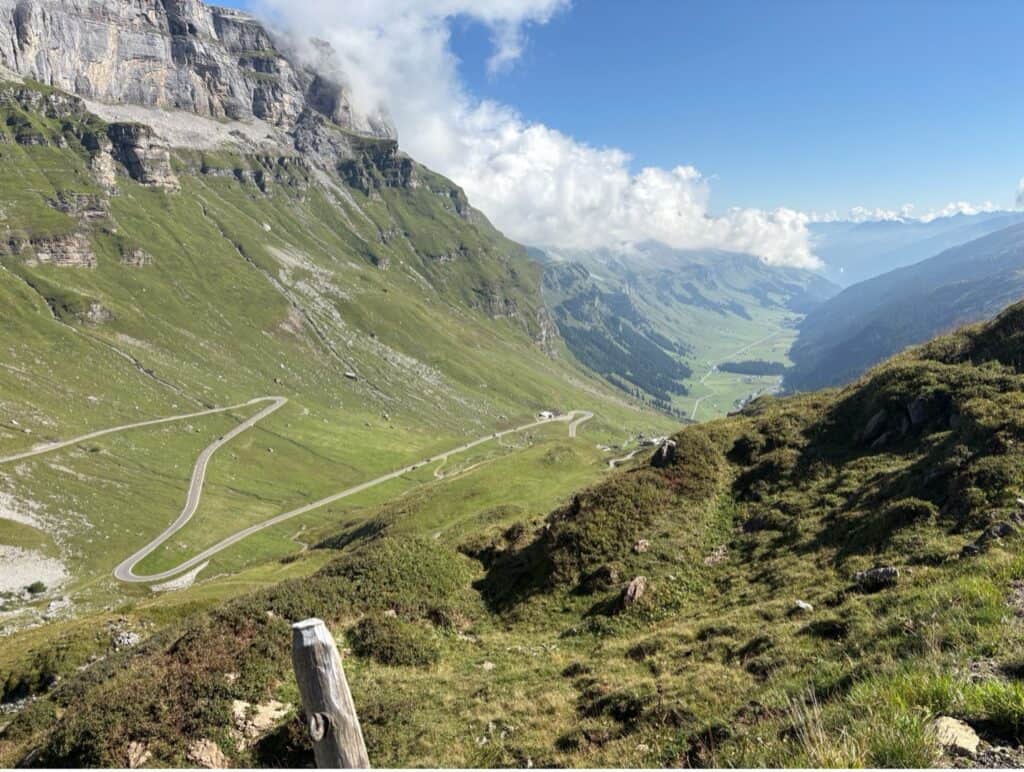
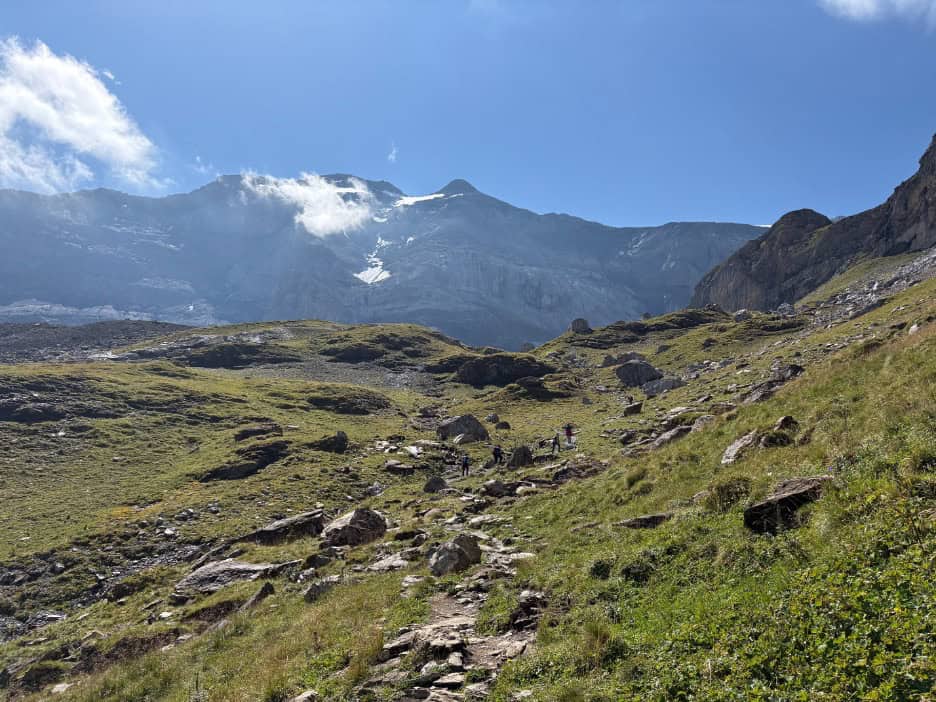
Once you reach the first little rise, the trail leaves the road and turns into a typical hiking path. You start walking through open alpine meadows, heading south toward the imposing Clariden north face, which looms quietly in the distance. Parts of the path are slightly rocky, but nothing technical or scary. Just enough texture underfoot to remind you that you’re in the mountains now.
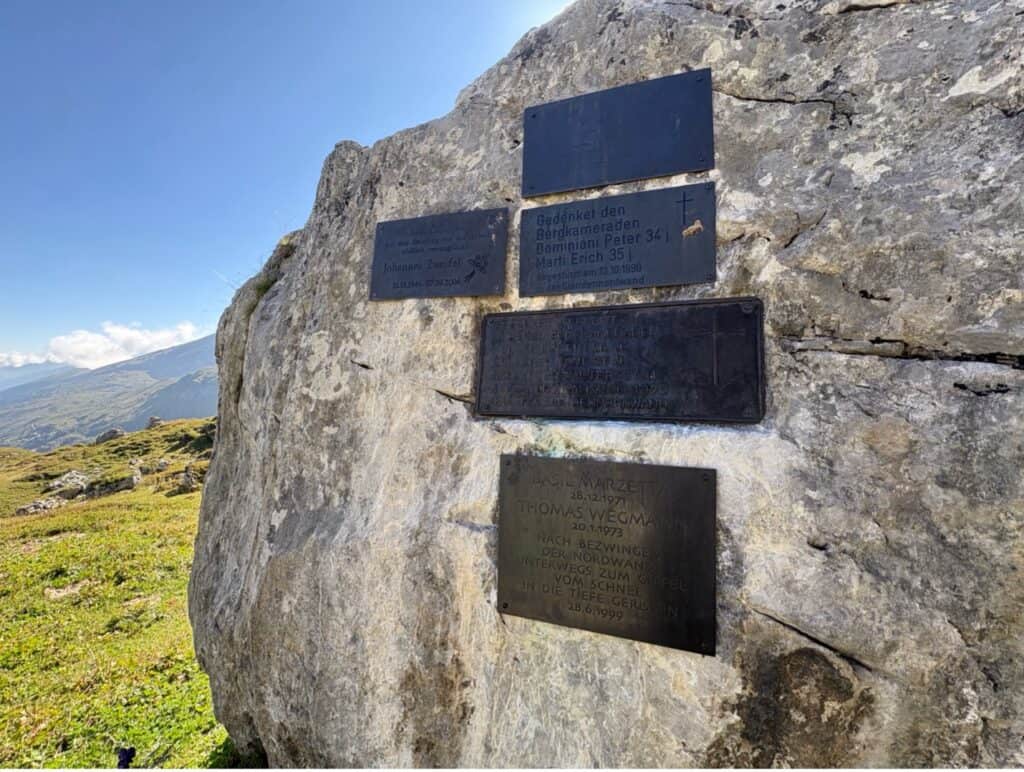
About halfway along, you pass several large boulders scattered across the landscape. One of them serves as a memorial stone for people who lost their lives on the Clariden over the decades. It’s a sobering, grounding moment, a quiet reminder of both the beauty and danger of these mountains.
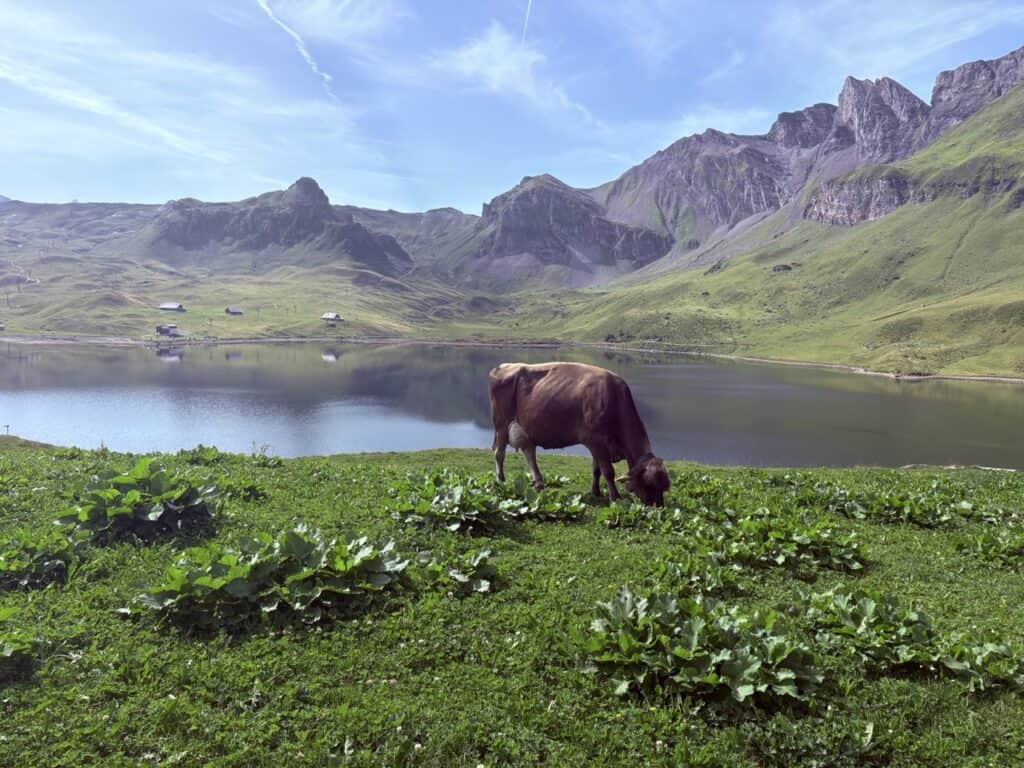
In summer, sheep and cows often graze here, bells clinking softly through the air. It’s idyllic in that very Swiss way that somehow never feels staged.
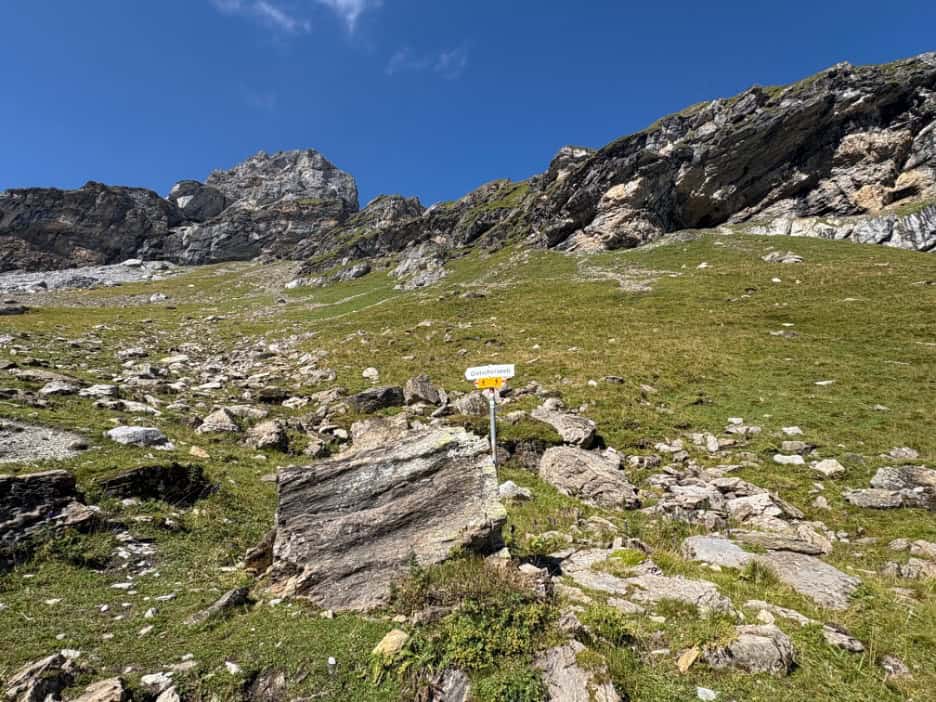
As you near the high plateau, the landscape shifts — the soft green pastures disappear, replaced by rocks and loose gravel that ask for a little more care with each step.
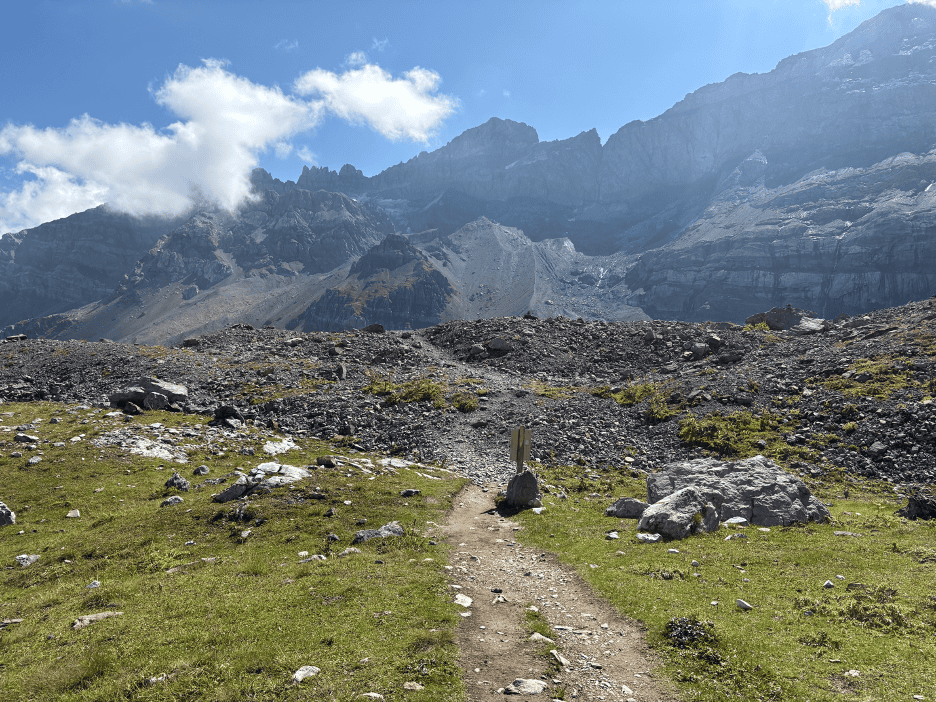
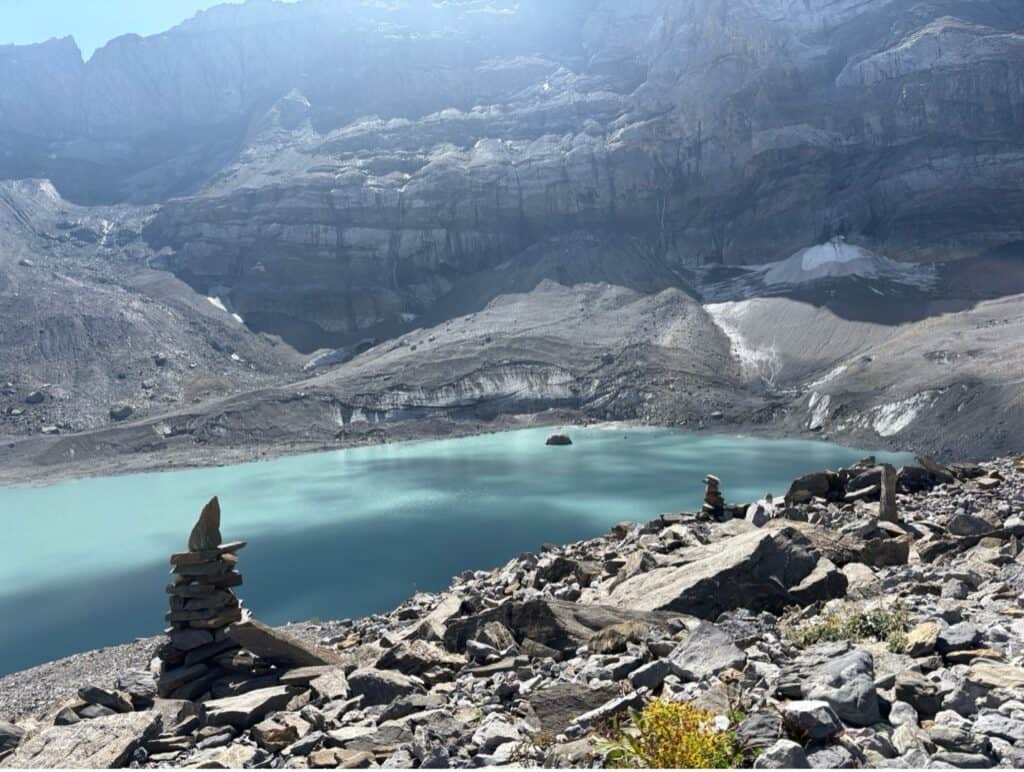
And then, just as the ground feels most barren, the reward appears. At the top, you suddenly catch your first glimpse of Gletscherseeli — and it really does feel like stepping into a different world.
The lake sits in a rocky, crater-like basin, glowing in that unmistakable milky glacier blue that almost looks unreal, like someone turned the saturation up just a little too high. It’s no wonder this spot is such a favorite for photographers.
But even without a camera, it’s mesmerizing.
This is the kind of place where time slows down without asking permission.
I found a comfortable flat rock overlooking the lake and unpacked my picnic — because cheese, bread, and chocolate taste better at altitude, it’s a fact. While I ate, I watched a few kids stacking little stone towers (or Steinmännchen), and of course I couldn’t resist adding my own slightly wobbly masterpiece.
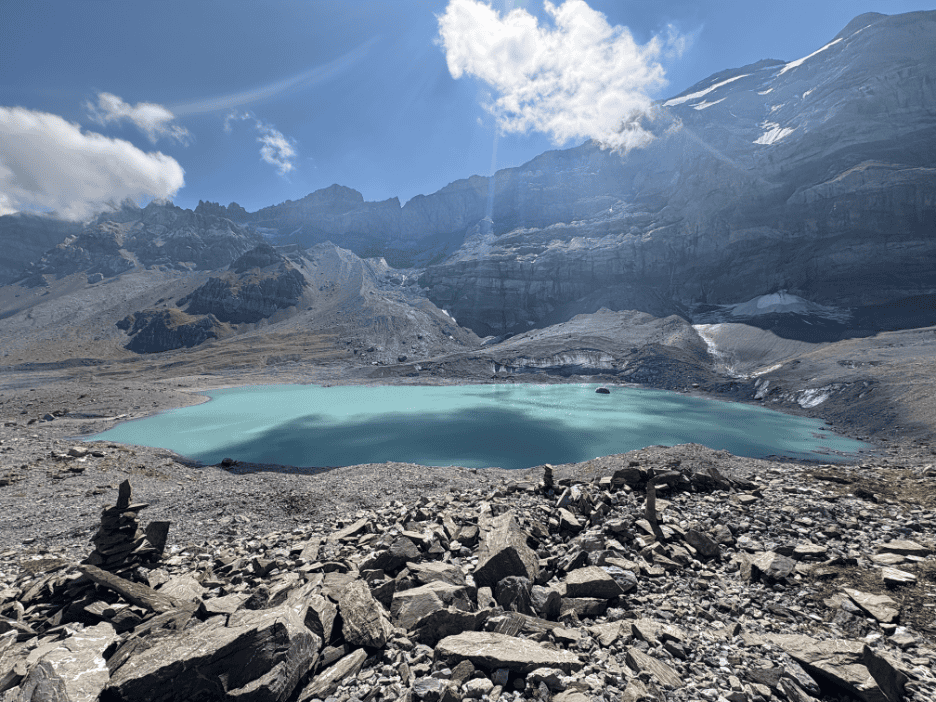
Later, I wandered all the way down to the shore and dipped my toes into the lake. To call it “refreshing” would be a polite understatement — it’s glacier water, after all. Swimming is possible if you’re braver than me, but I settled for an icy footbath that left me awake in every single cell.
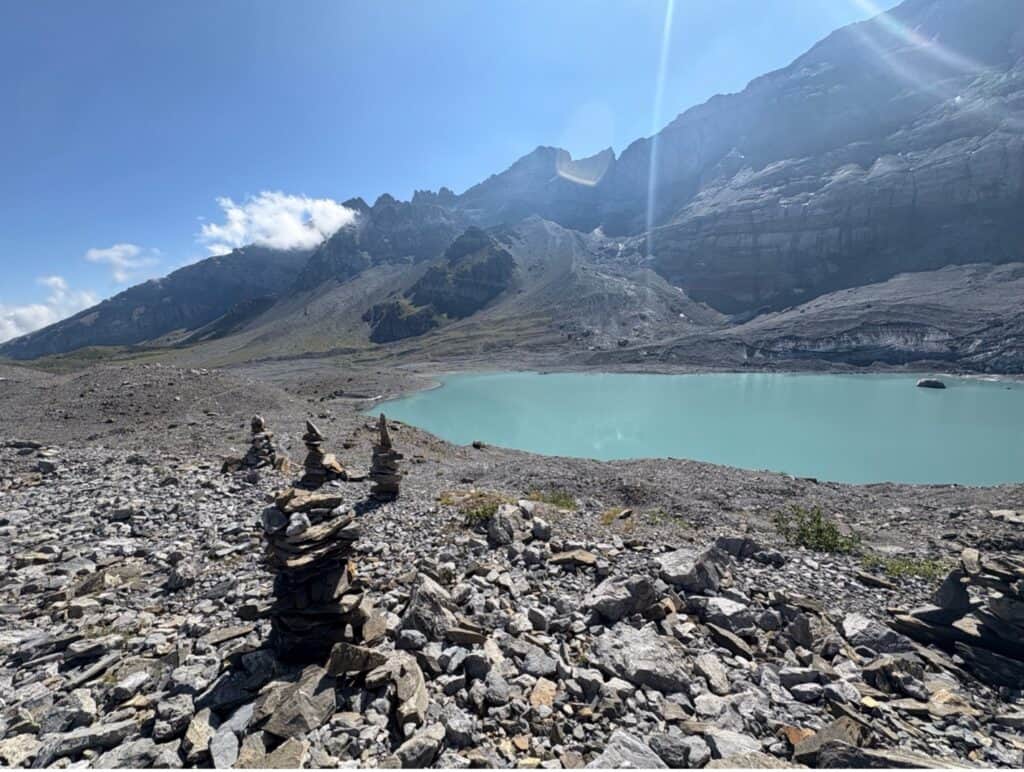
When it was time to leave this magical little landscape, I simply followed the same trail back to my starting point at Klausenpasshöhe.
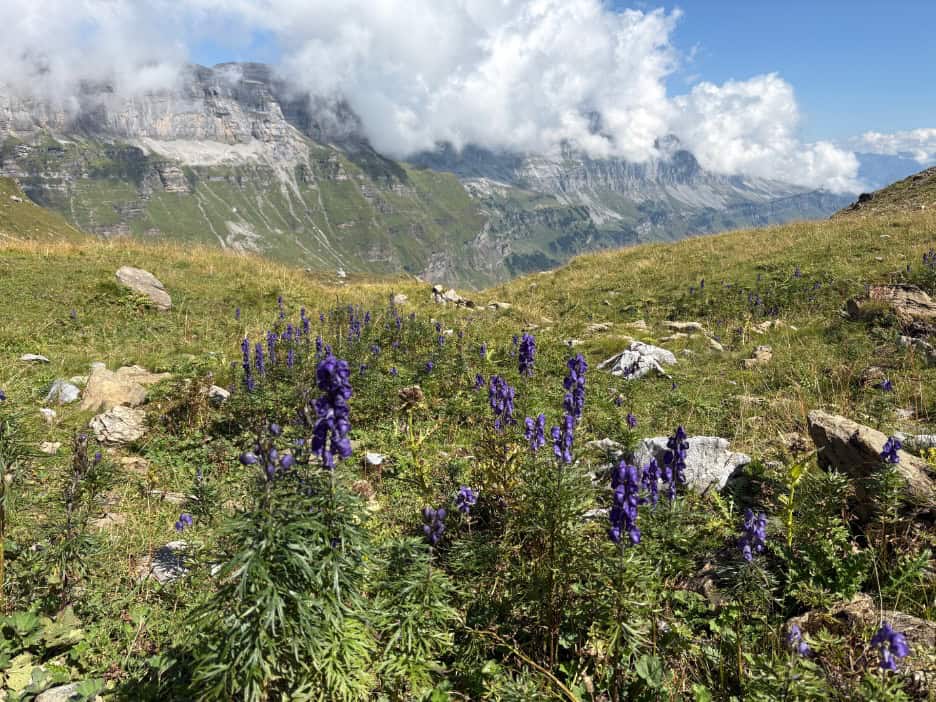
But instead of hopping straight on the bus, I made one more stop — the small alpine chapel right at the pass.
Built in 1938, it was originally intended as a memorial and today serves as a quiet place for reflection and shelter. The interior is simple: wood, stone, and silence. No excess. No distractions. It mirrors the rugged landscape outside perfectly.
It’s the kind of place that invites you to sit for a moment longer than you planned — just breathing, thinking, or not thinking at all.
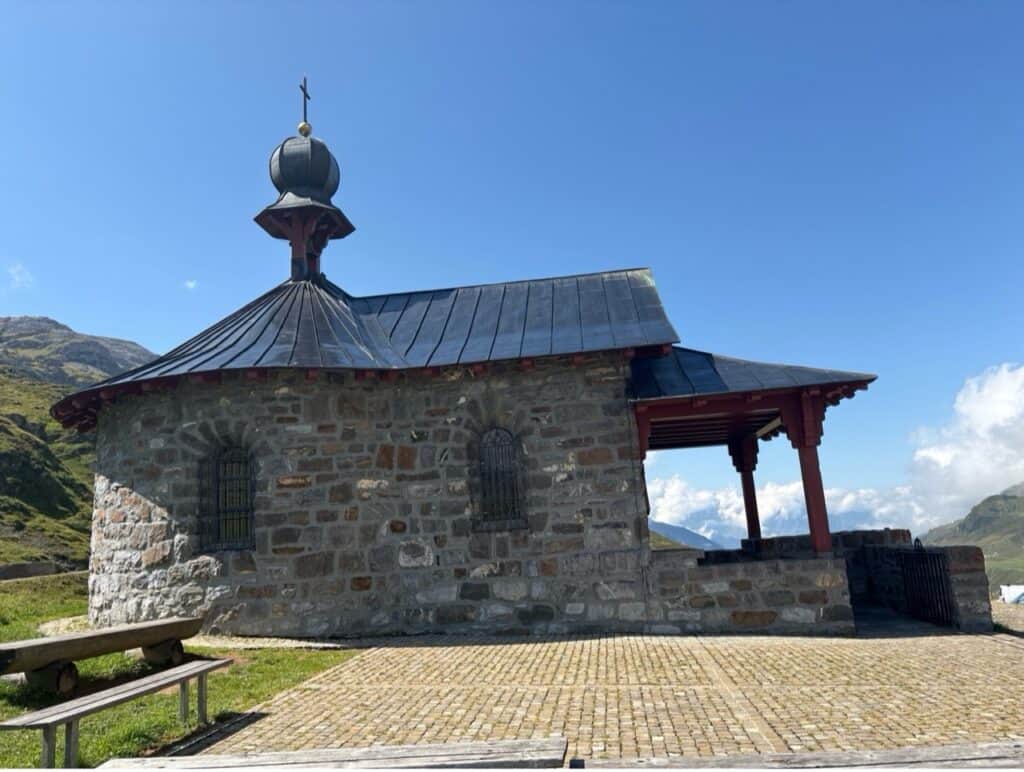
Rather than taking the bus immediately, I decided to walk another 20 minutes downhill toward the Klausenpass Hotel to continue my journey towards Altdorf from there.
How to Get to Klausenpass (and Back)
Like most of my adventures, this one began with a train ride. From Zurich, I hopped on the train to Linthal in Glarus, the last stop at the very end of the valley. From there, a bus whisked me up into the mountains, zigzagging along curves that seemed designed to make the stress of the city slide right off my shoulders.
The ride itself is part of the magic. The bus passes through Urnerboden, Switzerland’s largest alp. Imagine wide green meadows, little farmhouses, and about 1,000 cows happily grazing their summer away. From Urnerboden, the road winds even higher until you finally arrive at Klausenpass Höhe (1948 m).
Now, here’s where my story takes a little twist. I’m not a fan of retracing my steps when there’s a more exciting option. So instead of heading back the way I came, I decided to return on the Altdorf side. And let me tell you: this bus ride is not for the faint of heart. The road is narrow — “how can two vehicles possibly pass here?” narrow — but the views are breathtaking. We even caught sight of the Stäubifall, a waterfall that seems to leap straight out of the cliffside.
The best part? The bus driver was more than a driver — he was a storyteller. Pointing out summits, naming ridgelines, even suggesting hiking routes. By the time we rolled into Altdorf, I felt like I’d had my own personal mountain tour. From there, it was an easy train ride back to Zurich, tired but happy.
Where to Eat (and Where to Stay) at Klausenpass
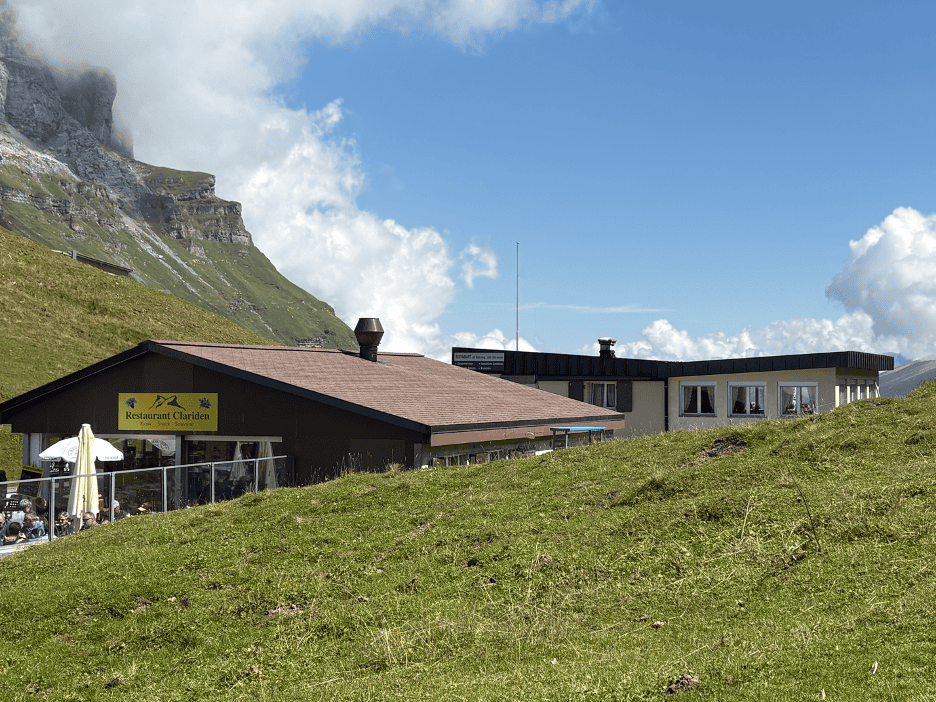
At the top of Klausenpass, you don’t just get sweeping views — you also get a few cozy spots to refuel. Right by the pass road you will find the Kiosk-Restaurant Klausenpass and the Alpenkiosk Restaurant Clariden, perfect for a coffee, a slice of pie, or something hearty before (or after) your hike.
A little further west, you’ll find the Hotel Klausenpass. The original building dates back to 1903, and after a complete renovation it reopened in summer 2021. It’s simple, modern, and exactly the kind of place where you can watch the light shift across the mountains with a glass of wine in hand. They also serve meals, so even if you’re not staying overnight, it’s worth popping in for lunch or dinner.
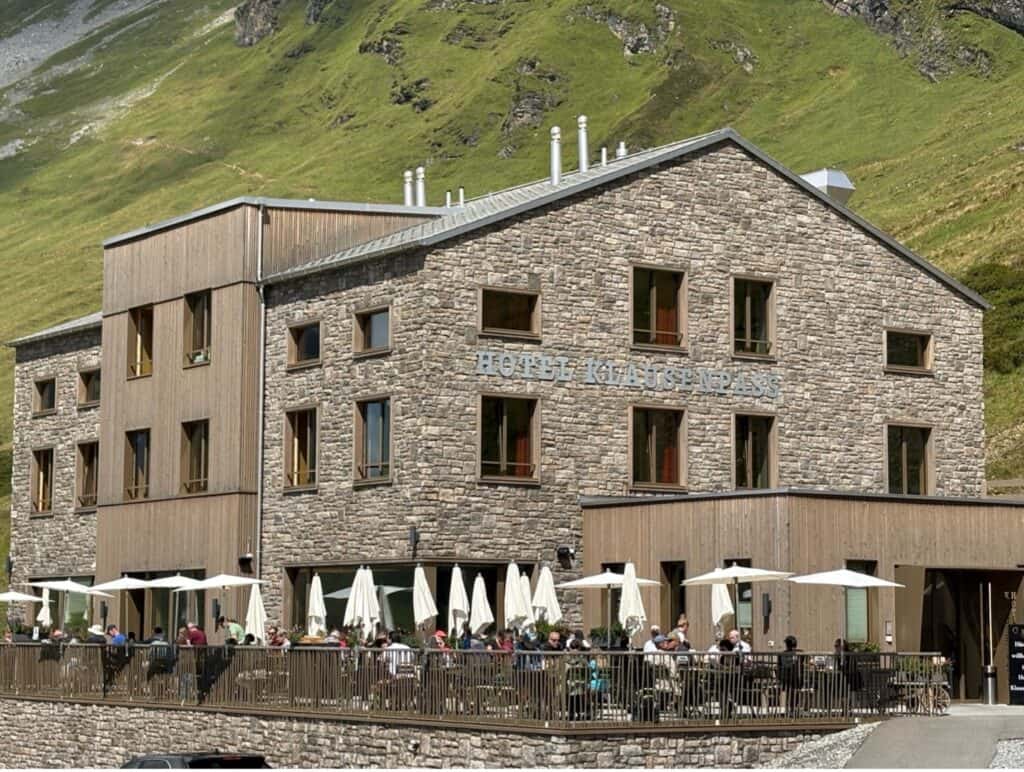
If you’d like to stay in the area a bit longer, Hotel Klausenpass makes a wonderful base. Imagine waking up at nearly 2,000 meters above sea level, with trails starting right outside the door — no commute, just pure alpine stillness. For slow travelers like me, it’s tempting to plan a whole weekend here rather than just a day.
And if you prefer something more rustic? Urnerboden (halfway up the pass on the Glarus side) has guesthouses and alpine inns, plus plenty of local cheese to keep you happy. Staying there means you’re right in the middle of Switzerland’s largest alp, surrounded by plenty of cows for company.
When to Go to Klausenpass and Gletscherseeli
Klausenpass is only open seasonally, usually from June to October, so timing really does matter when planning a visit. During the main summer season — from June to mid-September — buses cross the pass four times a day in each direction, all the way to Linthal. In the quieter shoulder season, from mid-September to October, service is reduced to two daily connections, one of which turns around in Balm (Klausenpass). If you’re relying on public transport, it’s always a good idea to double-check the current timetable of the bus company before you go. The full journey from Linthal (GL) to Altdorf (UR) via the Klausenpass bus line typically takes around 2 hours, depending on the specific connection and stops.
The good news: Swiss public transport passes like the Halbtax, GA, Tell Pass and Swiss Travel Pass are all valid on the Klausenpass line, and should you not already have tickets, they are easy to buy — online, at staffed ticket counters, via apps, or directly from the bus driver.
Each season has its own personality. Early summer feels fresh and a little wild, with lingering patches of snow along the trail and alpine meadows bursting with flowers (and very vocal cows).
By July and August, the hiking path is usually completely clear, the bus schedule runs smoothly, and the long days invite you to linger by the lake without ever checking the time. September is quieter and calmer, with crisp air and soft, golden light — perfect if you like your mountain moments a little more contemplative.
After that, winter slowly claims the pass again, and Klausenpass slips back into silence until the next hiking season.
Conclusion
Even though the Klausenpass can still get quite lively today — especially on sunny weekends when motorcyclists come to enjoy its legendary curves — the short hike to Gletscherseeli offers a peaceful contrast. Up by the lake, the sound of engines fades, replaced by the soft whistle of the wind and the gentle clinking of cowbells. It’s the kind of quiet that reminds you why these alpine places are so special: wild, unspoiled, and deeply restorative.
If you’d like more inspiration for what to do in the cantons of Uri and Glarus, check out my other articles on nearby alpine gems such as Lake Klöntal, Mettmenalp and Garichti Lake in the canton of Glarus and Golzernsee, as well as the spectacular Stäubi Waterfall in the canton of Uri. The Aeschi waterfall, by the way, is only about an hour’s walk from one of the PostBus stops along the Klausenpass route — but more on that in my blog post!