If you love easy day trips by public transport and have a soft spot for castles, the Bellinzona castles hike is one of the most rewarding experiences you can have in Switzerland, but somehow, it still flies under the radar.
As someone living in Switzerland and constantly hopping on trains for spontaneous day trips, I’m always looking for places that are simple to reach but feel genuinely special. Bellinzona, the capital of Ticino, is exactly that: a charming Old Town with an Italian flair, backed by three impressive medieval castles connected by a scenic trail and all part of a UNESCO World Heritage Site.
On a cold, rainy day in March, I did something very Swiss: checked the weather, spotted a tiny window of “maybe sun” south of the Alps, and jumped on a train without overthinking it. Instead of continuing on to the lake resorts Lugano or Locarno, I decided to get off in Bellinzona, and it turned out to be the perfect choice.
My plan (if you can call it that) was simple: follow the castle trail linking Castel Grande, Castello di Montebello, and Castello di Sasso Corbaro. The route itself is fairly easy but involves some uphill walking. But don’t worry: if you’d rather skip the climb, there are transport options to help along the way.
In this guide, I’ll walk you through the Bellinzona castles hike step by step, what to expect along the trail, and practical tips to help you plan your own relaxed day trip.
The Bellinzona Castles Hike: Step by Step
A Slow Start in Bellinzona’s Old Town
I started my hike at the Bellinzona railway station. From there, it’s an easy stroll into the historic center. A wide shopping street guides you forward and within just a few minutes you find yourself standing on Piazza della Collegiata — the heart of the old town.
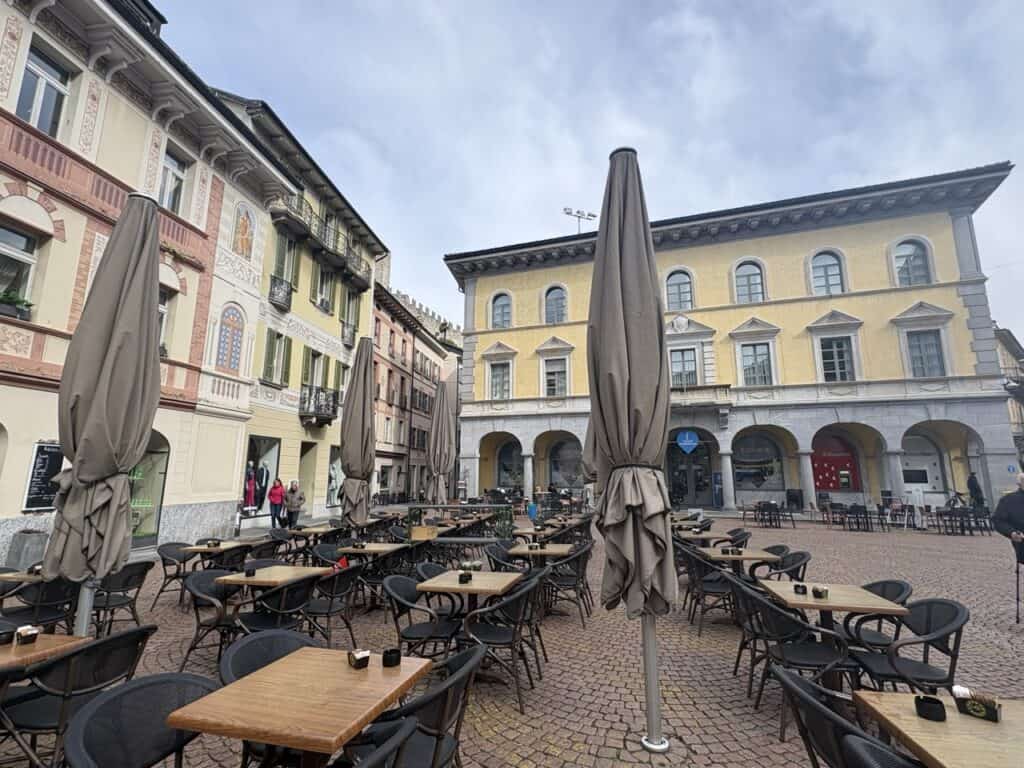
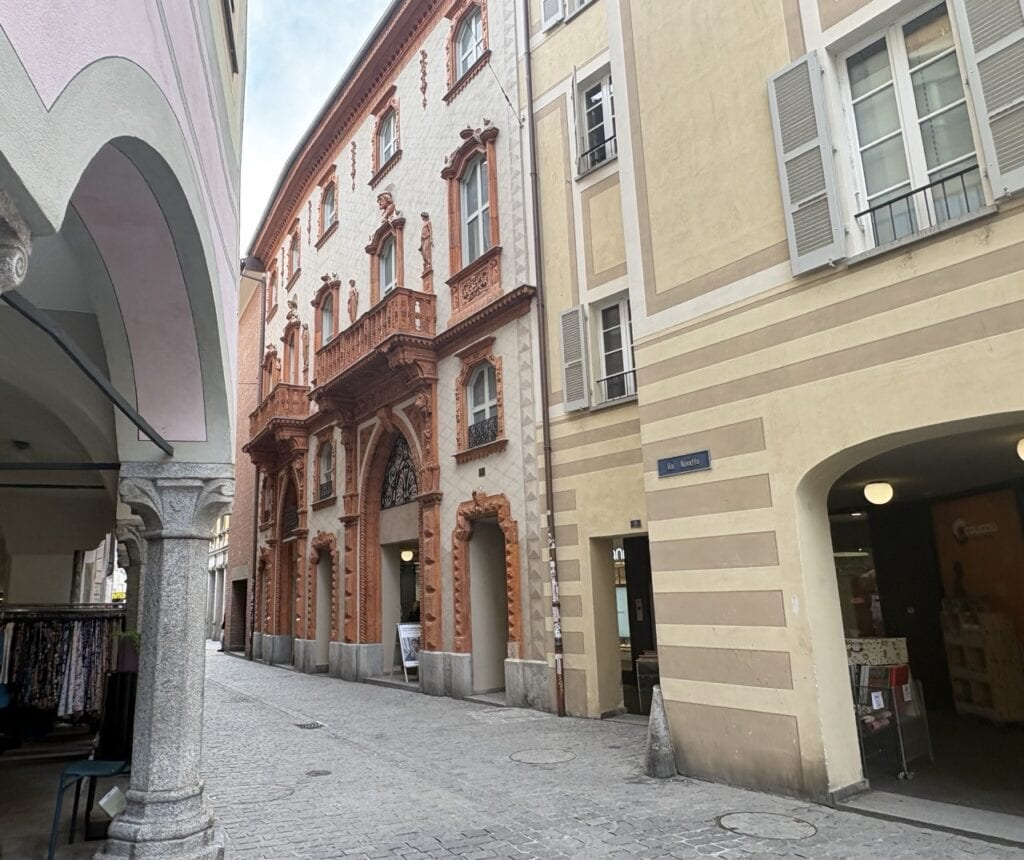
I hadn’t had breakfast (classic), so before doing anything remotely “cultural,” I followed my instincts and stopped for a quick espresso and a cornetto.
Bellinzona’s old town may be small, but it feels rich in all the right ways. Cobbled streets, pastel façades, quiet corners, and that gentle rhythm of southern Switzerland.
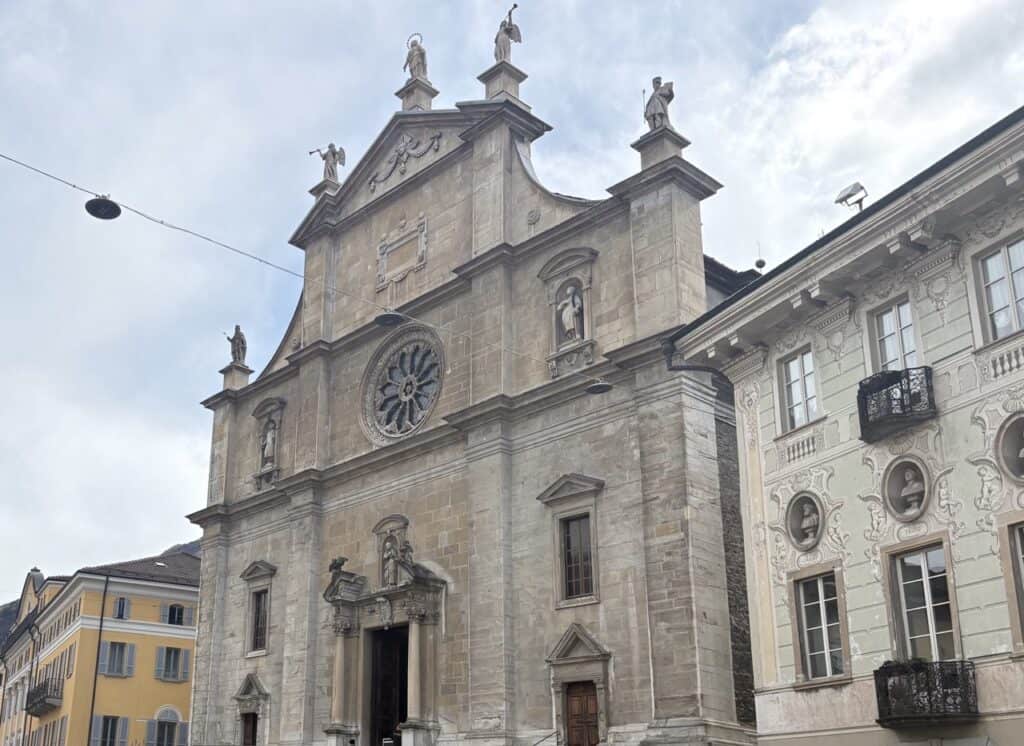
If you have time, step inside the Renaissance Collegiate Church of SS. Pietro e Stefano with its striking marble façade, and pass by the Palazzo Civico, a building that looks centuries old but is actually a careful reconstruction from the early 20th century, preserving elements of its much older predecessor.
And if you happen to visit on a Saturday, you’ll stumble right into the weekly market, a perfect excuse to sample a few local specialties.
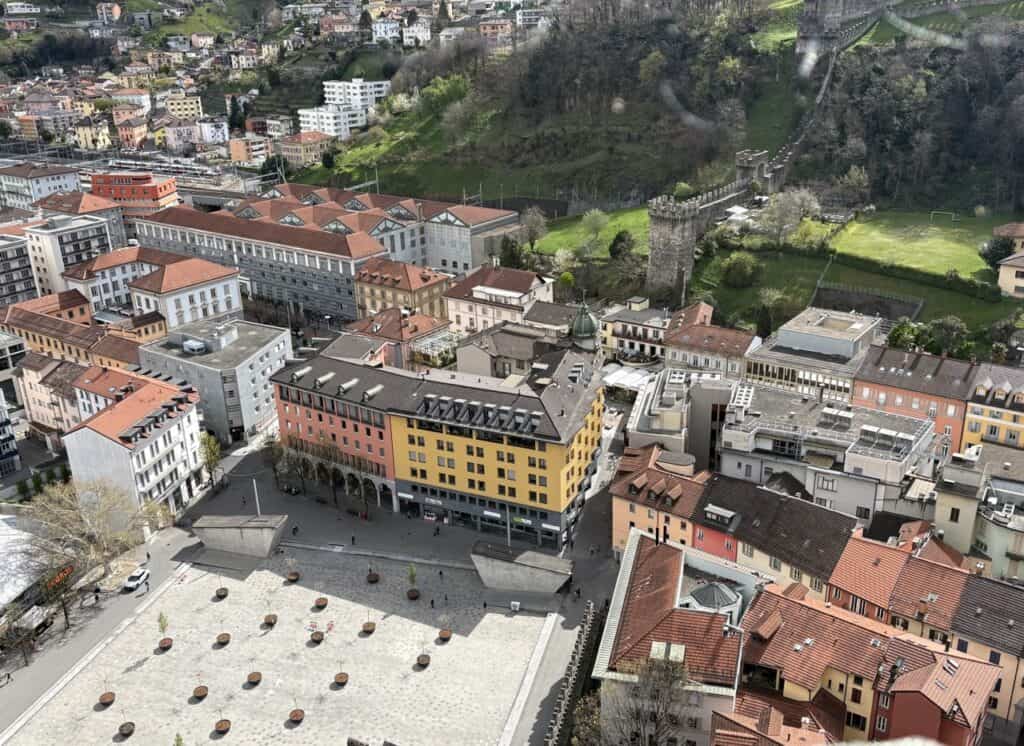
Climbing Up to Castel Grande
Caffeinated and happily unhurried, I made my way toward the first castle: Castel Grande.
From Piazza Collegiata and nearby Piazza Nosetto, steep cobbled alleys begin to wind their way uphill.
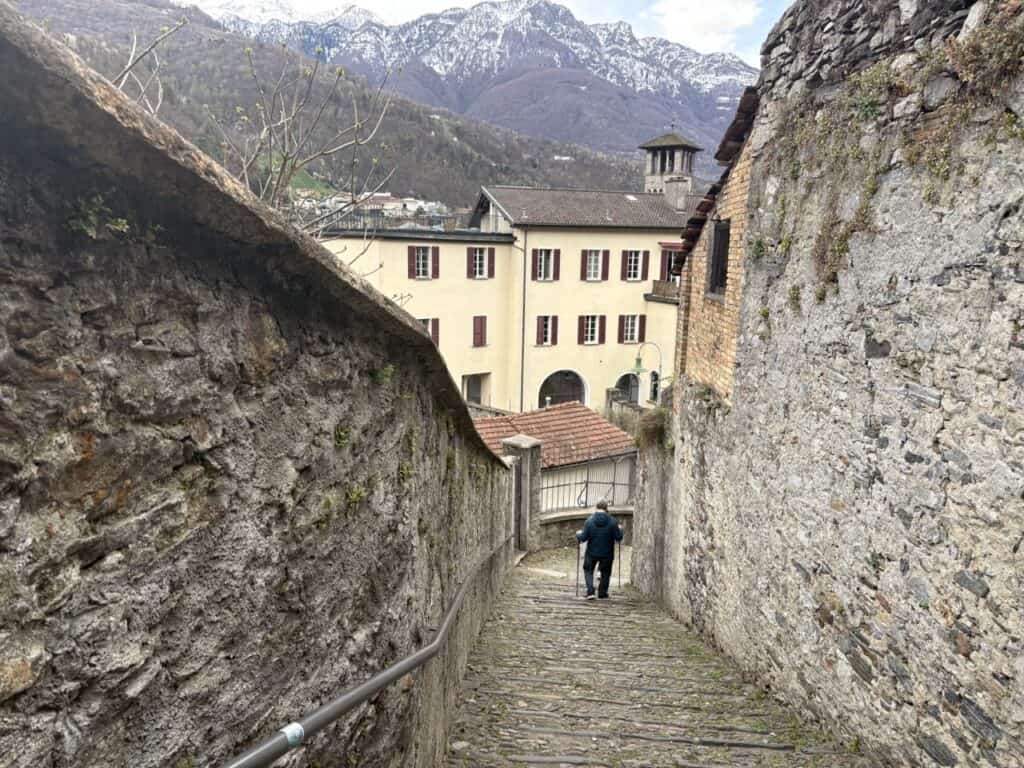
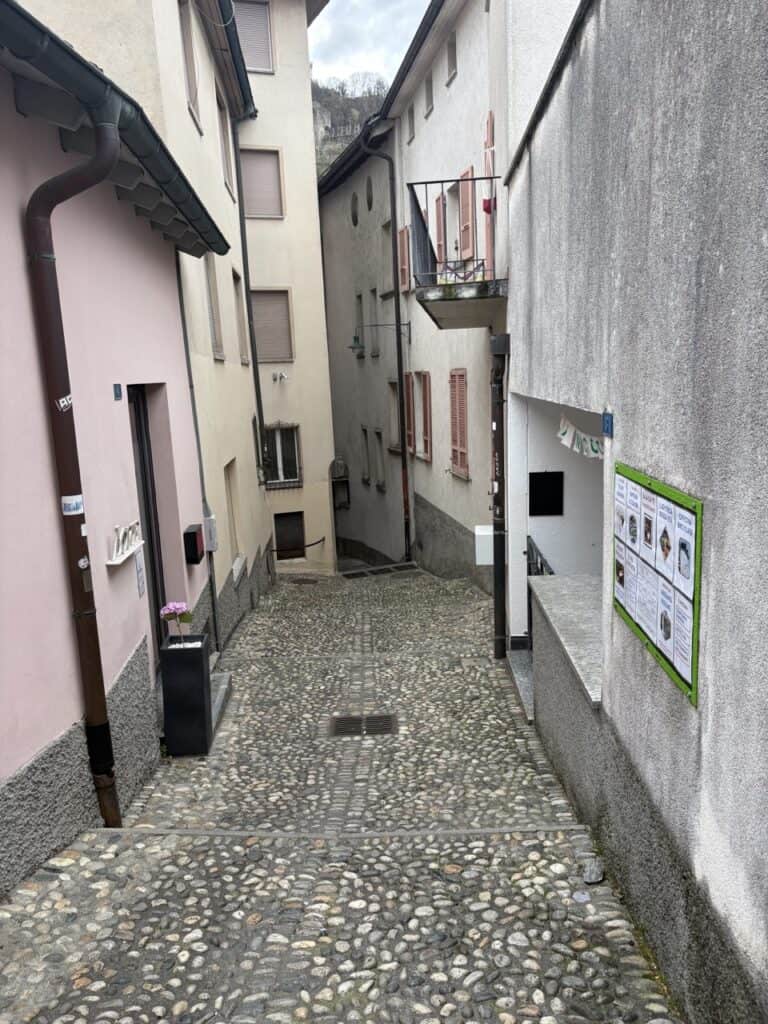
It’s a short but slightly breathy ascent. There are alternative routes too, including a gentler approach via Via Orico, or even a lift from Piazzetta della Valle if you’d rather skip the climb altogether.
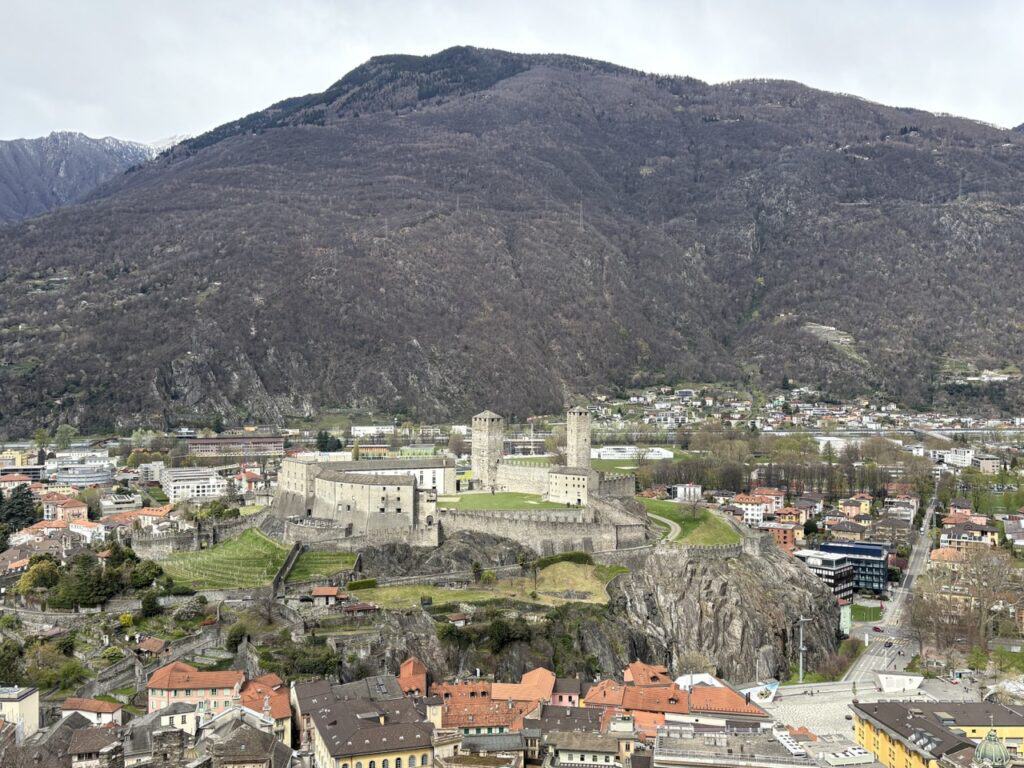
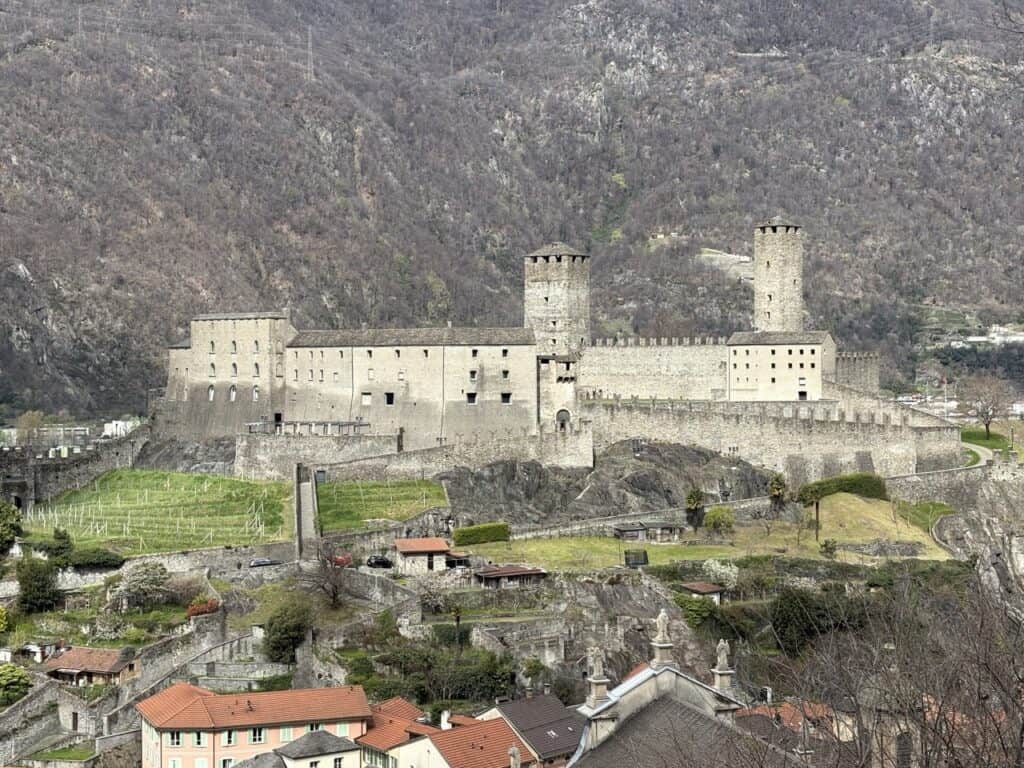
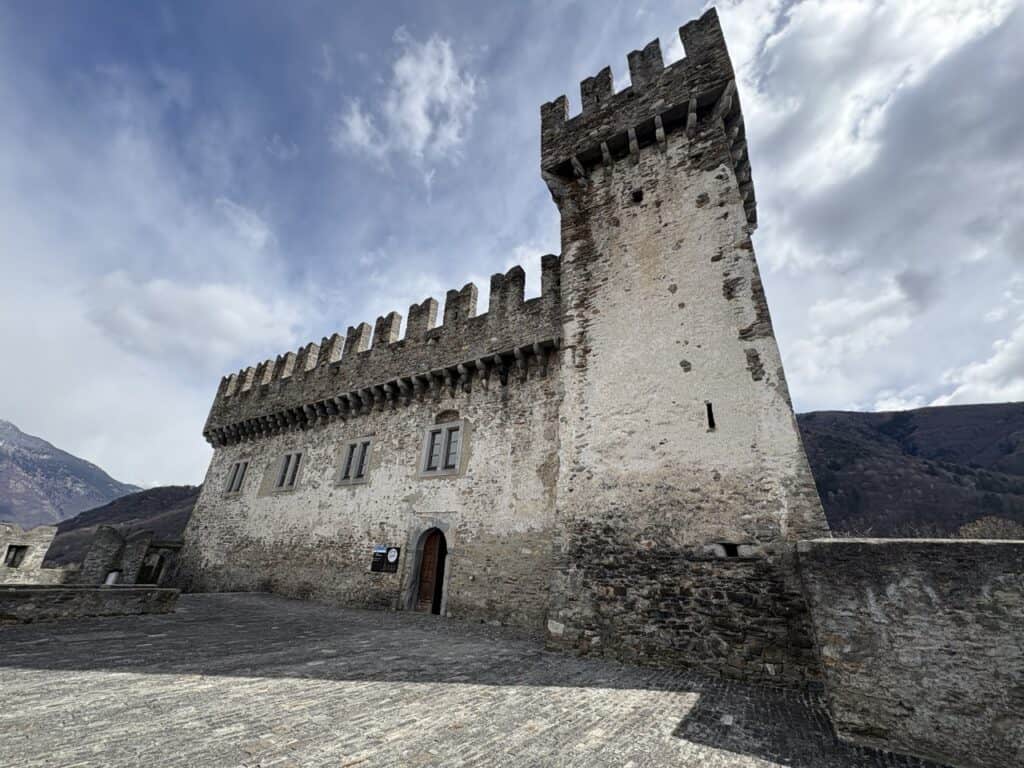
As the name suggests, Castel Grande is the largest and most imposing of the three castles, stretching over 200 meters along its diagonal. Its oldest parts date back to the 13th century, but what you see today is a layered result of centuries of building, rebuilding, and restoring.
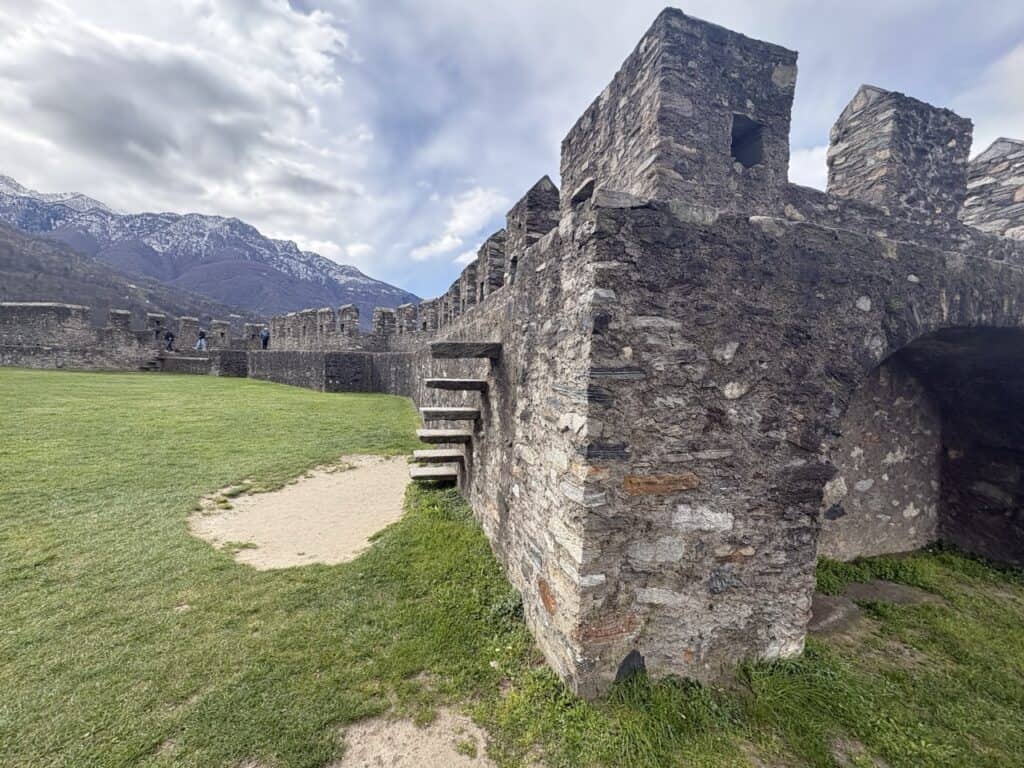
What struck me most were the two massive towers — the White Tower and the Black Tower — standing solid and quiet against the blue-grey sky. There’s something about them that feels both powerful and oddly calm. If you want, you can go up the stairs to enjoy the view from the tower and walk on the wall connecting the two towers. It was incredibly windy and cold when I was there, but the view is fabulous.
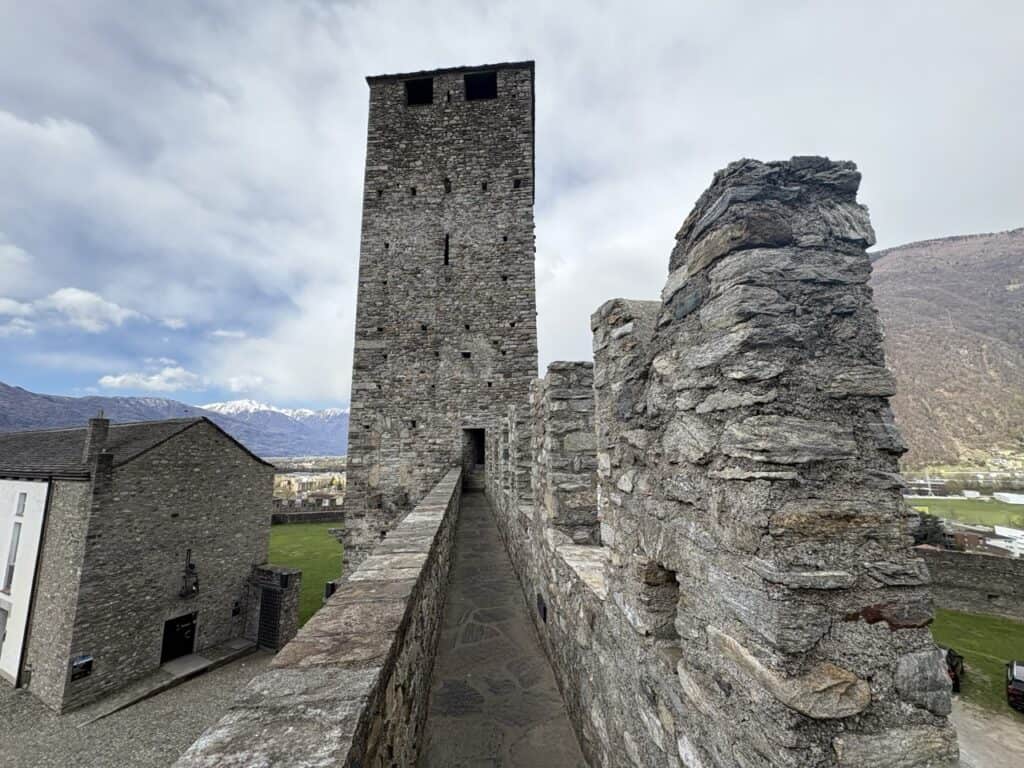
Unlike the other castles along this route, Castel Grande stays open even in winter, including its interior halls and exhibition spaces. There’s also a restaurant and a traditional Ticino grotto with an outdoor terrace, probably a dream spot on a warmer day.
The outer grounds are always accessible and completely free. It’s also the most accessible of the three castles, with paths suitable for strollers and wheelchairs.
A Hill with a Very Long Memory
Standing up at Castel Grande, it’s easy to forget just how far back this place goes. The hill of San Michele has been inhabited since the Neolithic period — we’re talking around 5000 B.C. The first confirmed fortifications appeared much later, during Roman times, and by the Middle Ages, the site had become a key stronghold.
Over the centuries, the castle changed names and rulers more than once: from Castrum Magnum to Uri Castle during the Swiss occupation, and even San Michele Castle at one point. Each era left its mark, shaping what you see today.
The current structure is a blend of different periods: medieval foundations, expansions under the Dukes of Milan, later restorations, and finally the careful architectural work completed in the late 20th century.
From here, you can also trace parts of the old defensive system — sections of walls stretching down toward the city and once connecting to the other castles. It’s a reminder that Bellinzona wasn’t just beautiful — it was strategic, protected, and deeply important.
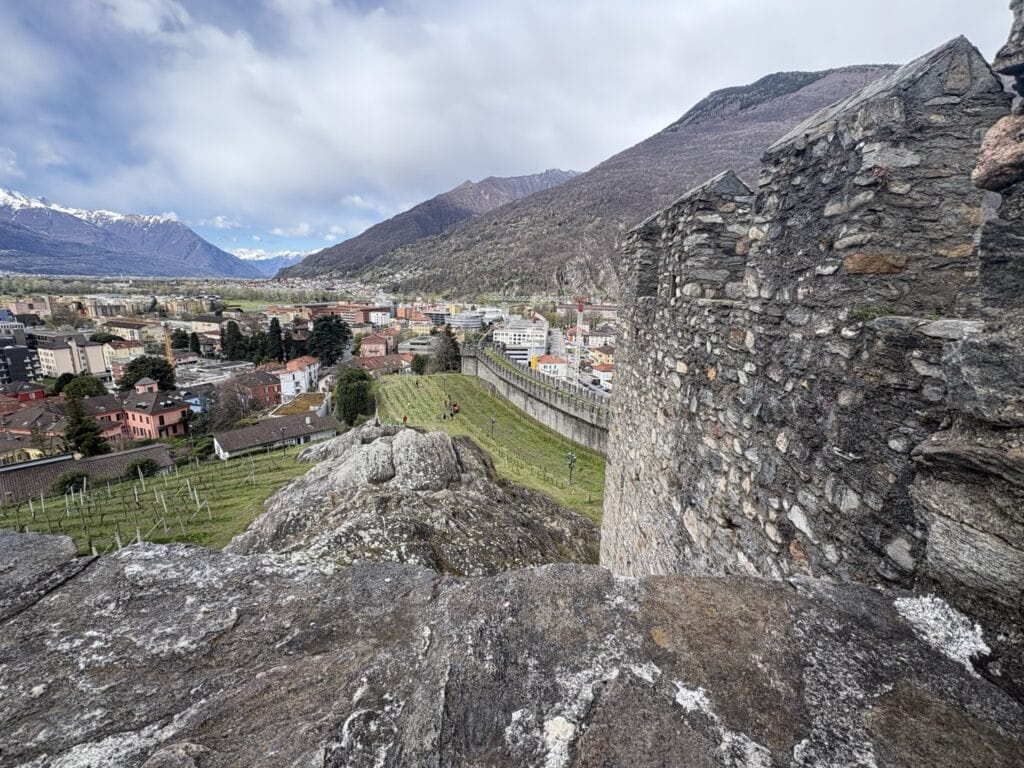
Onward to Montebello: A Gentle Climb with a View
After taking my time at Castel Grande, I wandered back down into the old town and followed the signs toward the second fortress: Castello di Montebello. From Piazza della Collegiata, a small side street right next to the church quietly marks the beginning of the ascent.
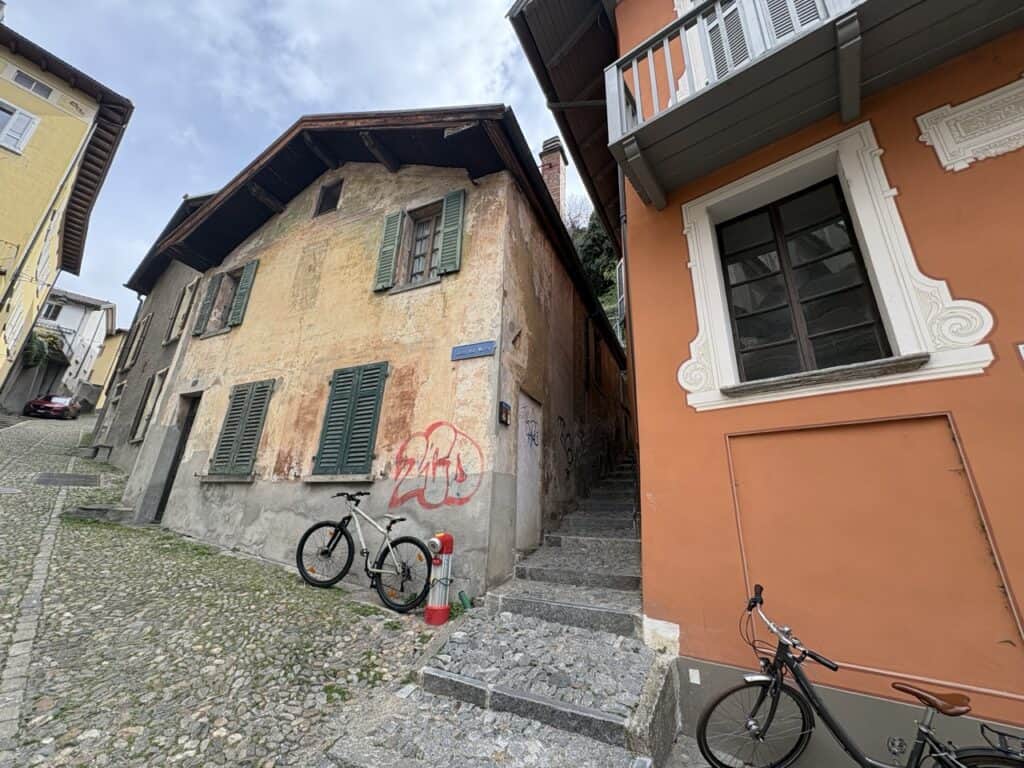
This part of the walk consists of a well-maintained stairway that gently winds its way uphill.
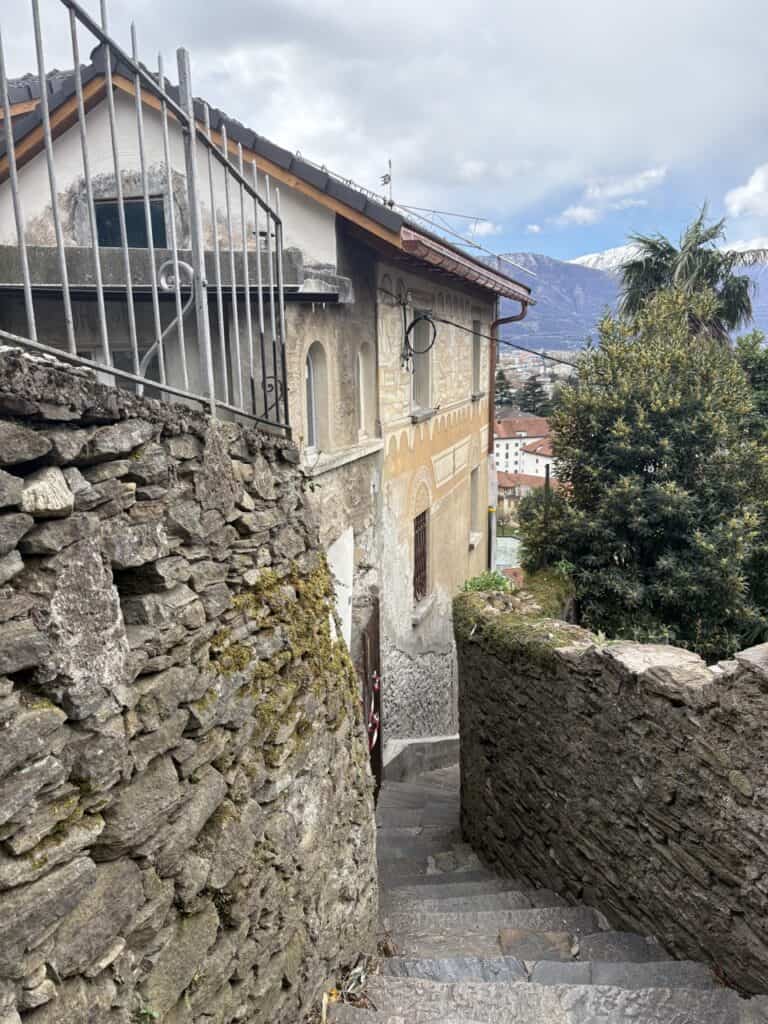
Yes, it’s a climb, but an easy one. We’re talking about 500 meters, not a mountain stage of the Tour de Suisse. And if you need a breather (I definitely did), there are plenty of excuses to stop, especially with those views opening up over the rooftops of Bellinzona and back toward Castel Grande.
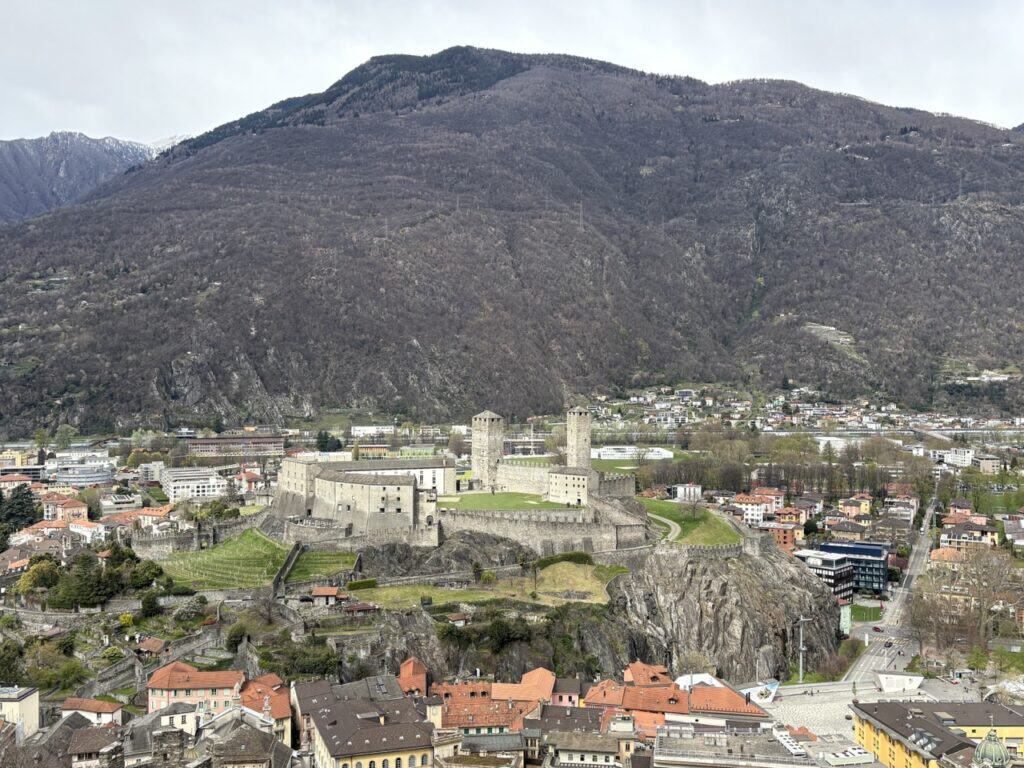
Eventually, the steps lead you straight onto the esplanade of the castle.
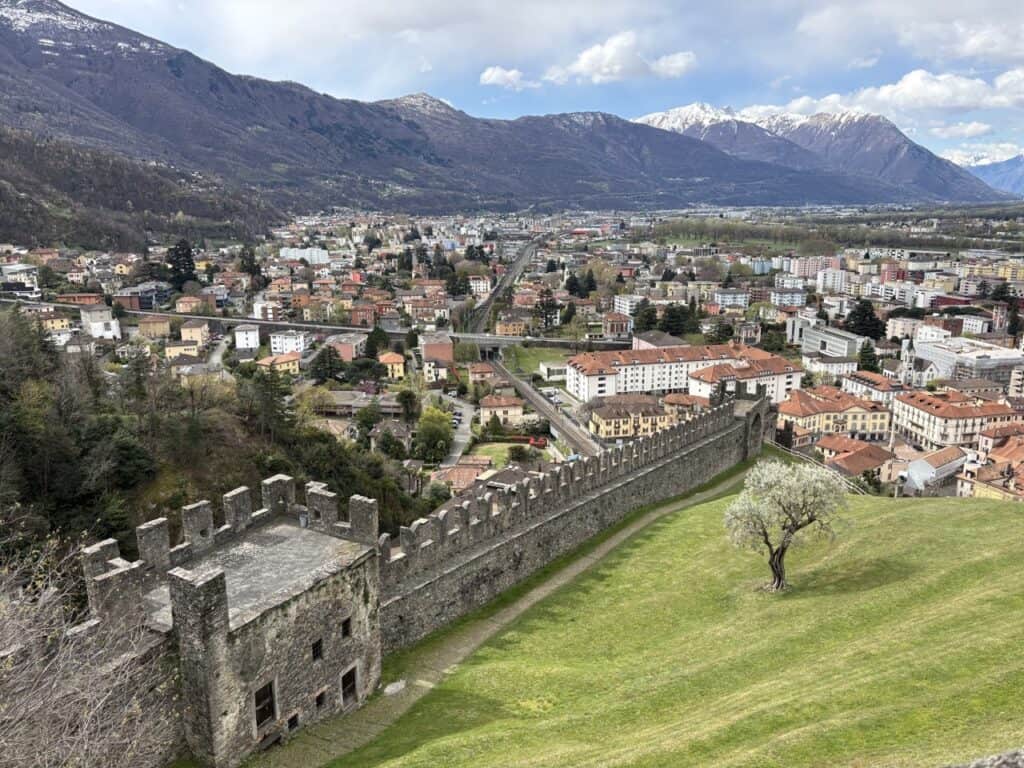
Perched about 90 meters above the town, Castello di Montebello feels more tucked away, a little quieter, almost like it’s observing everything from a distance. Its oldest parts date back to the 13th or 14th century and are believed to have been built by the Rusca family, wealthy merchants from Como. Over time, it was expanded and reshaped — especially under the Sforza — into the fortress you see today, with its distinctive triangular layout and protective outer courtyards.
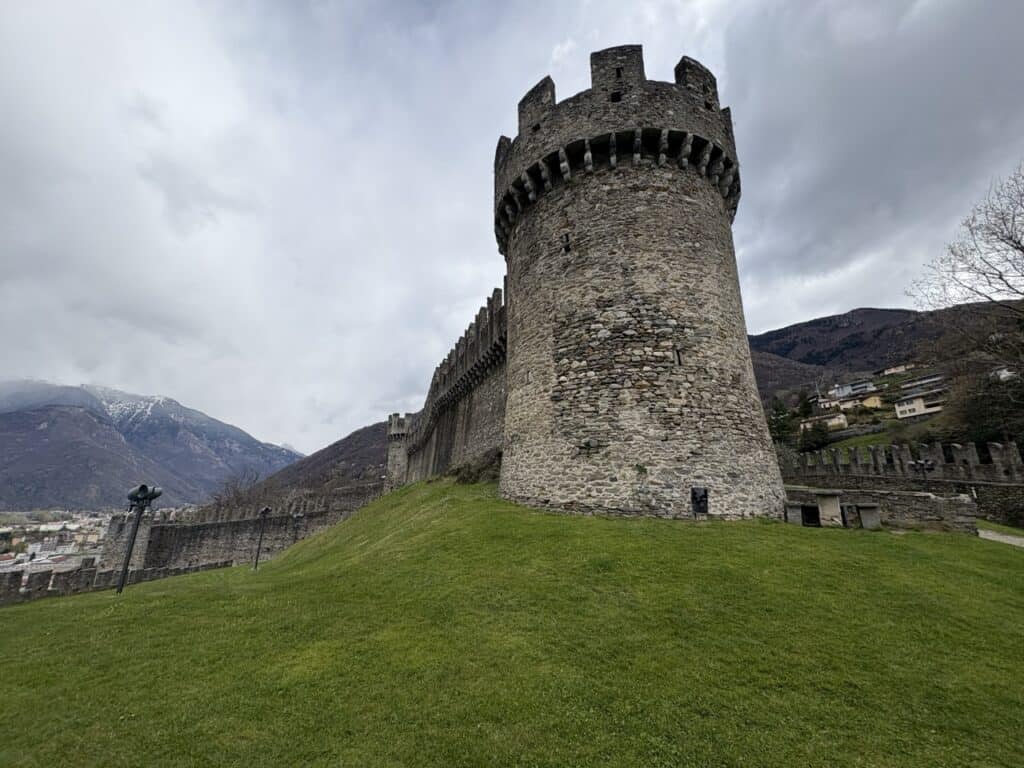
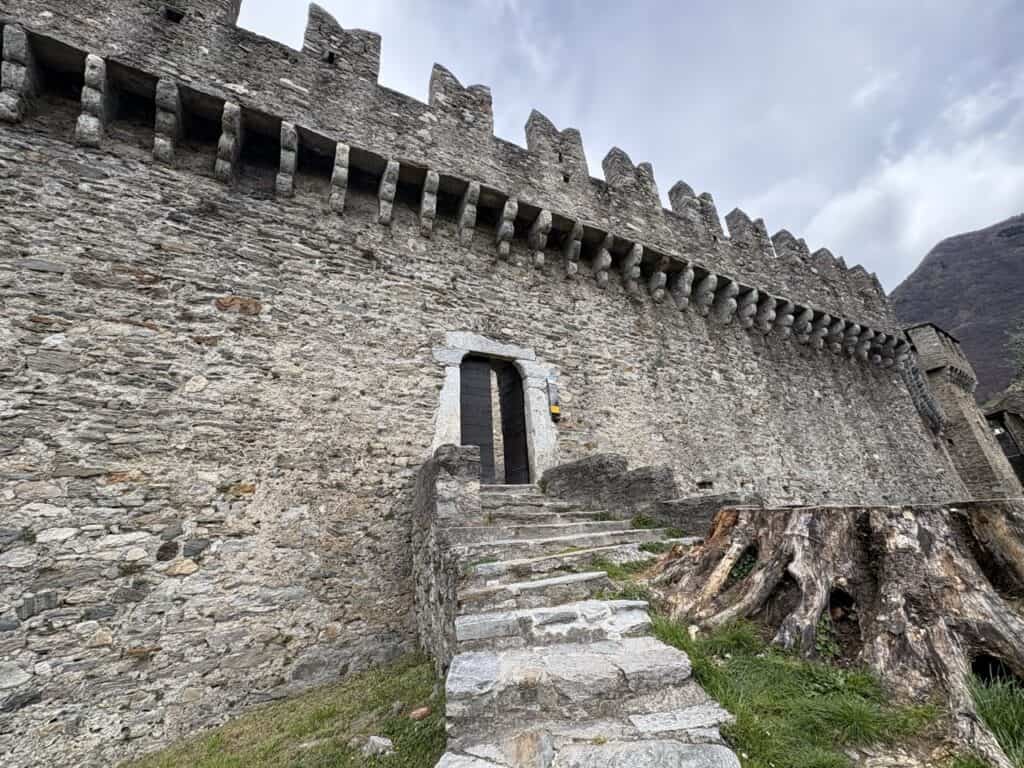
Inside, there’s an archaeological exhibition that traces not only the history of the castle itself but also the deeper human story of the region, reconstructed through local finds. Even if you don’t step inside, walking around the courtyards and along the walls already gives you a strong sense of its past.
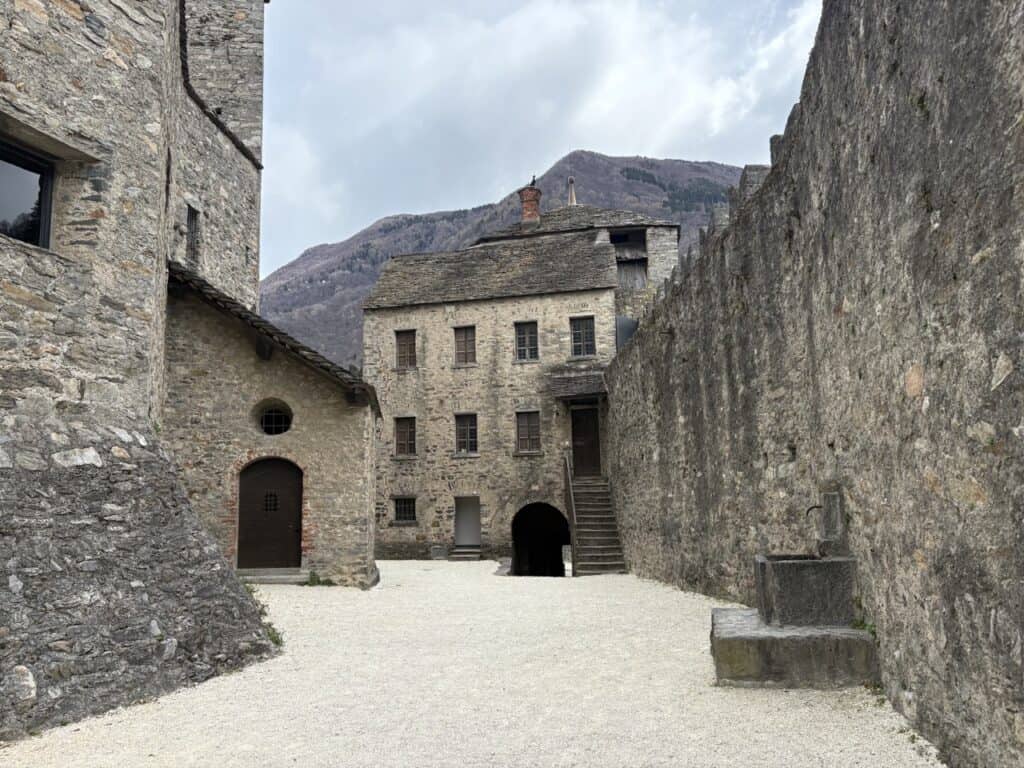
I made my way around the complex, eventually crossing an old drawbridge on the far side.
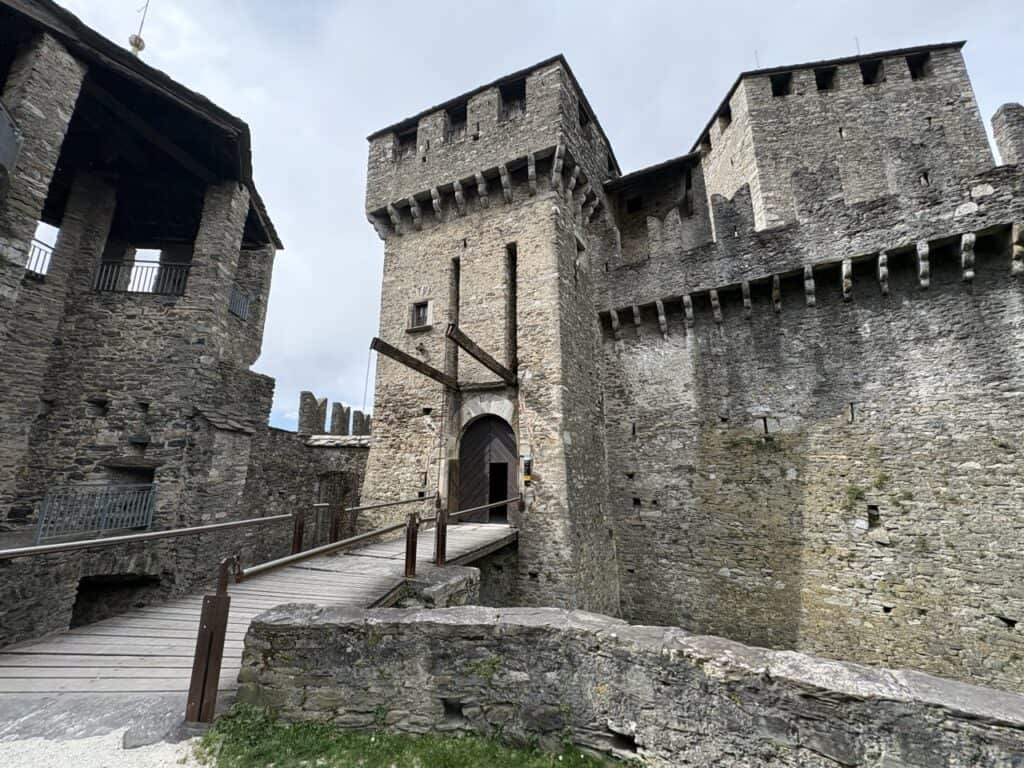
From there, the signpost guides you upward to the next castle.
Good to know: while the interior spaces are usually open from April to November (with an entrance fee), the courtyards remain also accessible in winter and free of charge.
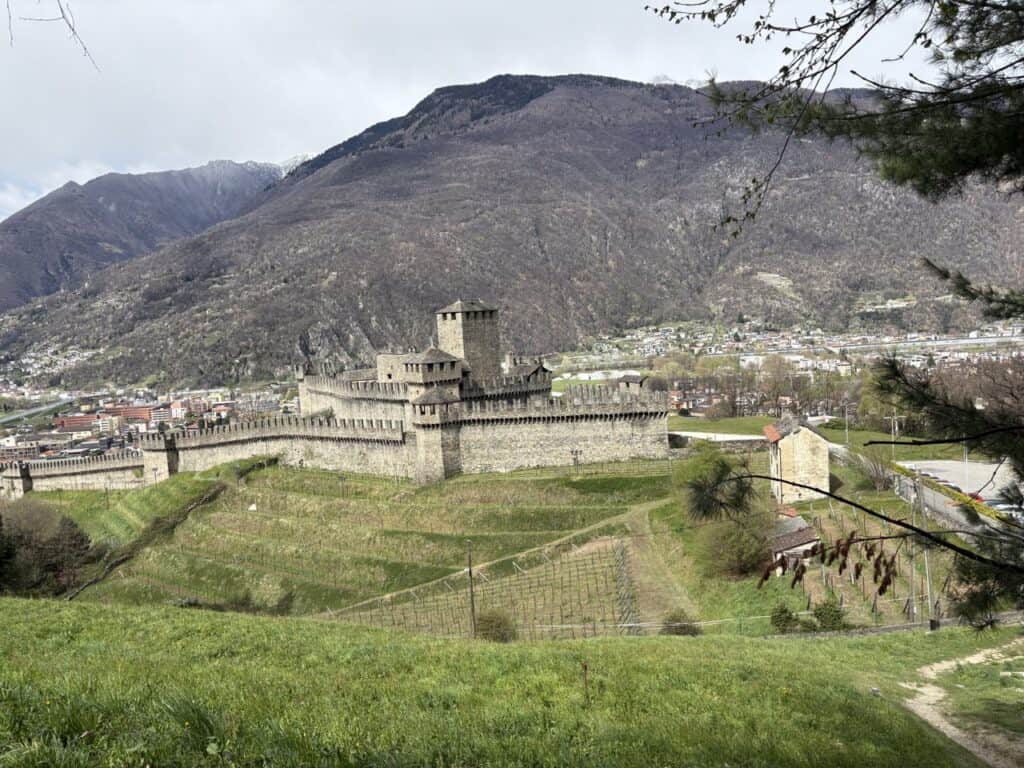
The Final Ascent: Sasso Corbaro
From Montebello, the path to the third and highest castle — Castello di Sasso Corbaro — stretches about one kilometer further uphill. Most people opt for the bus or take the little tourist train. I thought about it… briefly. And then kept walking.
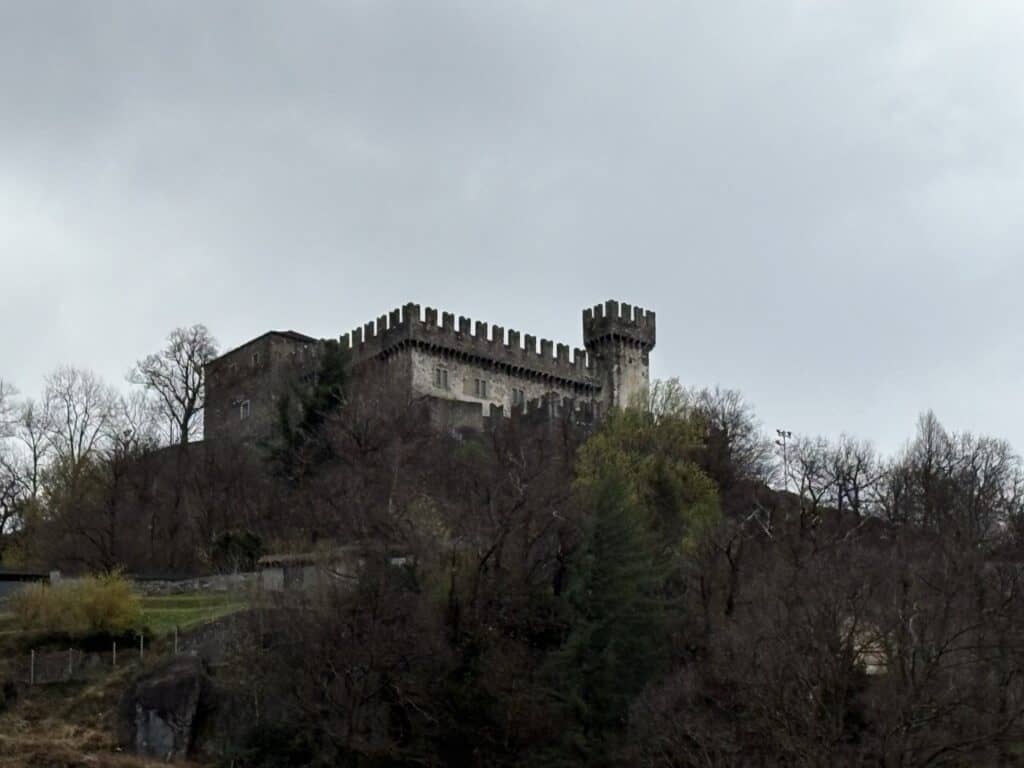
This stretch is definitely the most “effortful” of the three, but also the most rewarding. As you gain height, the landscape opens up even more, and by the time you reach the top, you’re greeted with sweeping views across the entire valley. On a clear day, you can even see all the way to Lago Maggiore.
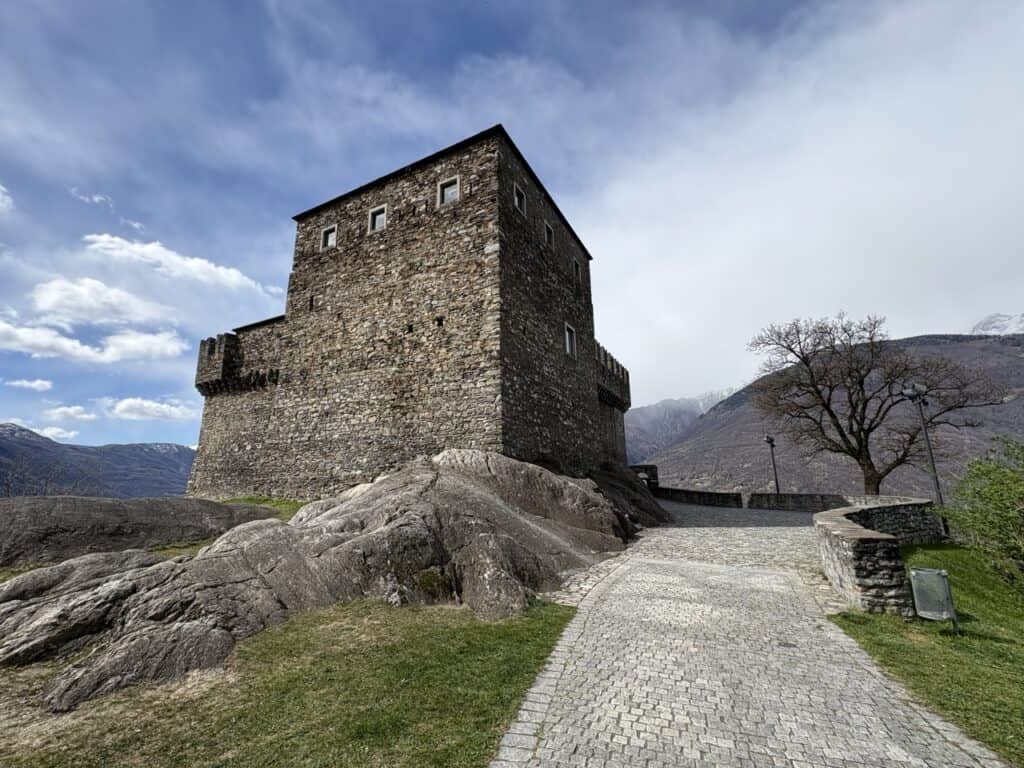
Sasso Corbaro sits solidly on a dark rock, which is exactly where its name comes from (in dialect, corbatt, like the feathers of a crow). Unlike the other two castles, its structure is more compact and geometric, a typical Sforza fortress with a square courtyard enclosed by high defensive walls.
What amazed me most: it was built in just six months in 1479. Apparently, construction went on day and night to complete this final piece of the defensive system designed to protect Milan from the Confederates.
There’s also an Osteria (restaurant) here, if you feel like rewarding yourself after the climb.
Like Montebello, the interior spaces are open from April to November with a ticket, but in winter you can still access the courtyard and have a look around.
The Way Back Down (and an Alternative Worth Knowing)
By the time I reached Sasso Corbaro, I was starting to keep an eye on the clock. Swiss trains don’t wait. So I decided to take the same route back down to Montebello and from there I took the bus back to Bellinzona train station.
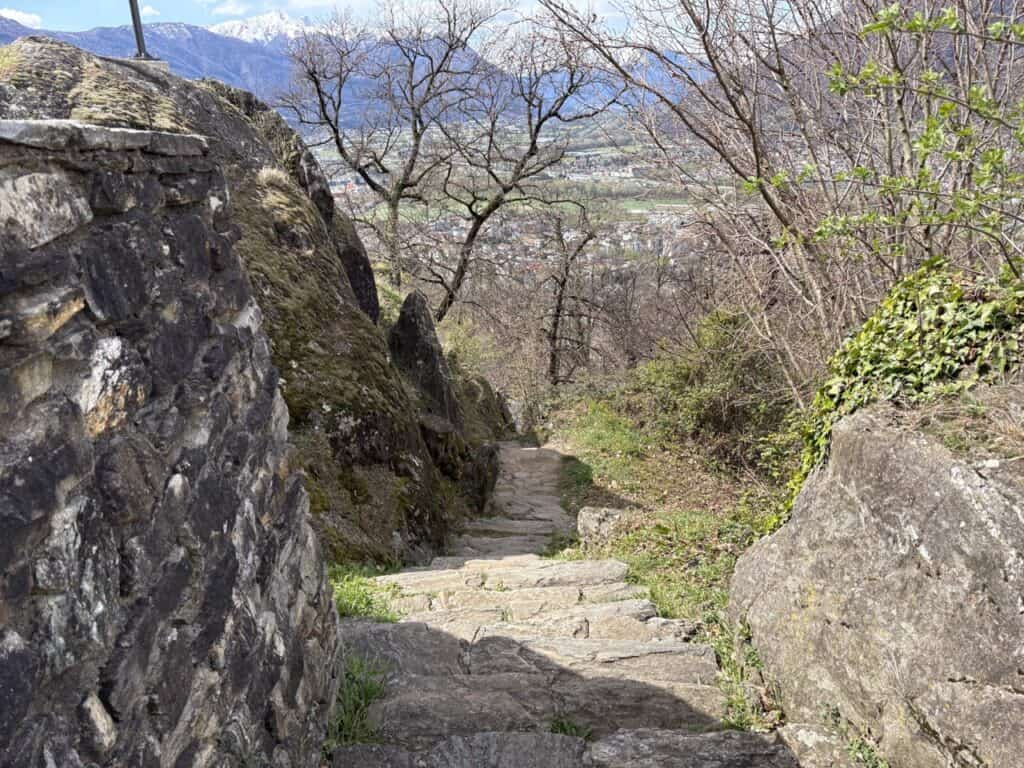
But if you have more time, there’s a beautiful alternative: at a fork along the way, you can turn right toward Pian Larghetto. This route takes you through vineyards and orchards, then into chestnut forests, before leading you into a quiet, almost hidden gorge. Eventually, you’ll reach the abandoned village of Prada, a place of crumbling stone walls and silent houses, where only the small church of San Girolamo is still in use.
From there, the path continues down to Scarpapè, offering wide views over the Magadino plain all the way to Lake Maggiore, before slowly looping back toward Bellinzona. It’s definitely a detour worth taking if time allows.
Costs & Practical Tips
One of the nicest surprises: exploring Bellinzona’s castles doesn’t have to be expensive at all.
Large parts of the fortress complex — especially at Castel Grande — are freely accessible year-round, including the walls, courtyards, and green spaces.
If you’d like to visit the interior exhibitions, here’s what to expect:
- Free entry with the Swiss Travel Pass
- “Fortezza Pass” (access to all interiors): CHF 28
- Individual castle tickets: CHF 10–15 each
For current opening times, visit the official website.
If walking isn’t your thing (no judgment), there are alternatives:
- During the summer months, the little tourist train Artù connects the town with Montebello Castle and Sasso Corbaro, making the journey part of the experience. The full tour takes about an hour, departs from Piazza Collegiata and a day ticket costs CHF 13 for adults. You can either buy your ticket directly at the departure point or book it online in advance. Current departure times you will find here.
- PostBus connections to Montebello and Sasso Corbaro (though not very frequent — definitely check the schedule in advance)
How to Get to Bellinzona
Reaching Bellinzona from Zurich is fast thanks to Switzerland’s world-class rail network. Direct trains connect the two cities in just 1 hour and 40 minutes, making Bellinzona perfect for a day trip or a relaxed weekend getaway.
One of the highlights of the journey is passing through the famous Gotthard Base Tunnel, the world’s longest railway tunnel. Stretching 57 kilometers beneath the Alps, the engineering marvel took nearly two decades to build and officially opened in 2016. The train passes through the tunnel in around 17 minutes, dramatically reducing travel time between northern and southern Switzerland
Final Thoughts: Castles, Views & Slow Travel Moments
Walking from castle to castle in Bellinzona is not just about ticking off sights, it’s about the feeling of wandering through history at your own pace, climbing upward, and watching the views open up with every step.
What I loved most is that it never felt rushed. You can move between Castel Grande, Montebello Castle, and Sasso Corbaro Castle at your own speed, with time to pause, sit, and just take it all in. You don’t need a strict plan, just some comfortable shoes and a bit of curiosity.
If you’re anything like me and have a soft spot for castles, there are so many more to discover across Switzerland. I’ve shared a few of my favorites on the blog, like Château de Chillon on Lake Geneva or Kyburg Castle near Zurich.
And if it’s the views you’re after, Ticino has plenty more to offer. I’ve written about a couple of easy-to-reach spots that I keep going back to: Monte Brè and Monte San Salvatore. Both give you that sweeping, almost cinematic perspective over the lakes and mountains.
In the end, this visit to Bellinzona felt like a perfect mix of everything I love: a bit of history, a bit of movement, and plenty of « dolce far niente » in between.