Some places don’t just appear on the map; they arrive in the heart. They don’t call loudly, but something inside us stirs when we’re near them. A quiet knowing, a pull, as if the soul recognizes the land before the feet even touch the trail. Engelberg Fürenalp in the Swiss canton of Obwalden in Central Switzerland, is one of those places.
I didn’t come with a grand plan — I rarely do. Just a soft curiosity that often leads me to where I’m meant to be. This time it brought me to the Grotzli loop trail, a gentle circular path of about an hour and a half. It may be one of the easy hikes in Switzerland, but it still feels like a true adventure, rewarding you with sweeping alpine views and a sense of renewal along the way. The secret lies in its twelve Kraftorte, or energy places, scattered along the trail. Whether or not you believe in such things, something about them invites you to slow down, breathe more deeply, and smile a little easier. And if you’re coming from the city, Fürenalp makes for a wonderfully simple day trip from Zurich — close enough for convenience, yet far enough to feel like another world.
So come along, if you like. I’ll take you up with me, step by step, heart wide open. Let’s wander through this little alpine gem together.
Getting There: The Journey is Part of the Magic
Fürenalp might be a small mountaintop, but getting there already feels like a little escape. It’s not just about arriving, it’s about slowly easing into a different pace. The kind where your shoulders start to drop, your breath deepens, and the noise of everyday life begins to fade.
If you’re coming from Zurich, like I did, it’s all pretty straightforward. First, a 45-minute train ride to Lucerne. Then, hop onto the Zentralbahn, that familiar red mountain train, and enjoy another 45 minutes through beautiful scenery all the way to Engelberg. Honestly, this part of the trip already feels like a warm-up for what’s to come. Rolling hills, quiet farms, deep green forests… and those first glimpses of the mountains. They show up slowly, almost like they’re testing if you’re paying attention.
Once in Engelberg, it’s only a short ride on the local bus (number 10, if you’re the kind who likes specifics). It winds its way through the valley and drops you right at the valley station of the Fürenalp cable car. From there, things get vertical. And magical.
Up, up, and into Stillness
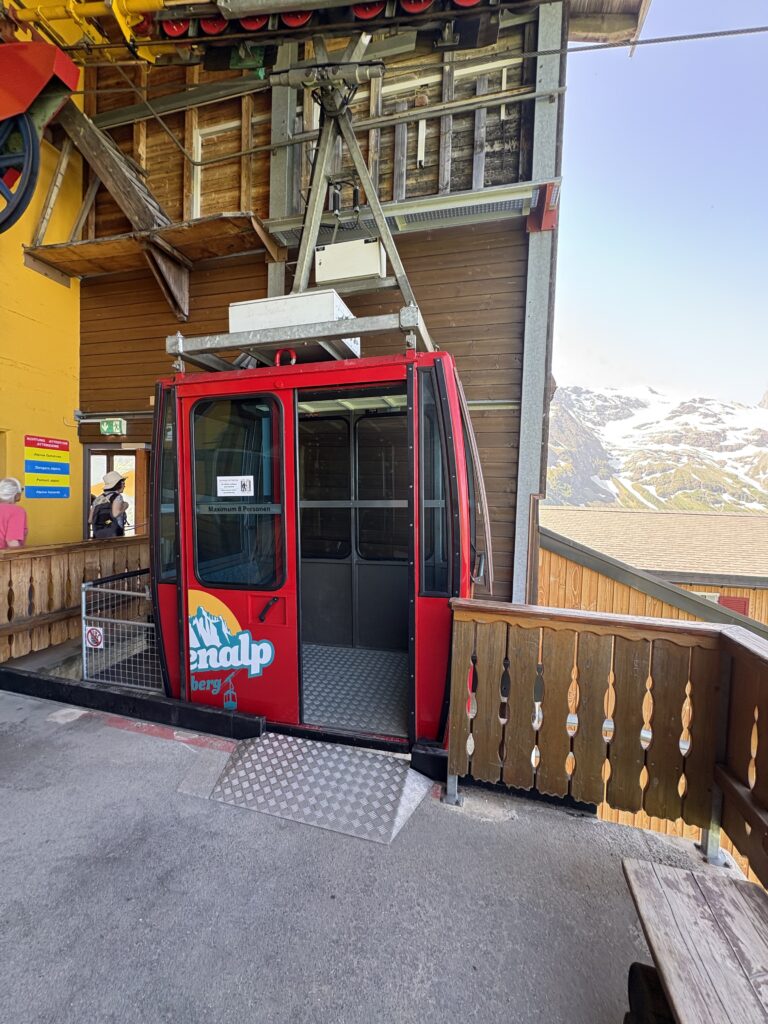
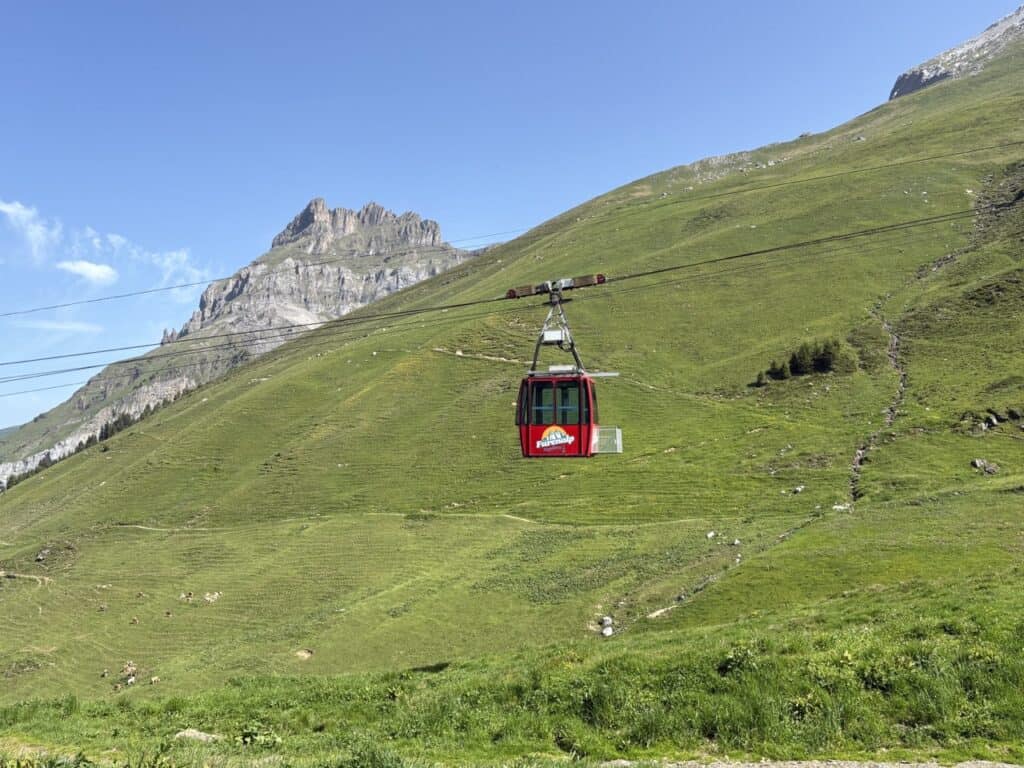
The cable car is a bit of an experience in itself. In just six minutes, it takes you from the valley floor up to 1,850 meters. And it’s steep. Really steep. You glide up right alongside the rugged Fürenwand cliffs, and it’s kind of thrilling, just enough to feel it in your stomach, in the best way. There’s even a legendary via ferrata (a climbing route) up those cliffs if you’re feeling particularly brave. I wasn’t, but I admired it from a safe distance.
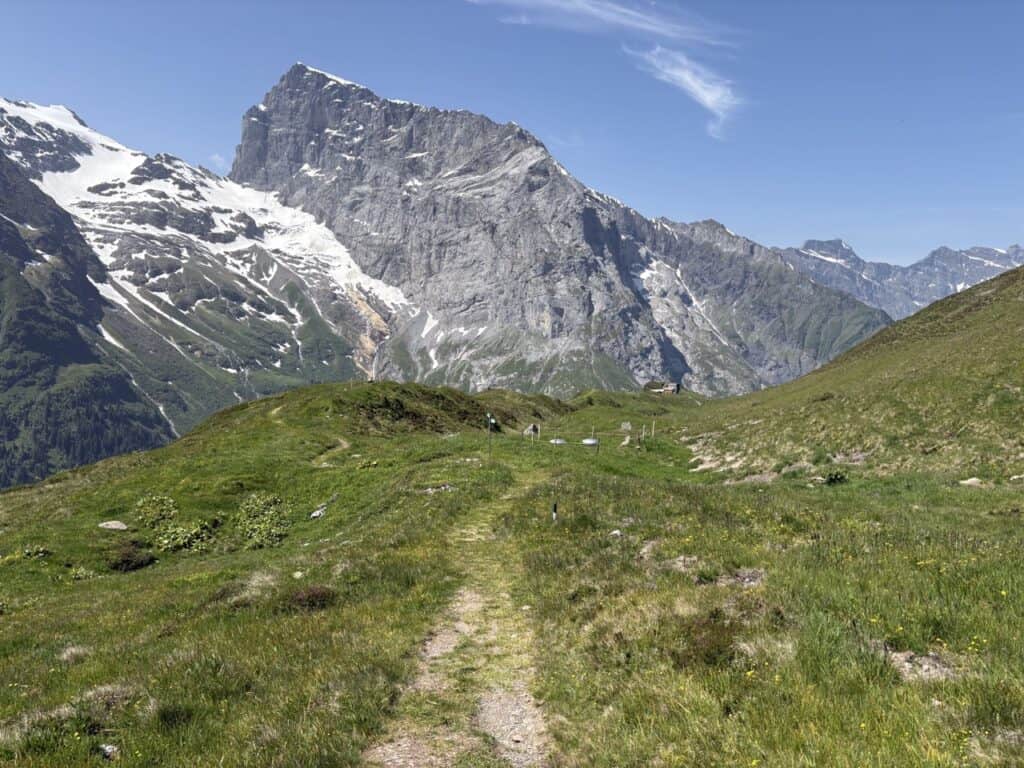
And then you’re there. You step out of the gondola, and it’s like the volume of the world has been turned way down. Everything feels a bit lighter. The air. The thoughts. Even the pace at which you walk. The views are incredible; the glacier-scapes of Titlis, the jagged silhouettes of Wissberg, the dramatic ridge of the Grassengrat, and in the distance, the snow-dusted shoulders of Schlossberg.
And if you want to continue your Engelberg adventure, I’ve written a full guide to Mount Titlis hat you might enjoy. Just a short ride from Fürenalp, Titlis offers iconic glacier landscapes, a thrilling suspension bridge, and panoramic alpine views — a perfect complement to the peaceful energy of the Grotzli Trail.
Twelve Energy Spots and a Pocketful of Peace
Up on the Fürenalp plateau, you’ll find something a little special: twelve marked Kraftorte, or energy spots. These aren’t flashy or overly mystical. Just quiet, natural places that seem to hum with a kind of stillness. To determine whether a place is truly an energy spot, specialists measure its radiation levels, looking at both the intensity and the quality of the readings. Often this is expressed in so-called Bovis units, a scale used in radiesthesia to describe how much vital energy a place seems to give off. A typical environment might register around 6,500 to 7,000 Bovis units, which is considered neutral and in balance with the human body. Energy spots, though, are said to measure much higher—sometimes 9,000, 12,000, or even more—levels that are thought to have a revitalizing or uplifting effect. All twelve sites along this path meet those standards.
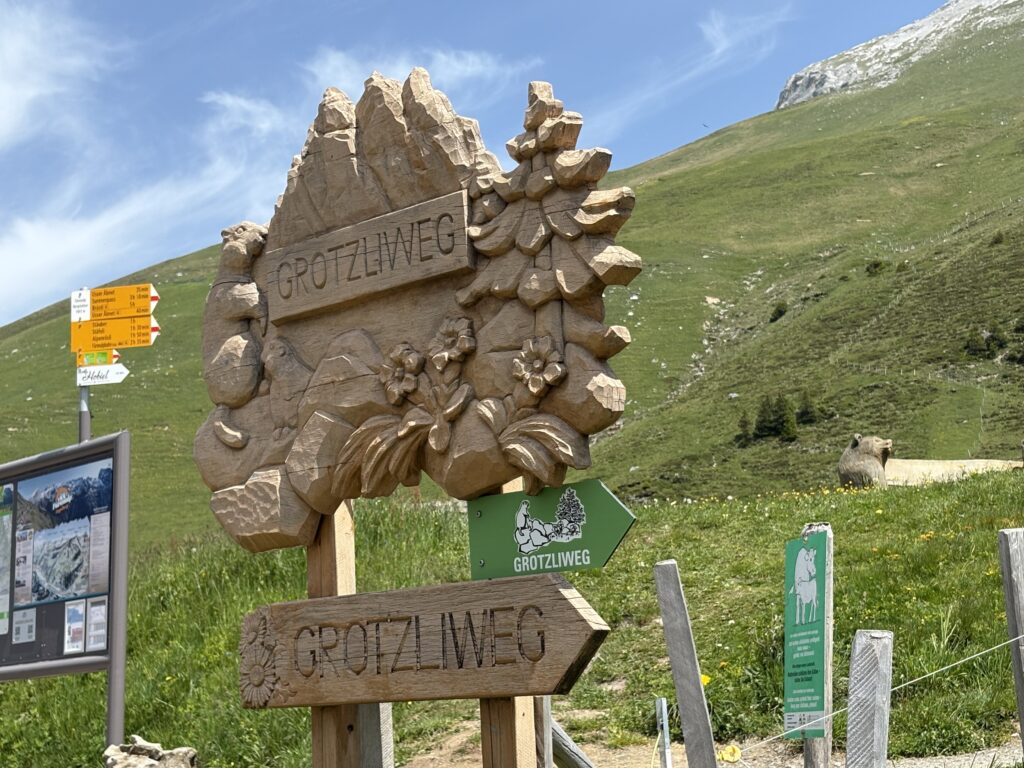
The energy spots are scattered just off the Grotzliweg, the circular trail I chose to walk that day. And no, Grotzli aren’t tiny mountain goblins (though that would be fun). The word simply means “young trees” in the Engelberg dialect, especially small spruce trees. You’ll spot plenty of them along the way.
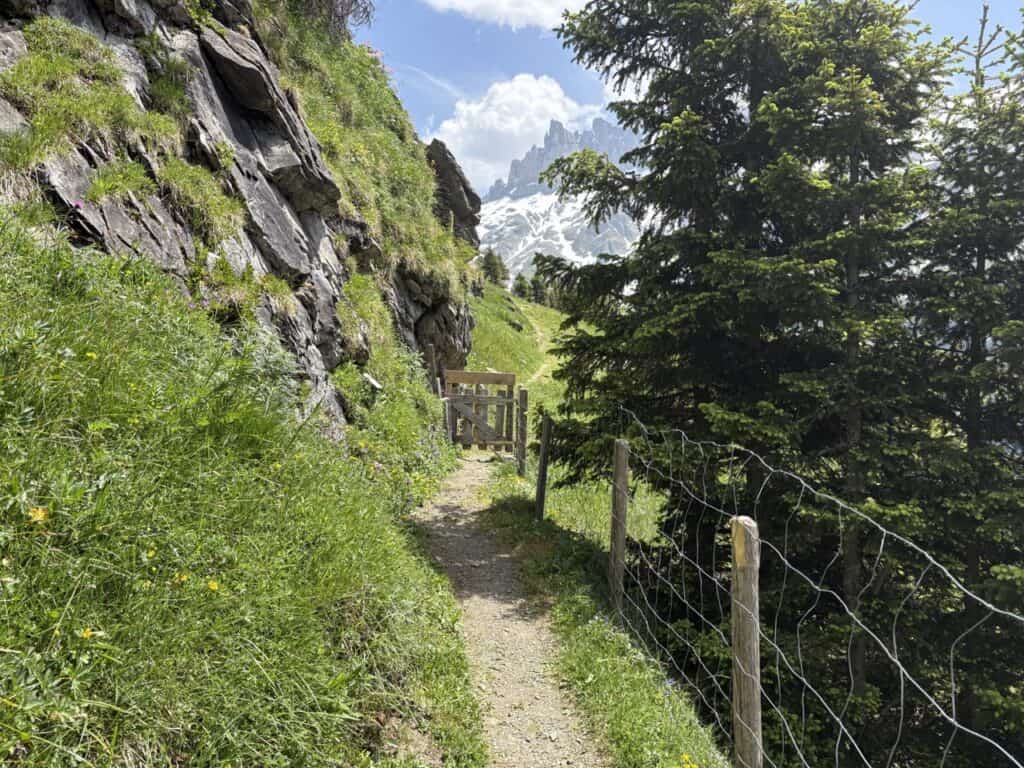
The Grotzli trail starts right at the mountain restaurant and loops gently through alpine meadows, larch forests, and rocky outcrops. It’s around 3.2 kilometers in total and can be walked in about an hour and 15 minutes. That’s if you just walk. I didn’t. I napped in the grass, sat quietly in a few of the energy spots, took way too many photos of mossy stones and crooked little trees. So yes, it took me much longer, and I wouldn’t change a thing.
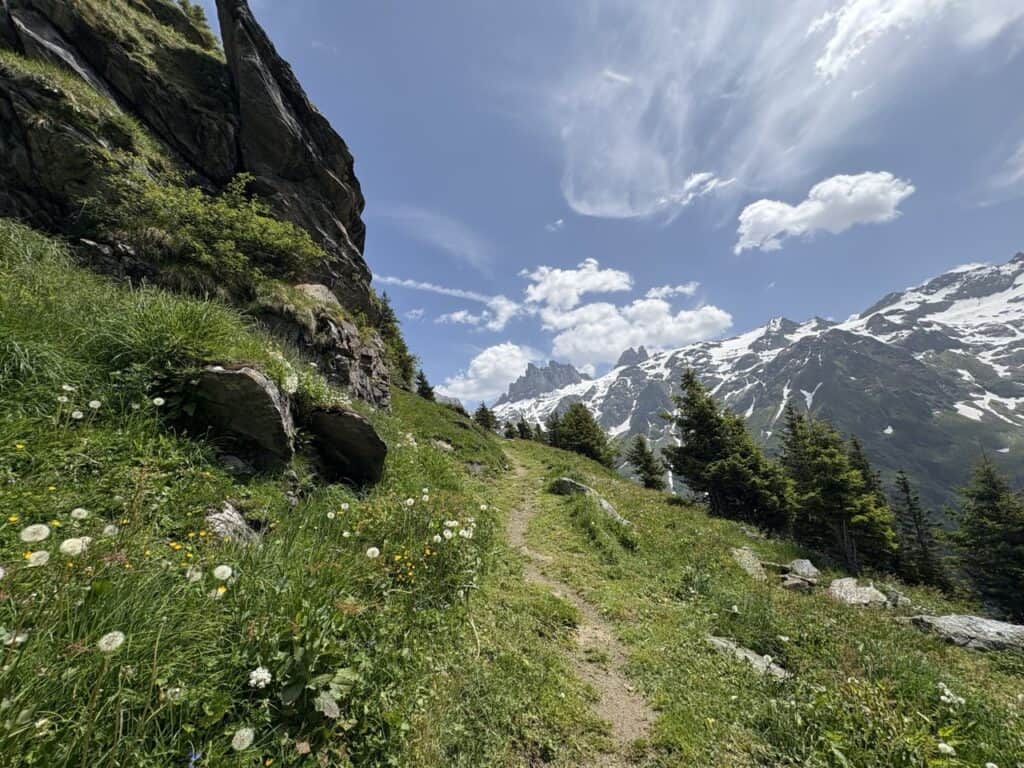
It’s the kind of hike you’re not supposed to rush. There’s something about it that makes you want to slow down. To listen. To breathe a little deeper. And if you’re not up for the full loop, you can easily do just the upper or lower half; they each take around 40 minutes. Very manageable, even if all you really want is a peaceful stroll with big views.
Now, I won’t walk you through all twelve energy spots, partly because I think it’s a very personal thing. What speaks to me might not speak to you, and that’s kind of the beauty of it. But a few places did draw me in a little more deeply… and I’ll share those in just a moment; in case they speak to you too.
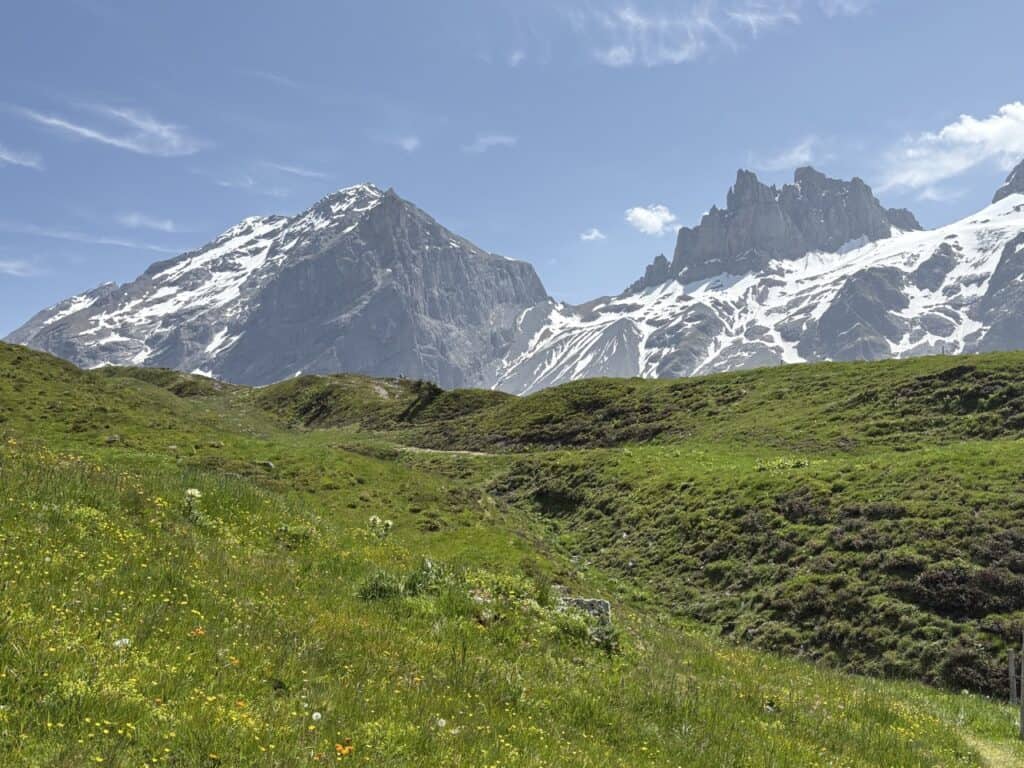
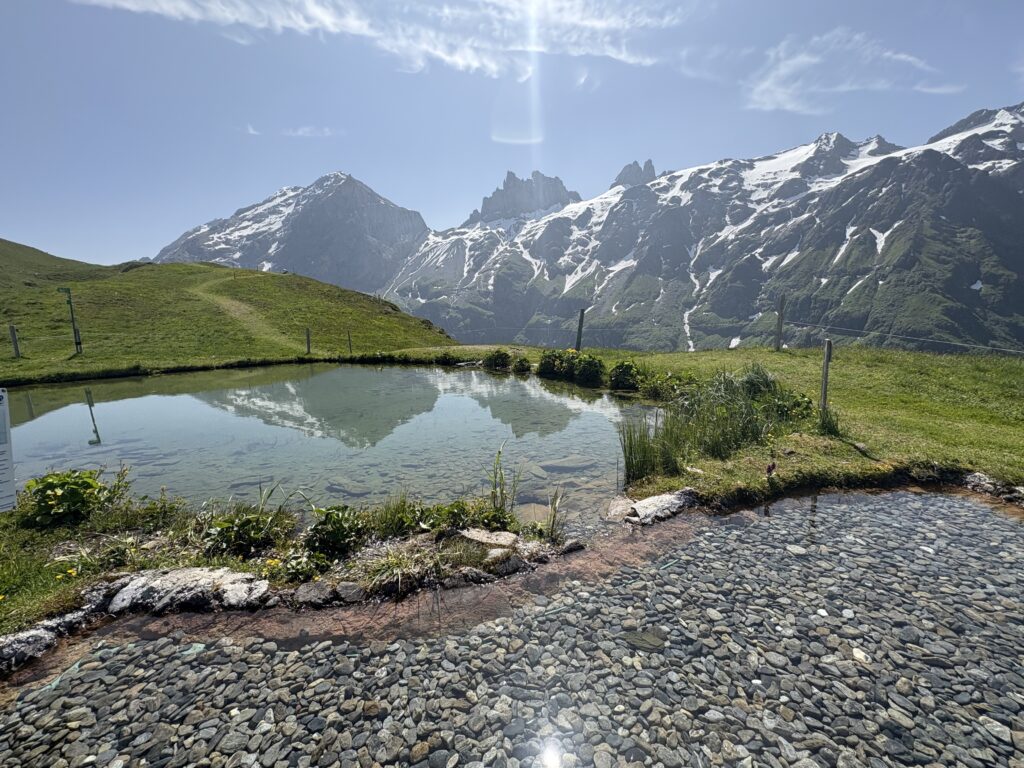
Spiegelseeli – Mirror Lake
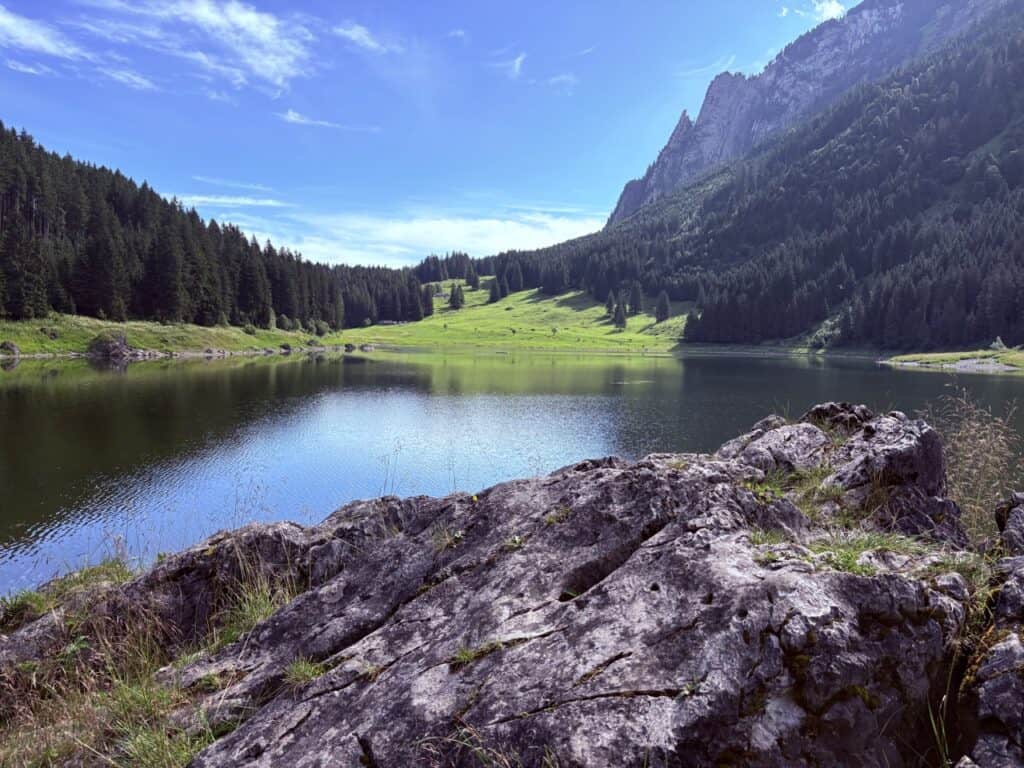
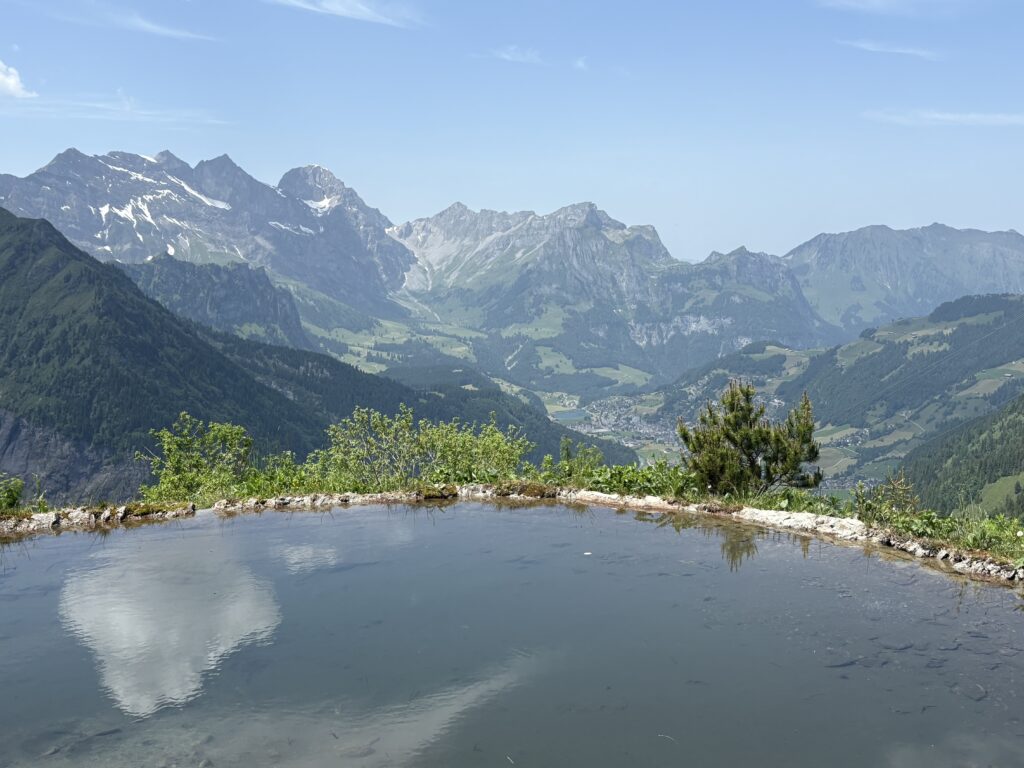
This one is hard to miss. A still pond, so small and humble, yet somehow it holds the whole mountain world in its reflection. The east face of Titlis, the jagged Grassen ridge, the wild-looking Bärenzahn (yes, that means Beartooth), the Spannort peaks, and even Schlossberg. All of them mirrored perfectly on the lake’s surface. It’s almost surreal. You could easily lose time here, just watching the sky ripple on the water.
There’s a little sign explaining the panorama if you’re curious. But honestly? You don’t need it to feel what this place gives you. It’s one of those rare spots where your body feels quietly charged, your thoughts slow down, and you just… are. And if it’s a warm day, like the one I had, don’t miss the little Kneipp facility next to the lake. Cold water for your arms and legs, straight from the mountain. Sounds simple, but it works. It clears your head, refreshes your energy, and somehow makes you feel more alive in the most natural way.
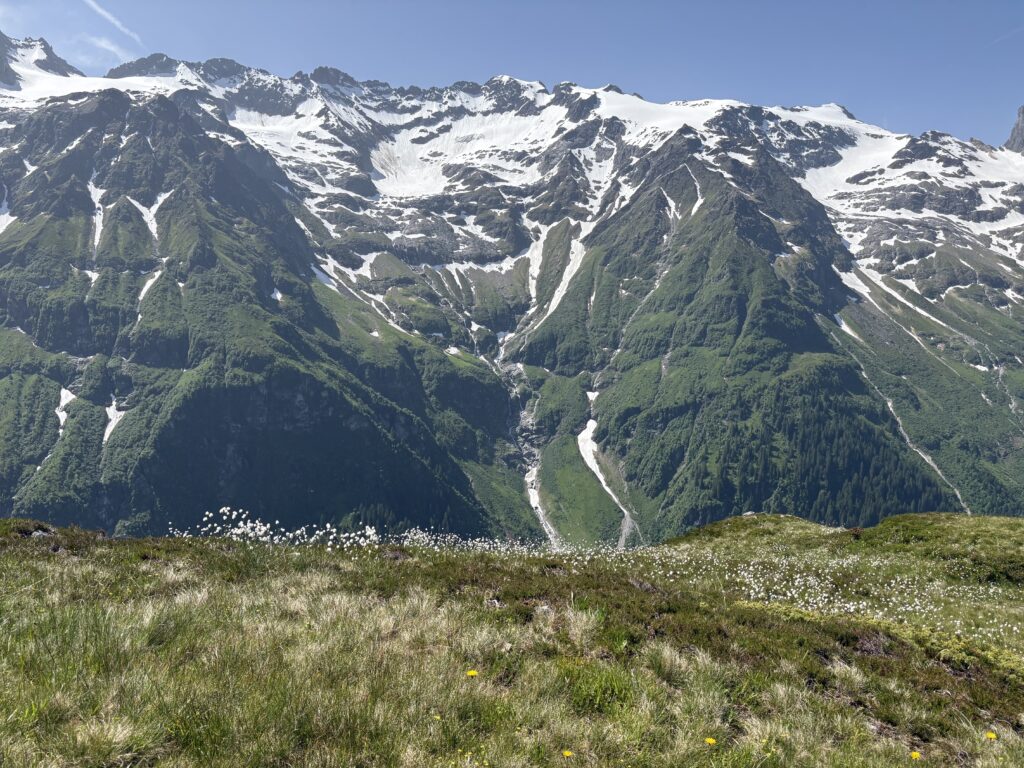
Bench “Hintersti Egge”
And then, almost unexpectedly, a little bench appeared—tucked along the trail toward “Obere Ziebeln.” The name might not sound glamorous, but the feeling here was just right. A simple wooden bench, looking out over what feels like the edge of everything.
You could sit here and feel like the whole world has paused with you. Just valleys, light, and space stretching out before your feet. No expectations. No effort. Just a really, really good place to sit.
Gummistein
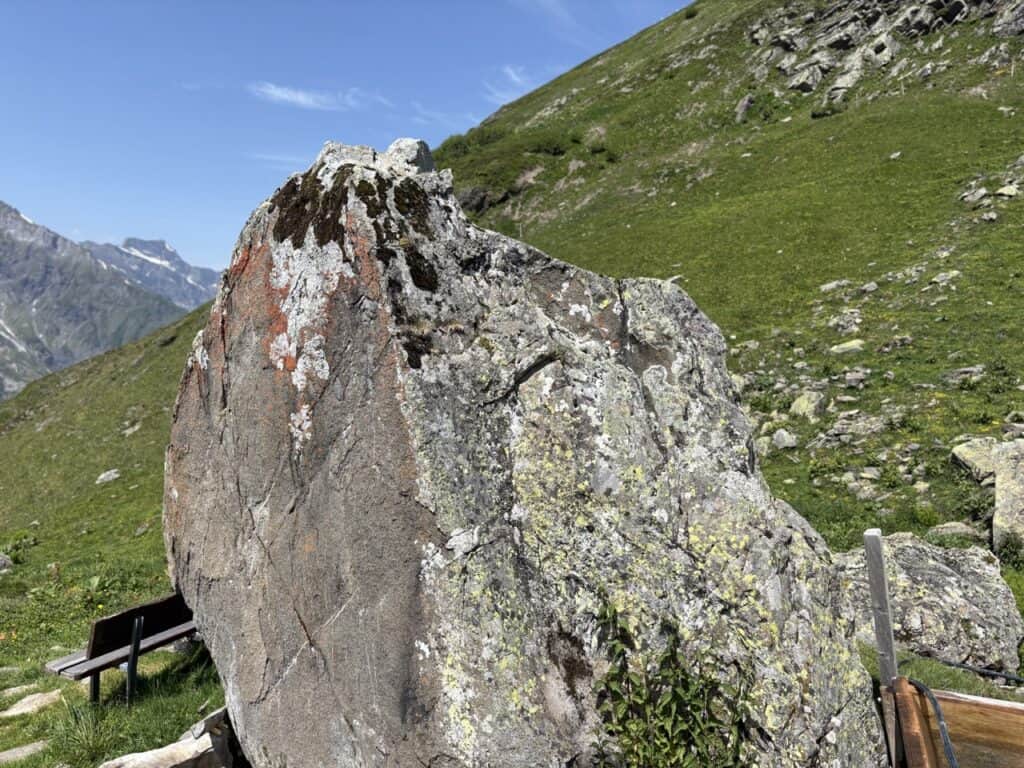
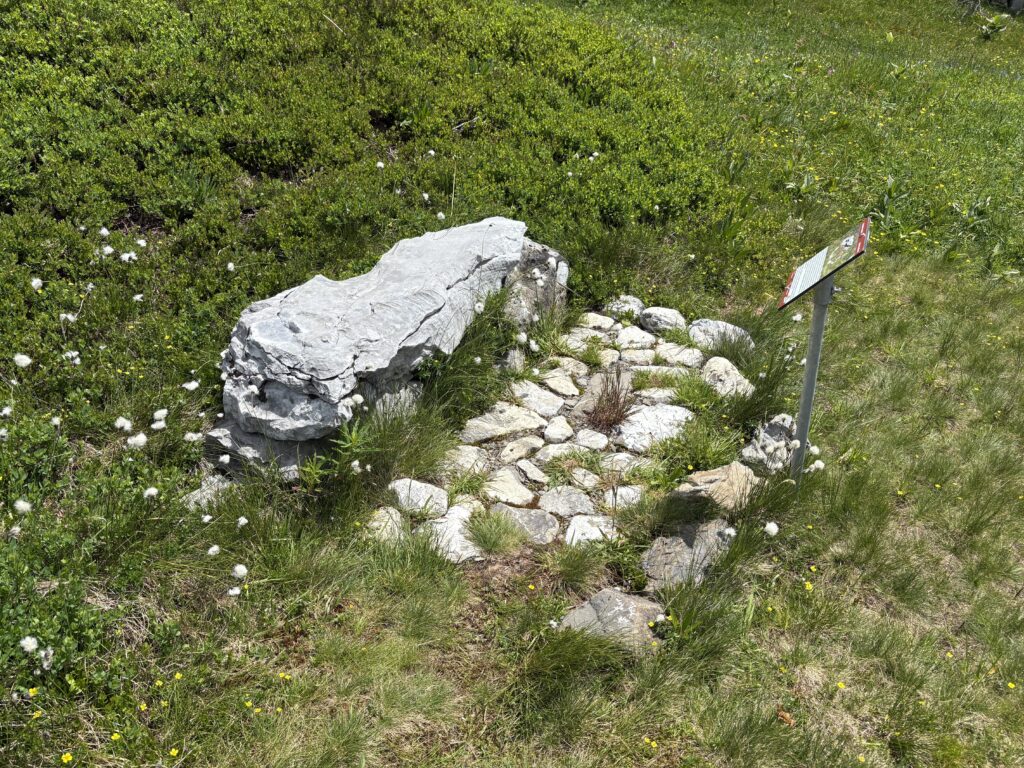
From the wooden bench I walked further upwards and reached ein grosser Steinblock, der den Tieren als Wetterschutz dient. Die Tafel, die dort aufgestellt ist, sagt, dass man sich in den Schutzbereich des Steins stellen soll um die Kräfte zu spüren. Ich habe nicht für eine Weile an den Steinbock gelehnt und es hat sich bei mir definitiv ein sehr beruhigendes und friedliches Gefühlt eingestellt. Ich hab mich dort auf jeden Fall sehr wohl gefühlt. Man geniesst von dort oben natürlich auch eine unglaublich schöne Aussicht auf die umliegende Bergwelt. Ein Traum! Es gibt dort auch ein kleines Bänkchen, auf das man sich setzen kann (wenn es denn noch frei ist). Auch andere verweilen gerne an diesem wunderschönen wohlfühlenden Ort.
Spitzigstein
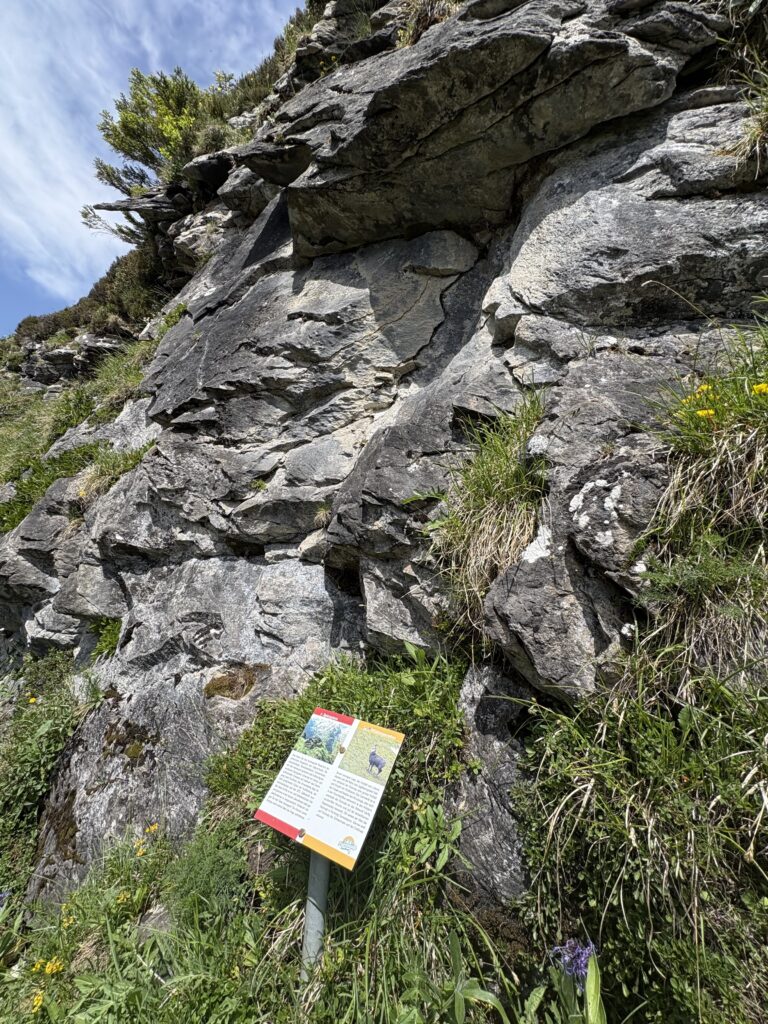
This one felt a little different. Less about the view, more about the presence. Here, surrounded by the gentle sound of several small mountain streams (yes, they all have charming names like Lägerenbach and Räzelistöckli), stands a curious rock formation: Spitzigstein. Partly overgrown, slightly mysterious, and with a certain quiet strength about it.
The energy here is said to be high and positive, and it’s part of an ancient line of force that once guided people, long before modern navigation, long before GPS. I’m not sure what I believe about all that, but I know how I felt standing there. Grounded. Still. Seen, in a way. You can climb the rock if you feel drawn to it. I didn’t. I just stood nearby for a while, listened to the water, and let it be enough.
Panoramaseeli – The Panoramic Lake
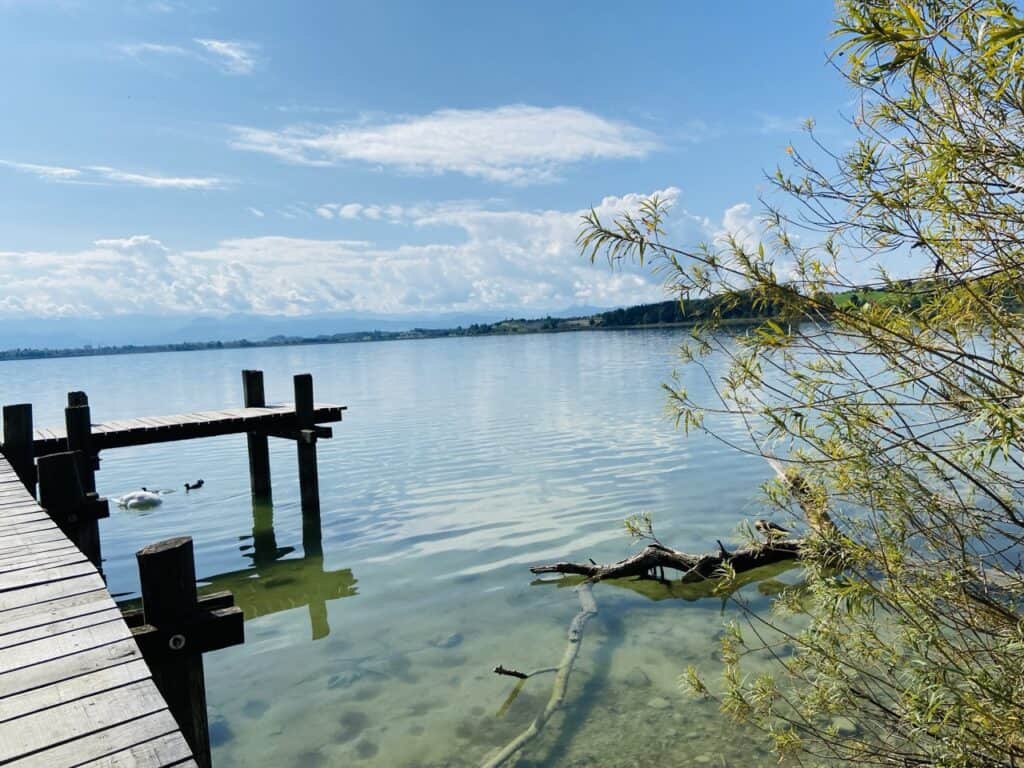
A little further on, as the trail curves around the “Hundschuft,” you’ll find another peaceful lake. This one with sweeping views all the way down to Engelberg. On a clear day, the water seems to melt into the sky. There’s something incredibly calming about the openness here, especially after the more intimate feeling of Spiegelseeli.
Hundschuft – Charging Up Where the Earth Breathes
Hundschuft might have the oddest name on the trail (no one seems to know exactly where it comes from), but it offers one of the most powerful feelings of presence I experienced all day. It’s a lookout point that towers above the valley, with Engelberg and the monastery far below, and all around you: openness, stillness, and something harder to name.
Near the summit, there’s a large wooden table marked with a cross, and a little further down there is a simple stone bench known as the “Akuplatz”. This spot is said to be more than just a Kraftort. It’s a place where energy rises naturally from the earth, spiraling upward in a way that nourishes not just your body, but your mind and spirit too. I know it sounds a little far out. But sitting there, honestly, something shifted.
I sat down, closed my eyes and for a few quiet minutes there was no separation. No thinking. Just a soft, still presence. The kind that makes you forget where you end and your surroundings begins. It felt like being part of something ancient and alive, something that doesn’t need words or reason, just your attention. Your being. Your breath.
For ancient people, places like this weren’t just nice; they were essential. They chose to live near these spots, drawn to the combination of energy, water, and protection. It makes sense. Nature knew what it was doing. For me, Hundschuft was the place where I felt that deep contentment settle in. That feeling of enough. Of being exactly where I was meant to be. And maybe that’s what all of this is really about. Not chasing the energy, but letting it meet you where you already are.
The Restaurant Terrace
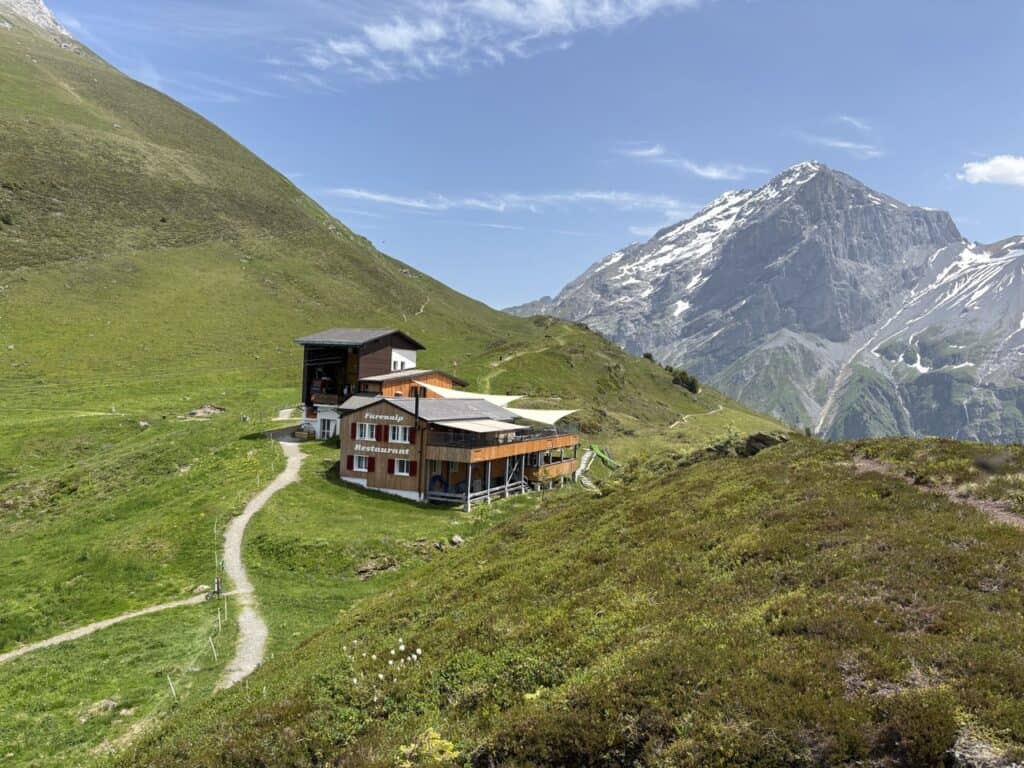
And if hiking isn’t your thing, or if your feet simply feel like they’ve done enough for today, don’t worry. The magic of Fürenalp isn’t reserved only for those on the trail. Right next to the summit station, you’ll find Restaurant Fürenalp, with a sun-drenched terrace that just so happens to be its own little energy spot. The atmosphere here feels gentle and uplifting, slightly elevated, yes, but in that comforting, cozy way that makes you want to linger a little longer than planned.
I stopped there at the end of my hike, treating myself to a cool drink, legs pleasantly tired, heart full. The view stretches wide from up there, as if the landscape is quietly offering you a final embrace before you head back down.
Planning Your Visit
When to Go
The best time for Fürenalp is summer through early autumn, when the meadows are green, the lakes reflective, and the trails clear of snow.
Cable Car Prices
The gondola from the valley floor to Fürenalp takes just six minutes, and the ride itself feels like part of the adventure. As of 2025, tickets cost:
- Adults (16+): CHF 14 one way / CHF 21 return
- With Gästekarte or Seniors (64+): CHF 13 one way / CHF 19 return
- Children (6–15): CHF 7 one way / CHF 10.50 return
- Children with discount: CHF 6.50 one way / CHF 9.50 return
- Family ticket (2 adults + 2–4 children): CHF 36 one way / CHF 54 return
The Tell-Pass is valid, but note that Fürenalp is a small, independent mountain railway and that SBB half fare card, Swiss Travel Pass, and other SBB discounts are therefore not accepted.
The cable car operates in summer and winter, with two maintenance breaks in April and November.
Check their website for price updates and current operating times.
Trails & Time
The Grotzli loop is the signature walk—a gentle 3.2-kilometer circuit that takes about an hour and a quarter. You can shorten it by doing just the upper or lower section, each about 40 minutes, and still capture the essence of the place.
What to Bring
Sturdy shoes are enough for the trail, but don’t forget a light jacket—mountain weather has a way of changing its mind quickly. Water and a small snack are useful if you plan to linger at the energy spots.
Food & Rest
Even if hiking isn’t your main reason for visiting, the mountain restaurant Fürenalp at the summit station is worth the ride up. Its sunlit terrace offers sweeping views and is the perfect place to rest and recharge.
Conclusion
Fürenalp isn’t the kind of place that overwhelms you with grandeur; it settles into you quietly, like a whisper you carry long after you’ve left. Whether you linger by the mirror-like lakes, sit on a weathered bench with the valley spilling wide below, or simply rest on the restaurant terrace with the sun on your face, there’s a softness here that seeps in slowly. It’s less about ticking off sights and more about letting the mountain set your pace, reminding you that stillness has its own kind of richness.
Some journeys stay in the legs; this one stays in the heart. Fürenalp doesn’t just give you views—it gives you space. Space to breathe, to listen, to be. And maybe that’s its greatest gift: the reminder that hidden gems aren’t really hidden at all. They’re waiting quietly, ready to meet us whenever we’re willing to slow down and notice.