Recharging on Kronberg Appenzell: An Easy Hike Along the Energy Trail

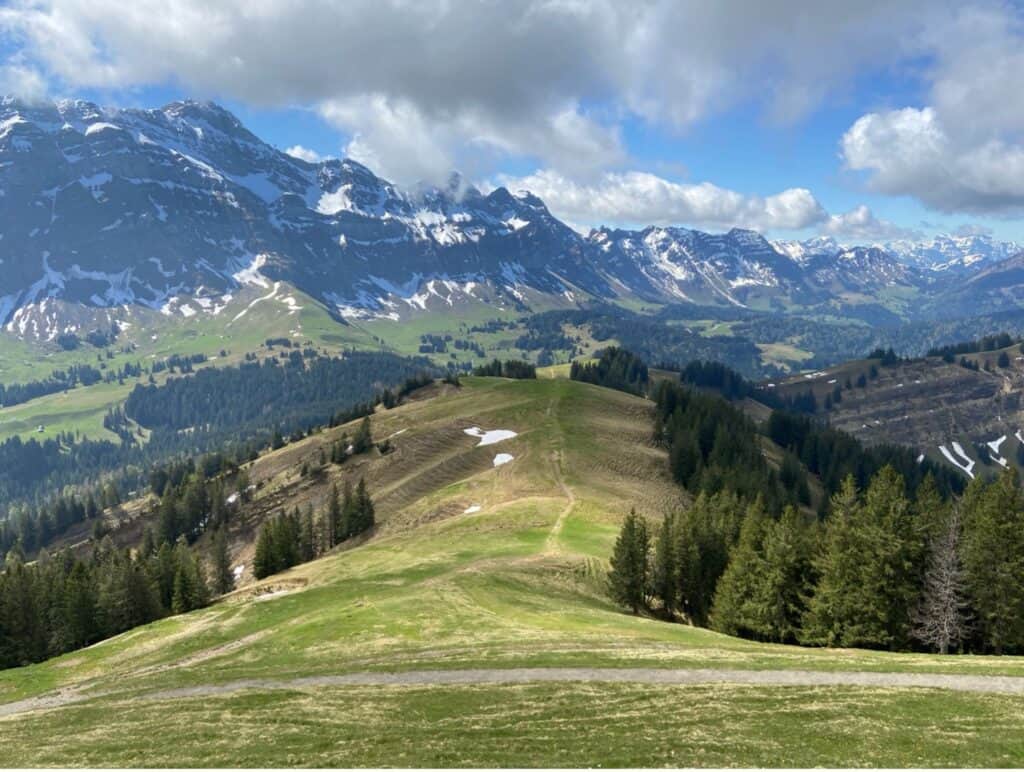
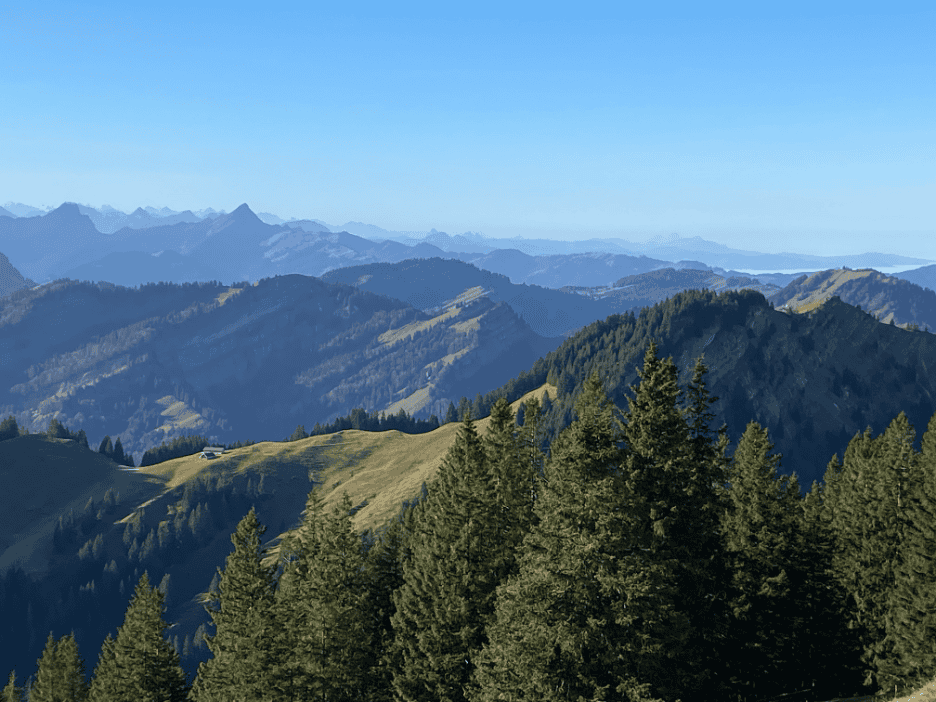
Panoramic view from the Kronberg summit showing the ridge trail with snow-capped Alpine peaks in the distance

Some places feel like a warm hug the moment you arrive, like they’ve been waiting for you all along. Others work more quietly, easing their way into your system one deep breath and curious step at a time.

Kronberg was that second kind of magic for me.

Tucked into the Appenzell region of Switzerland, Kronberg isn’t a “look at me” mountain. There are no dramatic cliffs competing for attention and no crowds lining up for the same photo. Instead, it offers something gentler and more grounding — the kind of place you choose when you want an easy hike, fewer people, and space to slow down.

If you’re looking for a family-friendly hike in Switzerland that still feels meaningful, Kronberg’s Kraftweg-Rundwanderung (also known as the Energy Trail) might be exactly what you’re craving. The circular trail winds across this unpretentious peak, inviting you to tune into the landscape rather than rush through it. It’s accessible with kids, peaceful enough for reflection, and playful too, with a mountain coaster and zipline waiting at the end if you’re in the mood for a little adrenaline.

Reaching 1,663 meters and accessed by a charming cable car from Jakobsbad, Kronberg opens up wide views across Central Switzerland, with Säntis, Öhrli, and Schäfler standing watch in the distance like quiet mountain elders.

I went to see if I could feel something — not just the satisfaction of ticking off another trail, but something subtler. A shift. A spark. The kind of energy that doesn’t announce itself, but hums softly if you’re willing to listen.

Spoiler: I did.
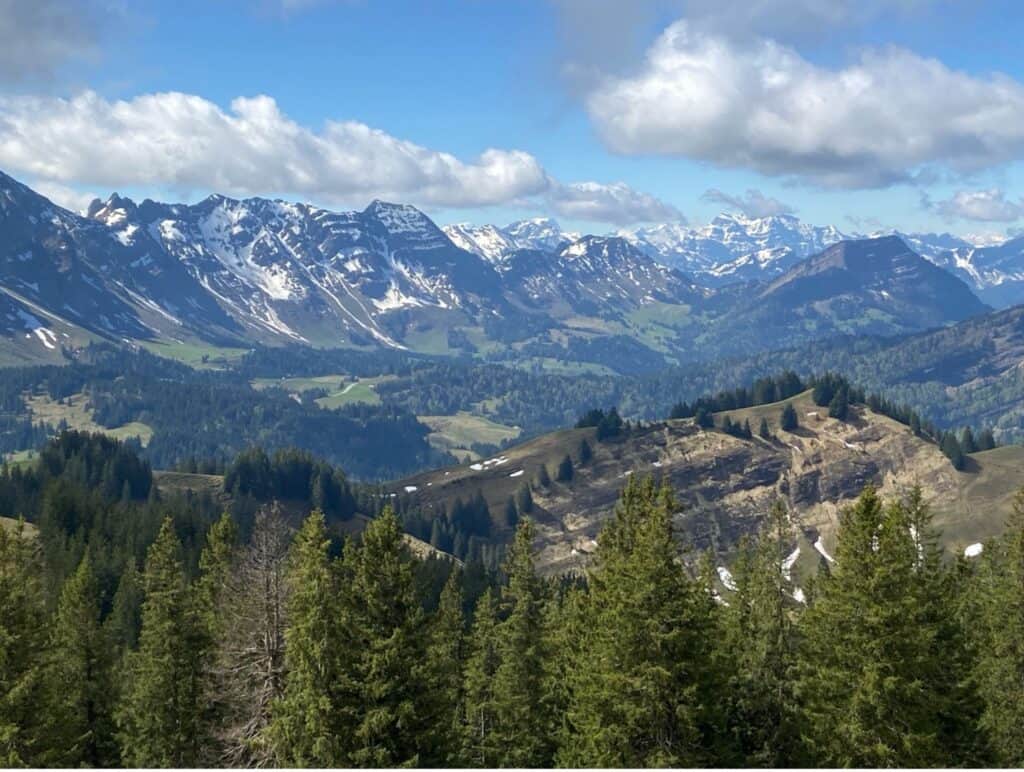
View from the Kronberg summit where the Energy Trail begins, overlooking the Appenzell Alps

How to Get from Zurich to Kronberg

I boarded a train from Zürich toward St. Gallen and reached Gossau in just over an hour. There, I switched to the charming Appenzellerbahn — one of those delightfully slow trains that meanders through lush green hills before arriving in Jakobsbad about half an hour later.

The Kronberg cable car station sits just across from the train platform and is impossible to miss.
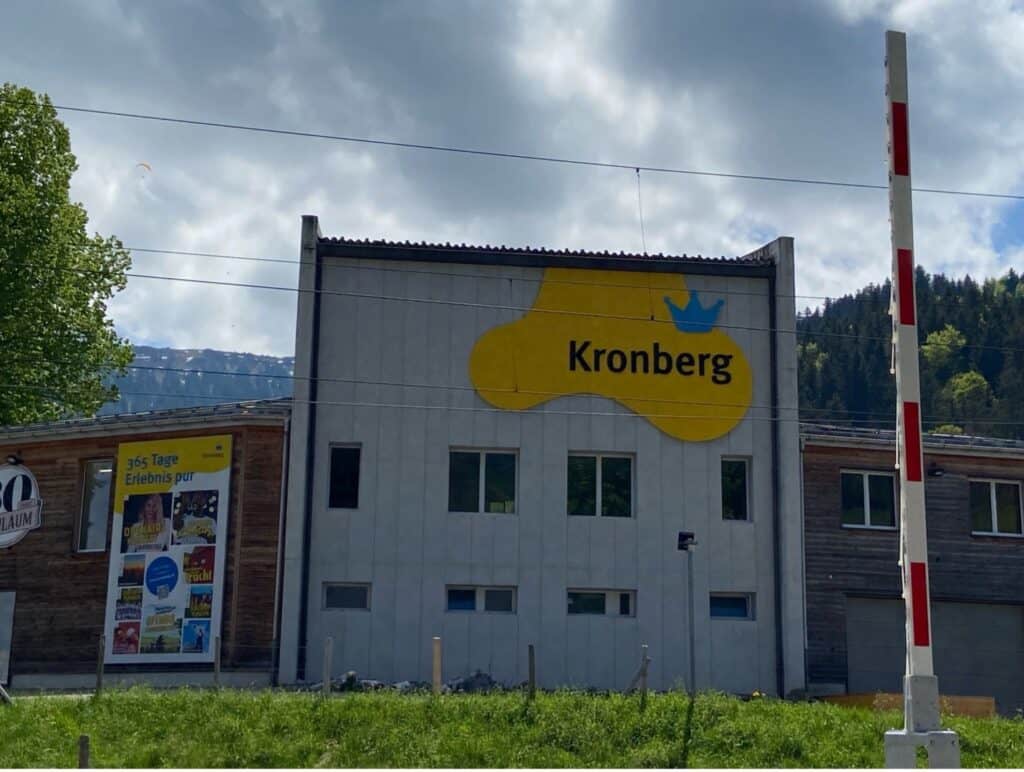
Kronberg cable car valley station in Jakobsbad, Appenzell, with train platform nearby

The ride up takes around ten minutes, and within moments of stepping out at the top, I was standing at the summit — and wow. Just… wow.
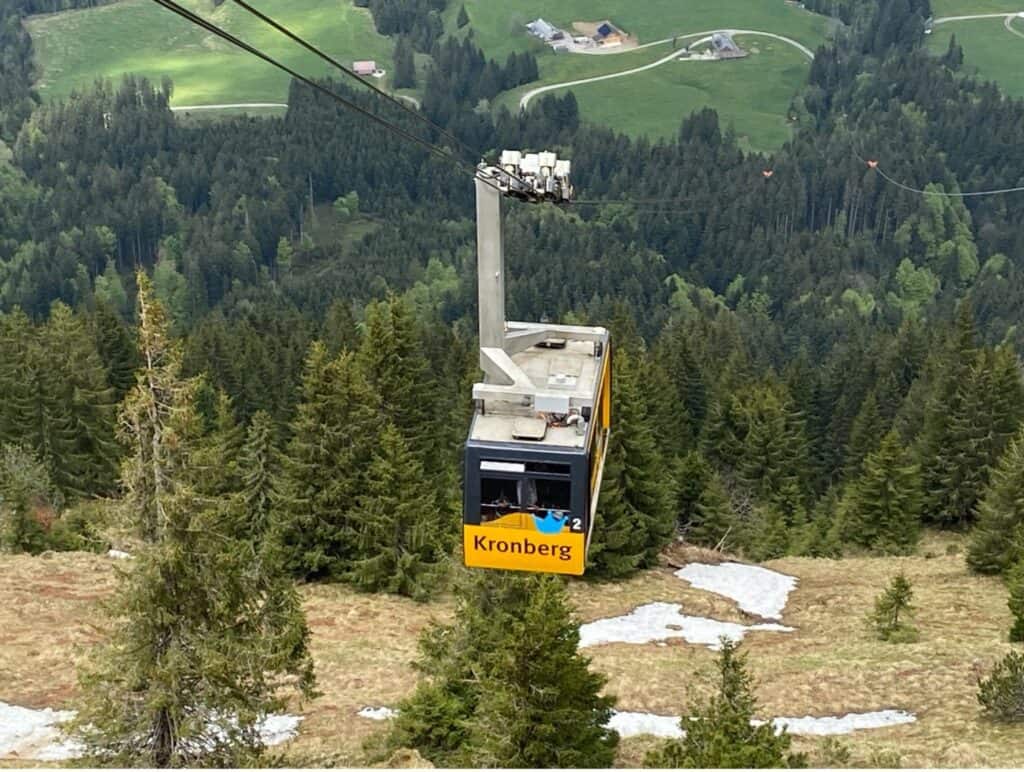
Yellow Kronberg cable car gliding up to the summit.

To the southeast, the northern Alpstein range stretched like a living painting: jagged, majestic, and timeless. To the north, the gentle curves of Appenzellerland unfolded all the way to Lake Constance, dotted with tiny villages and storybook hills. The summit is dotted with benches and lounge chairs, quietly inviting you to pause, breathe, and maybe lose track of time — which, let’s be honest, is half the point of being up here.
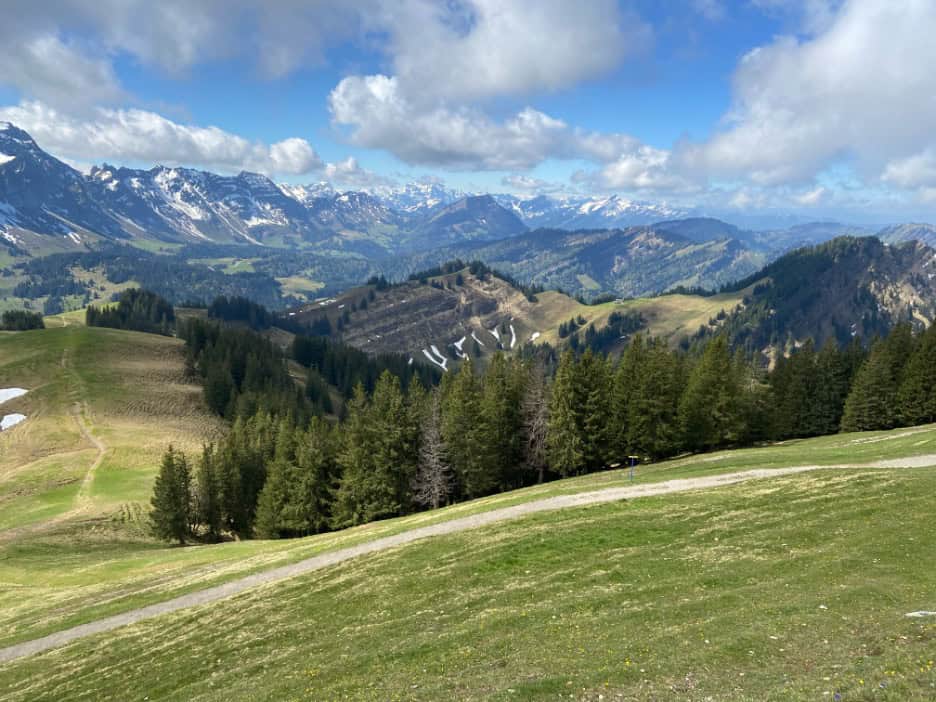
Snow-covered Alpine peaks viewed from Kronberg on a clear spring day.

Starting the Energy Trail

From the summit station, I began walking the Energy Trail, a circular path that gently flows through alpine meadows, quiet woodlands, and deeply sacred spaces. The trail starts with a walk along a wide, grassy ridge, leading down past a simple summit cross and toward a peaceful little chapel — the Jakobskapelle, or Chapel of St. James.
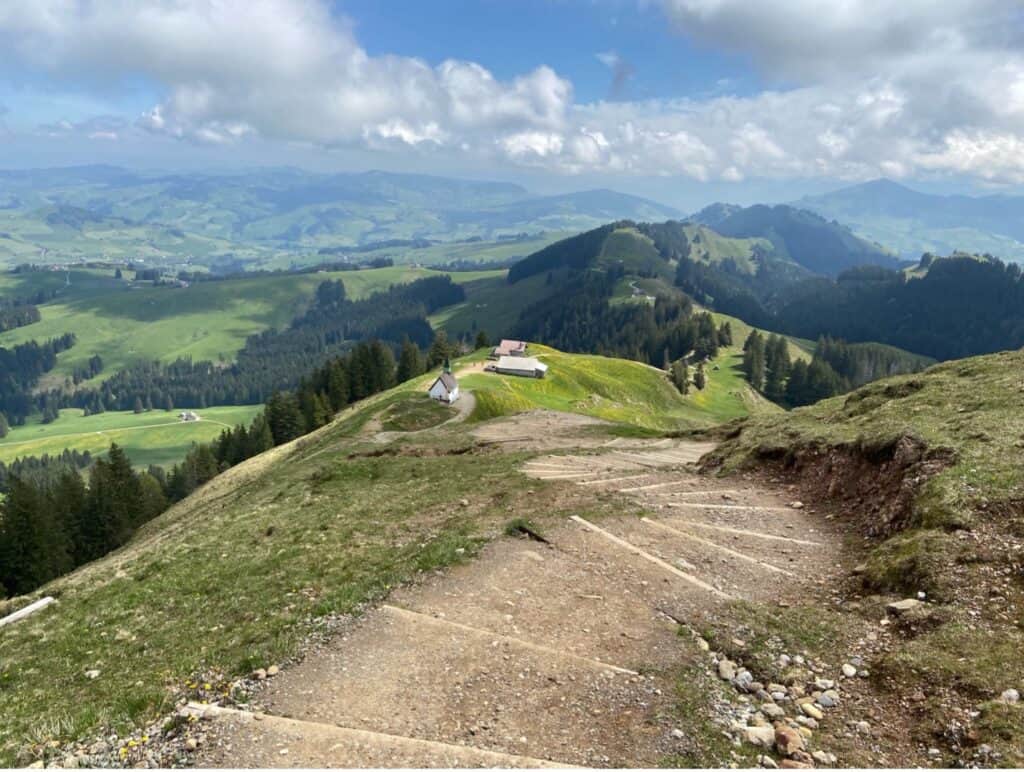
Hiking path descending from the Kronberg summit toward the Chapel of St. James

The chapel isn’t always open, but I peeked inside through the window, and it was enough to feel the stillness inside — humble, quiet, meaningful. The interior is simple, adorned with the eight Beatitudes from the Sermon on the Mount. At its heart, beneath a red Lazarus cross, stands a polished wooden statue of St. James. You don’t have to be religious to feel the energy here — it’s in the silence, in the age of the stones, in the wind rustling just slightly louder as you pause.
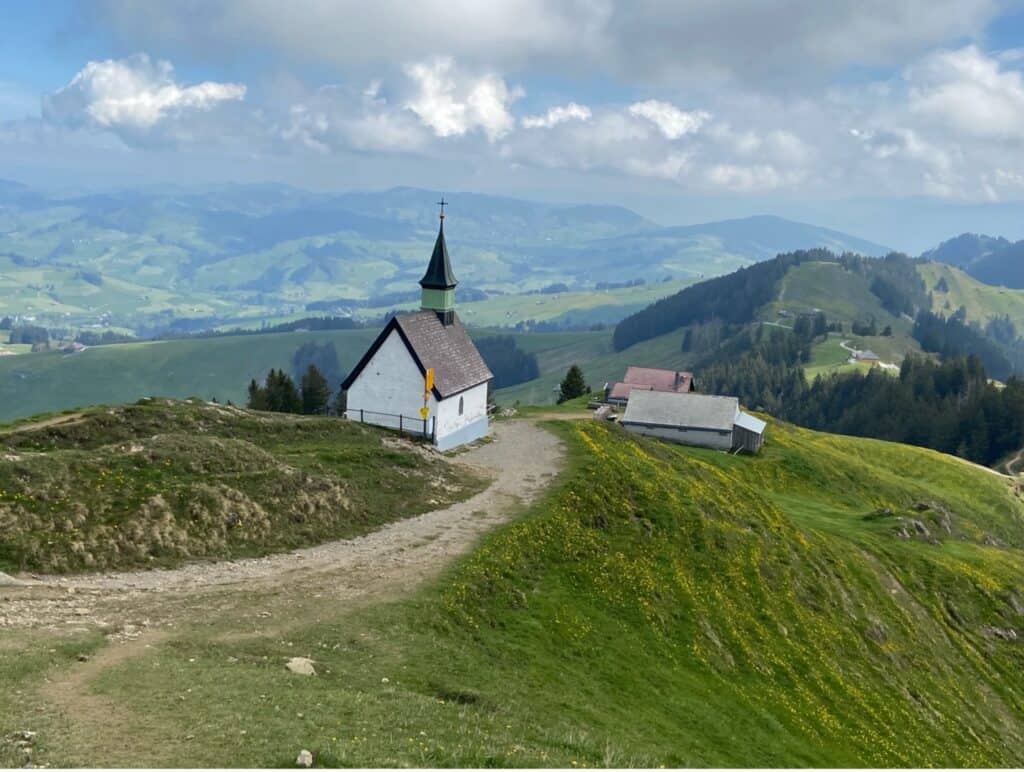
White Chapel of St. James (Jakobskapelle) standing on the slopes of Kronberg.

The Jakobskapelle stands on what’s believed to be a powerful energetic site. Originally built in 1859, the chapel was destroyed by arson in 1882, but rebuilt with sacred intention — even incorporating a bell from 1744 that once belonged to the old ossuary in Appenzell. The current version was consecrated in 1925, and it still feels timeless, like it’s always been watching over this mountain.

Following the Ancient Way

From the chapel, the path winds gently through soft, open pastureland known as Gross Chenner — land that once formed part of the Jakobsweg, the Camino de Santiago pilgrimage route. That alone filled my steps with a quiet sense of reverence. The idea that thousands of souls had walked this same ground before me, seeking clarity, healing, or purpose… it was humbling.

Soon, the trail entered the forest — and that’s when things started to shift.
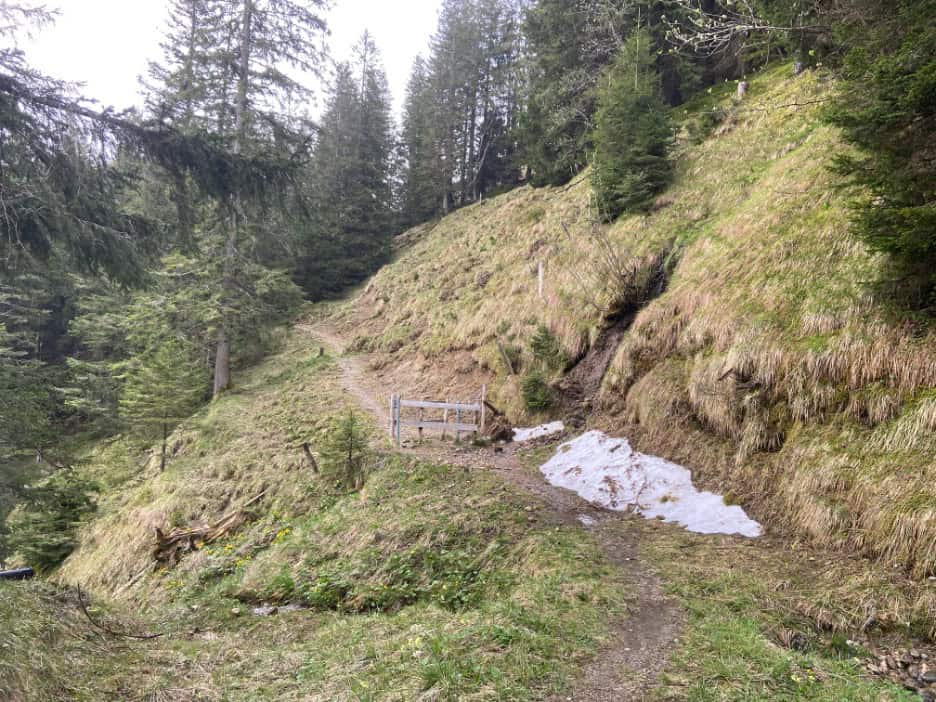
Narrow hiking trail on Kronberg with patches of melting snow in early spring

Reaching the Jakobsquelle – The Pilgrim’s Spring

Before I even reached the Jakobsquelle (St. James Spring), I could feel it: a low, subtle hum. My fingertips tingled. My breath deepened. If you’re sensitive to energy, you’ll know the feeling. It’s not loud or dramatic. It’s just… there. And it feels ancient.

The spring itself is wrapped in legend. One story says that St. James once preached with such intensity in Spain that his pilgrim’s staff flew across the sky and struck the ground on Kronberg, where it split the earth and water began to flow. Another version has St. James himself visiting the mountain and blessing the spring directly.

And for centuries, people have been coming here to seek healing. There’s even an old votive plaque from the 1700s, describing how a man with leprosy washed himself with this water every day for four weeks — and walked away completely healed.

I can’t claim a miracle — but I can say this: when I cupped the cool water in my hands and took a sip, it felt like drinking something older than time. It tasted like stone and sky and earth all at once. I splashed it on my face. I filled both my bottles. And I stood there a little longer than necessary, just grateful to be alive.
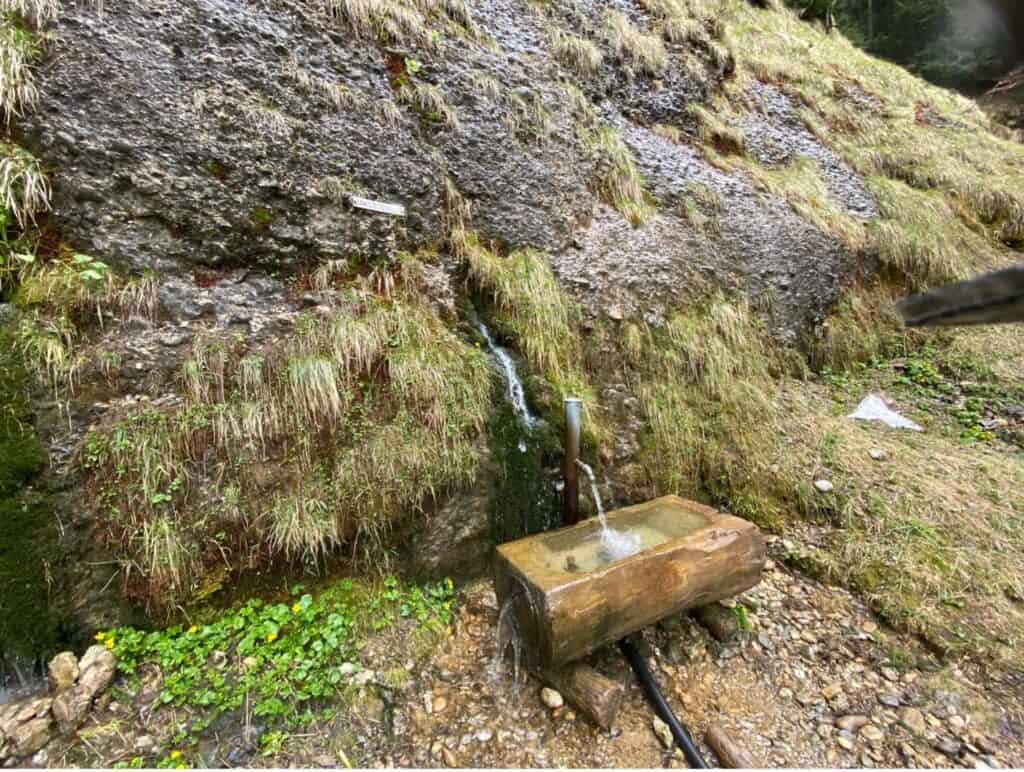
Stone fountain at the St. James Spring on Kronberg, known for its mineral-rich water

They say the water here is rich in minerals like calcium, sodium, and magnesium, with all the signs of natural healing water. But beyond that, for those who believe in energetic flow, this spring holds a high frequency — a vibration of pure life force.

Beside the spring stands a stone shrine with a statue of St. James, marking the spot where his staff is said to have struck. I placed my hands on the cool rock and closed my eyes. A soft, quiet vibration rose through my palms — not loud, but unmistakable. Whether it was spiritual, physical, or just my own openness in that moment, I felt something.

And even if you don’t feel anything right away? That’s okay. Sometimes the energy works quietly, behind the scenes.
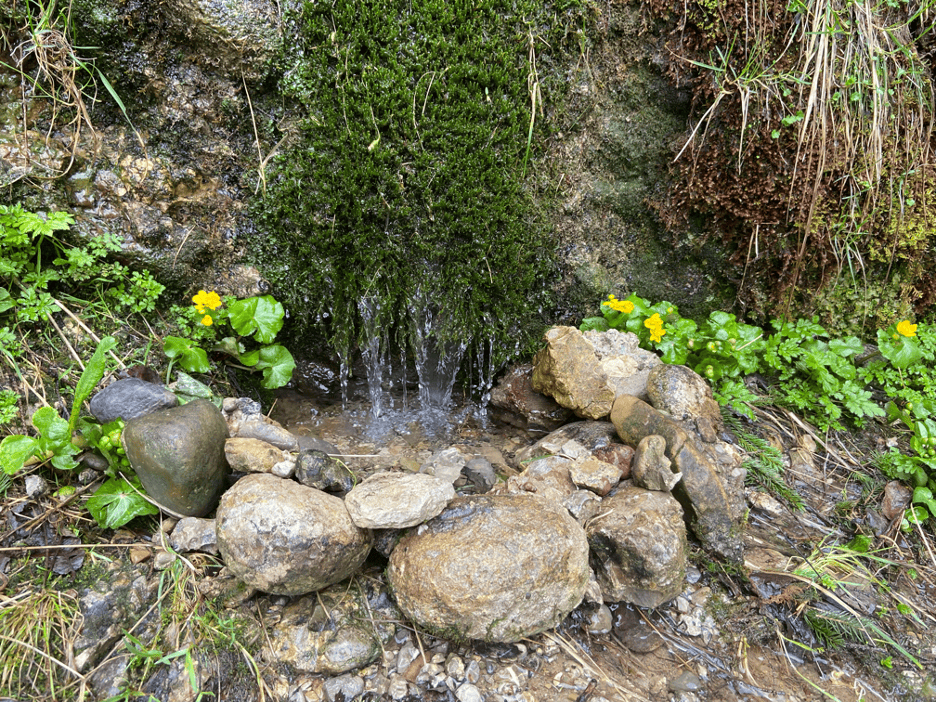
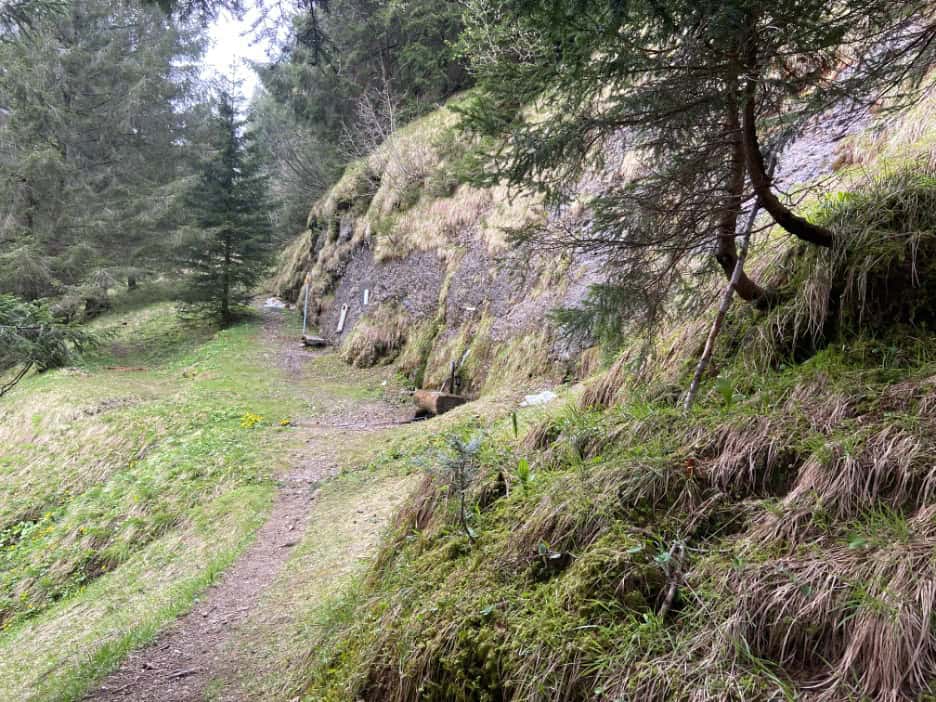
St. James Spring (Jakobsquelle) flowing from the mountainside on Kronberg
Forest path leading to the St. James Spring on the Kronberg Energy Trail

Facing Spring Snow on the Trail

Since I visited in early spring, parts of the trail were still under snow — which added a little extra mystery (and challenge) to the experience. I moved carefully, hoping the snow was firm enough beneath my boots, and laughing at myself every time I nearly slipped. It felt like nature’s reminder not to take things too seriously.
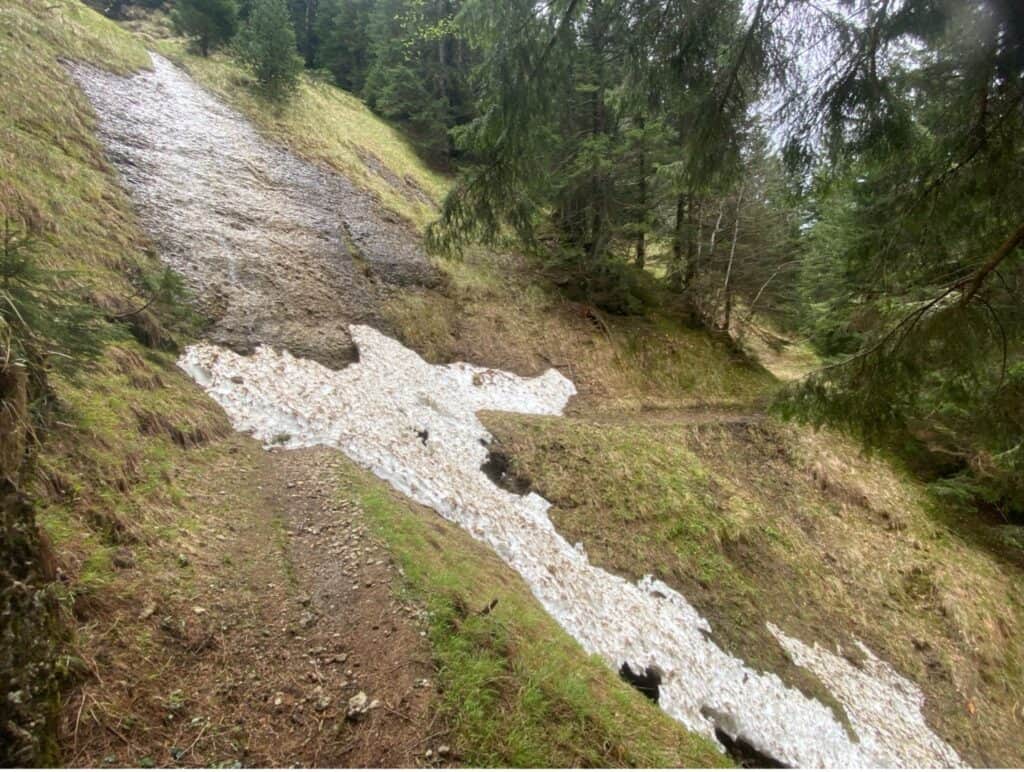
Leftover snow lining the hiking trail on Kronberg during early spring

Despite the icy patches, the views, the peace, and the gentle energy of the trail kept me going. There’s something about a snow-covered path that demands presence. You can’t rush it. You walk, step by mindful step.
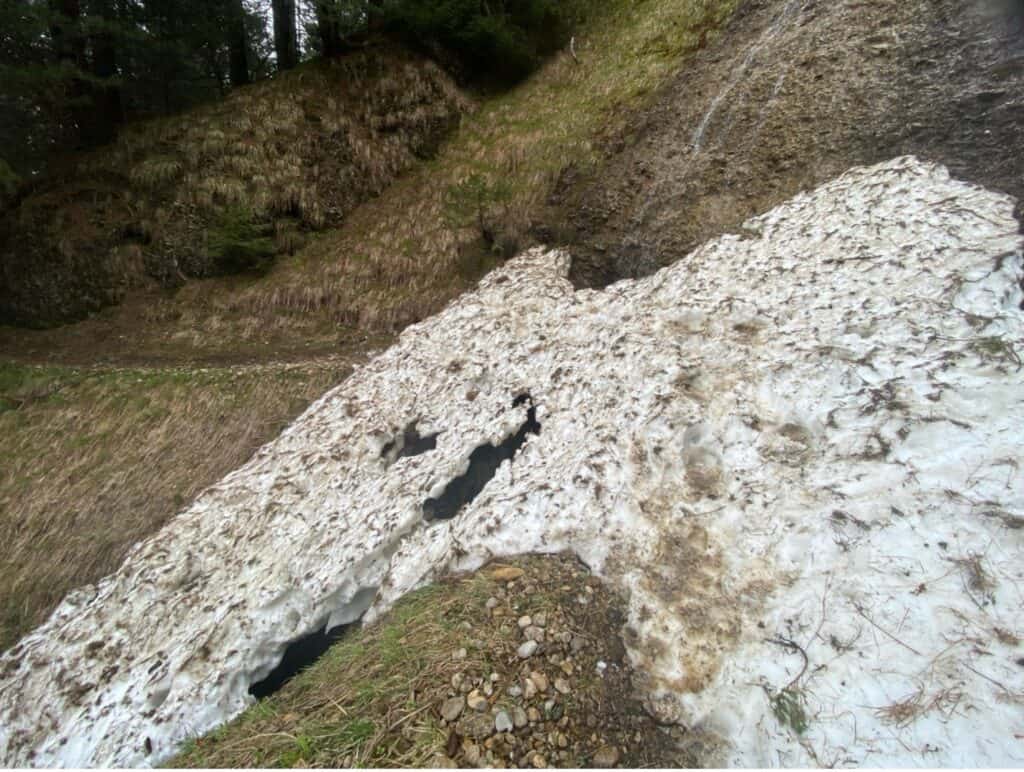
Icy snow field crossing the Kronberg hiking trail in springtime

The Climb Back – Through the Forest and the Energy Zones

As I neared the final stretch of the loop, the path took me into a beautiful, slightly mysterious spruce forest — the kind with twisted trunks and low-hanging branches that look like they’ve been keeping secrets for centuries.
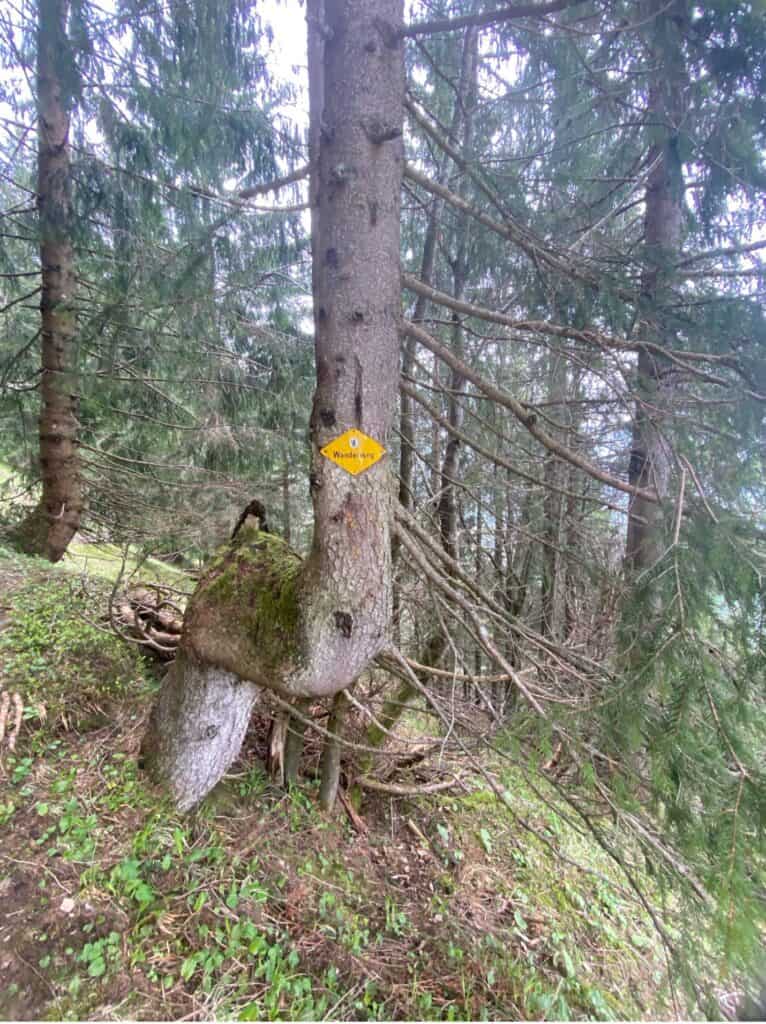
Dense spruce forest on Kronberg with twisted trunks and low-hanging branches

This part of the trail is said to pass through a “Reizzone” — an energetically intense zone shaped by underground rock faults, water currents, and subtle energy fields. Some trees and animals — called Strahlensucher (radiation seekers) — thrive here: firs, oaks, cats, hares, insects. Others, like dogs and horses (and most humans), are Strahlenflüchter — more sensitive to these fields and less likely to settle in them.
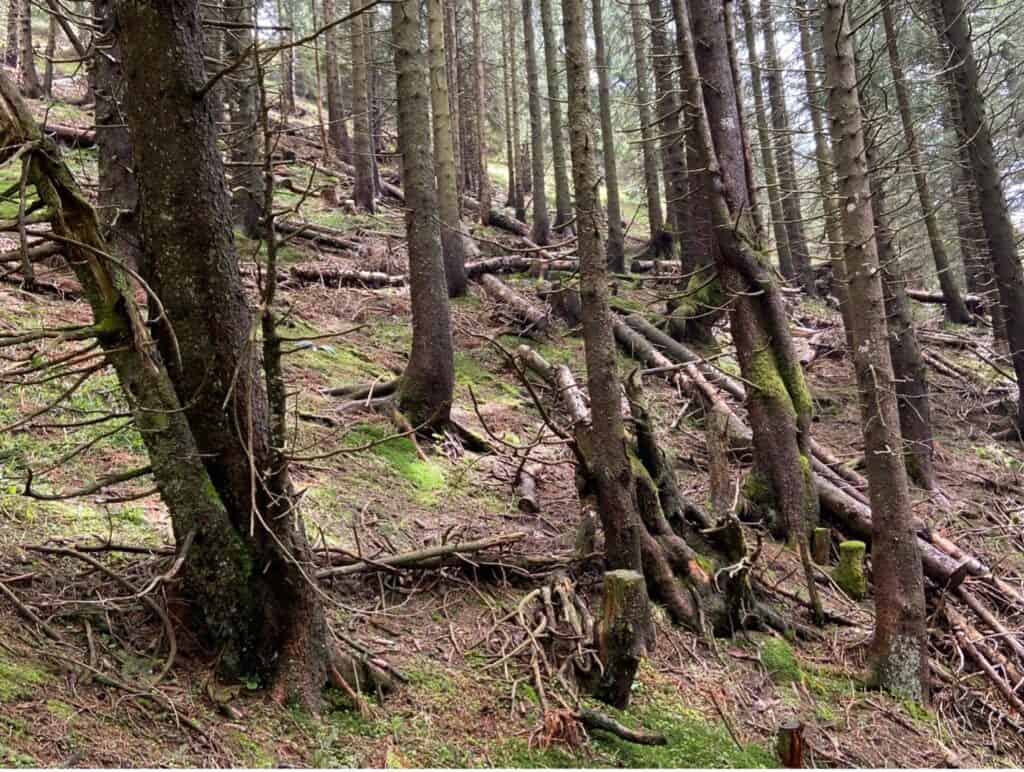
Hiking path through the Reizzone energy area in the forest on Kronberg

 I didn’t know what to expect as I entered this stretch of the trail. But I noticed something subtle: a faint pressure in my head, a weight settling into my body. Each step uphill felt heavier, more demanding than usual—not just the climb itself, but the way the air and the place seemed to press against me. It was hard to tell how much was the steep slope and how much was something else, something in the energy of the land itself. Either way, the sensation made me pause and walk more mindfully, noticing the trees, the wind, and the quiet intensity around me.
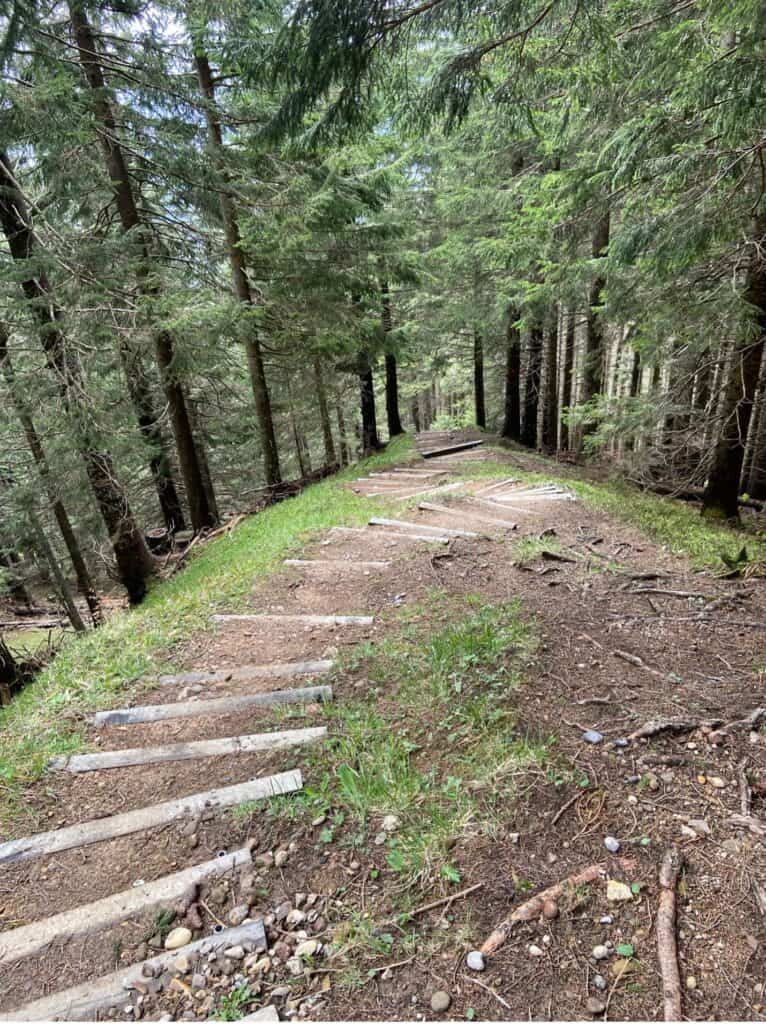
Steep uphill forest trail on the Kronberg Energy Path leading back to the summit station

Wrapping up with a Little Play

After making my way through the forest and completing the energy trail, I treated myself to a well-earned rest at the summit — a quiet snack, a long sip of spring water, and a few deep breaths with my feet dangling off a sun-warmed bench. 
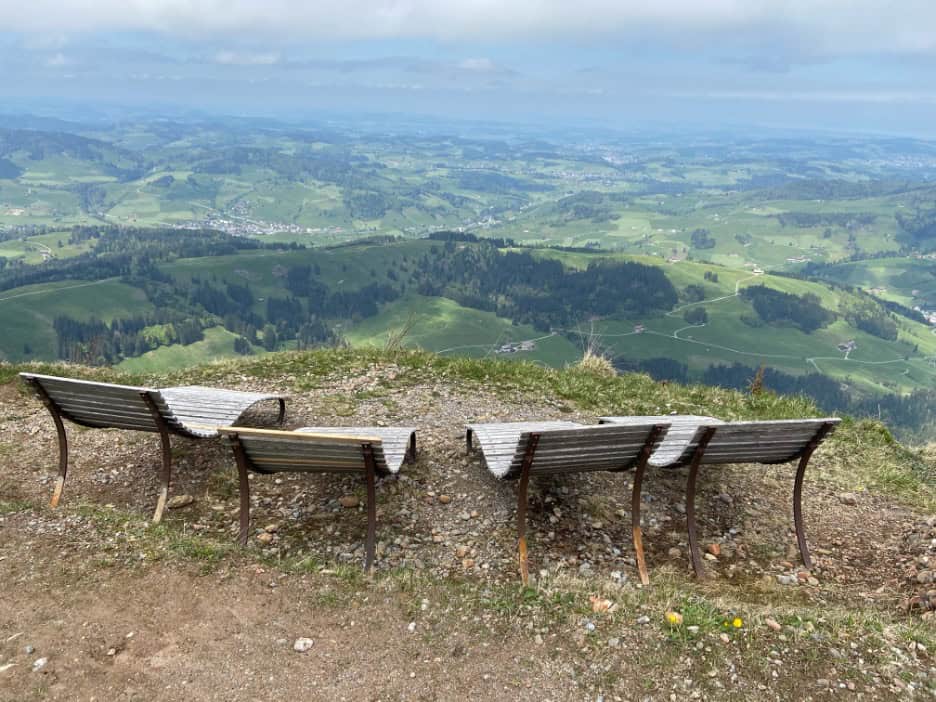
Wooden lounge chairs at the Kronberg summit inviting hikers to rest and enjoy the view

Eventually, I hopped back into the cable car for the gentle descent back into the valley. But before heading home, curiosity (and maybe a bit of childlike joy) pulled me toward the Erlebniswelt — the little adventure park tucked beside the base station. And honestly? It was a blast.

There’s a fun mountain scooter run that zips and zags down the mountain, a zipline park that lets you soar through the treetops, and even a whimsical Märliwelt (Fairy Tale World) for little adventurers and storybook lovers alike. 
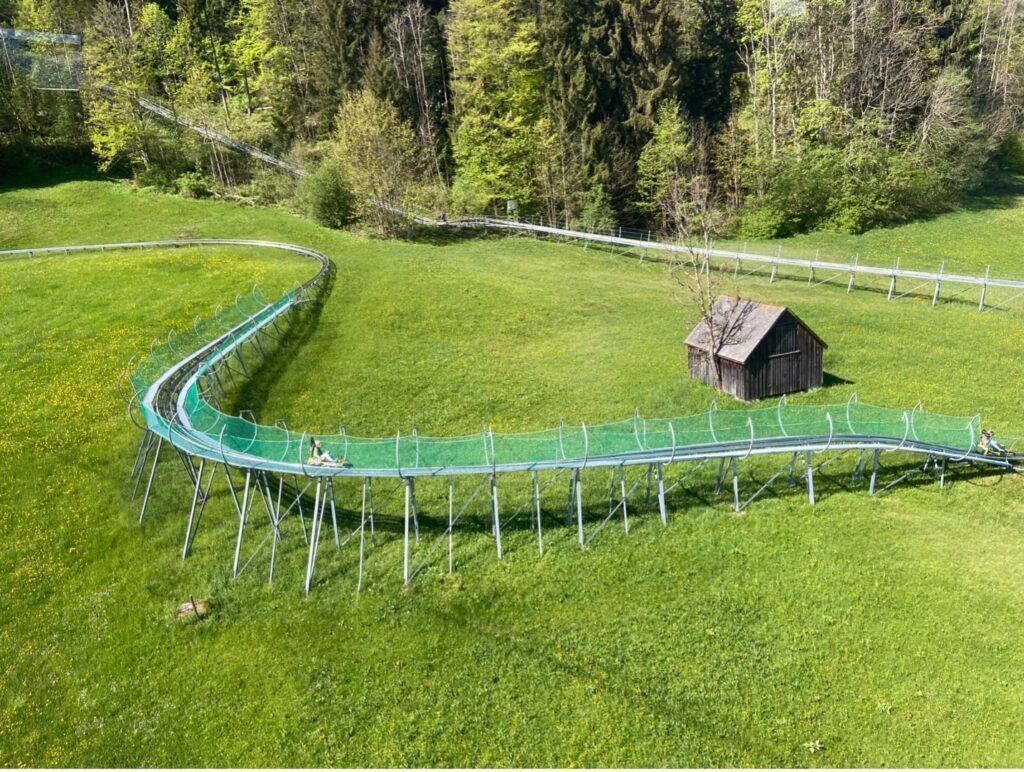
Mountain coaster ride at Kronberg offering a playful descent through alpine scenery
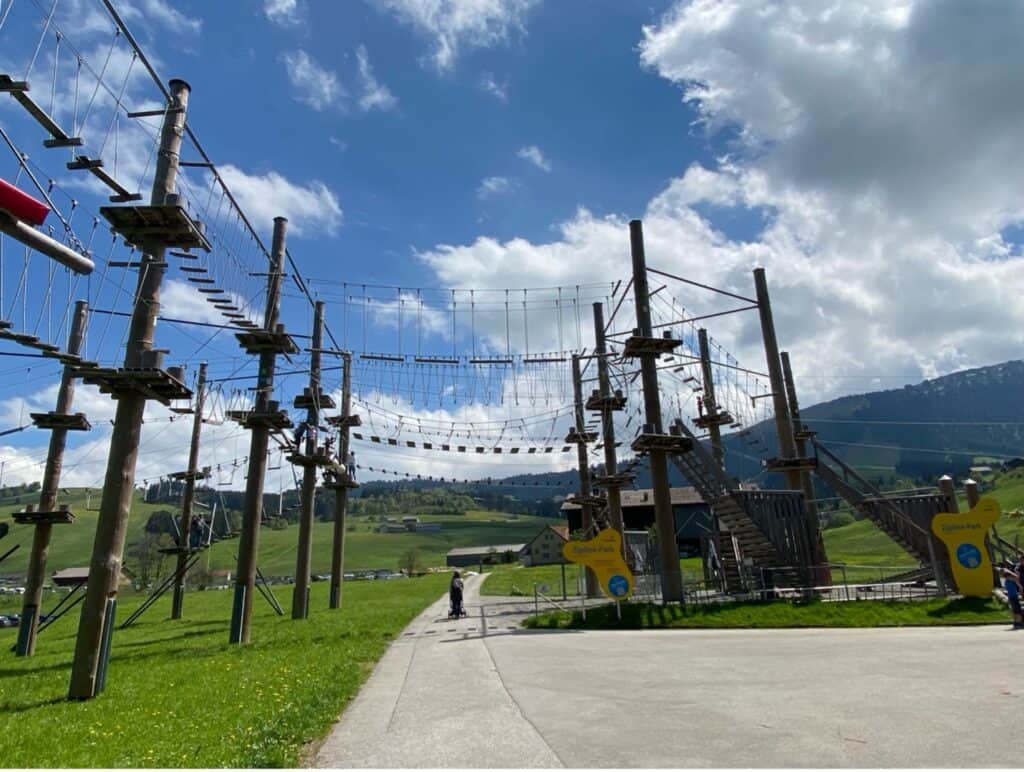
Zipline park near the Kronberg cable car base station in Jakobsbad, Appenzell
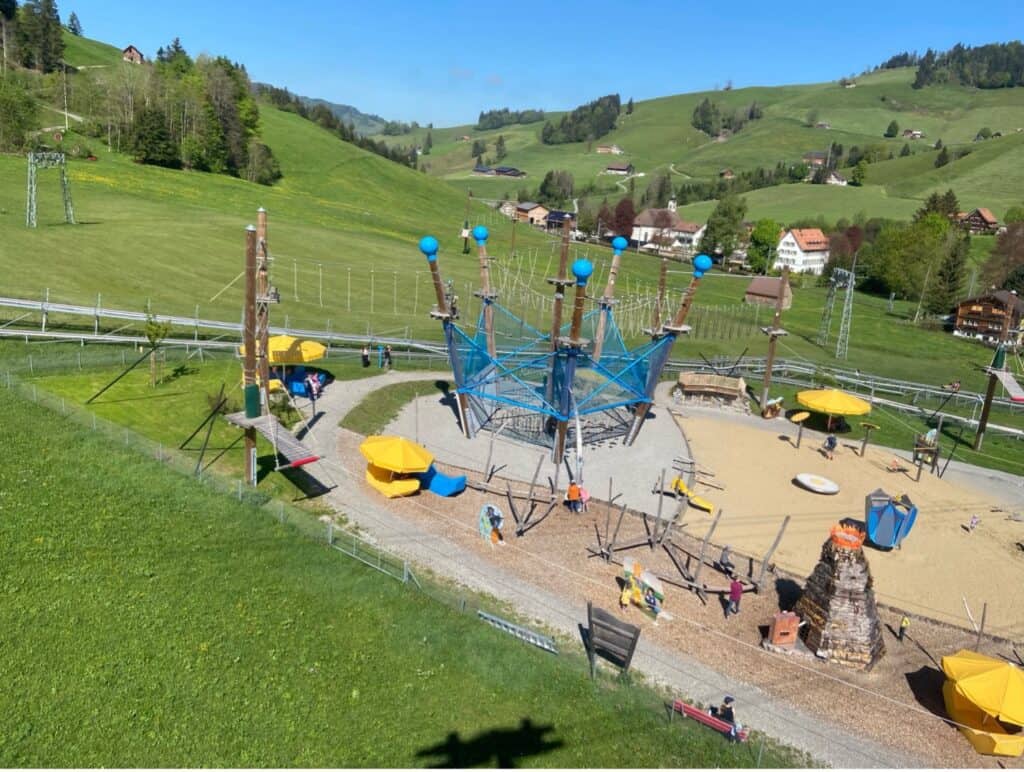
Children’s playground at the Kronberg cable car base station in Jakobsbad
Hotel Kurhaus Jakobsbad
Historic Hotel Kurhaus Jakobsbad nestled in the peaceful Appenzell countryside
New Section: How Much Does It Cost?
How Much Does a Visit to Kronberg Cost?
Kronberg is refreshingly accessible by Swiss standards, especially considering how much it offers for both hikers and families.
A round-trip cable car ride from Jakobsbad to the summit typically costs around CHF 38 for adults. If you have a Swiss Half Fare Card, expect to pay roughly CHF 19, and with a GA Travelcard, the ride is usually fully covered.

Children benefit from discounted rates, and families with a Junior Card can often bring kids along for free — making this a very budget-friendly mountain outing if you’re traveling with little ones.

If you want to add a playful element after your hike:

The mountain scooter ride costs approximately CHF 12–15, depending on the route.
The zipline park prices vary by course length and age, generally starting around CHF 25–30.
(Prices can change seasonally, so it’s always worth checking the official Kronberg website before you go — but this gives a realistic idea for planning.)
New Section: Where to Stay if You Want to Linger Longer
Where to Stay Near Kronberg: Hotel Kurhaus Jakobsbad
If Kronberg’s calm, grounding energy makes you want to stay overnight (and honestly, it probably will), Hotel Kurhaus Jakobsbad is a beautifully aligned choice.
Just a short walk from the cable car valley station, this historic spa hotel feels like an extension of the landscape rather than a break from it. The atmosphere is quiet, restorative, and intentionally slow — exactly what you want after a mindful hike.

Rooms are simple and comfortable rather than flashy, and many look out over rolling Appenzell hills that seem to soften your thoughts the longer you stare at them. The hotel is especially known for its wellness offerings, including spa treatments and a peaceful garden — perfect if you’re leaning into the healing, reset-style travel that Kronberg invites.

Staying here turns Kronberg from a half-day excursion into a deeply nourishing retreat, giving you time to let the experience settle instead of rushing back to everyday life.

Final SEO + Content Notes (Quick but Important)
Adding costs + accommodation significantly improves search intent satisfaction for:
“Kronberg hike Switzerland”
“Kronberg Appenzell energy trail”
Your personal energy experiences are a major strength — don’t dilute them.
This post now balances:
Inspiration (top of funnel)
Practical planning (mid-funnel)
Stay overnight suggestion (soft conversion opportunity)
If you want, next we can:
Lightly tighten the intro for even stronger intent alignment
Add a short “Is Kronberg Worth It?” section for skimmers
Optimize one or two H2s to avoid any “filler header” risk
Just tell me what you want to tackle next.
Can I include where to eat, summit restaurant with regional specialities or base station restaurant in the where to stay paragraph as well or should I write a separate paragraph? Could you help me write it please? Thank you in advance.
Great question — and you’re thinking about this exactly the right way from both a reader and SEO perspective.
Short answer
👉 Yes, you can include where to eat, but don’t fold it fully into the “Where to Stay” paragraph.
Best practice (and why)
I recommend a short, clearly labeled separate section, even if it’s just one compact paragraph.
Here’s why this works better:

Readers actively scan for food info (“Where can I eat?” is a different intent than “Where do I sleep?”)
It avoids diluting the emotional calm of your “Where to Stay” section
It helps Google understand that you’re covering practical visit planning, not just inspiration
It gives you space to highlight regional Appenzell specialties, which boosts EEAT and uniqueness
That said, the section can still be soft, atmospheric, and slow-travel aligned — not listy or transactional.
How I’d structure it on the page
Where to Stay Near Kronberg (Hotel Kurhaus Jakobsbad)
Where to Eat on Kronberg (and After the Hike) ← new H2 or H3
This keeps everything cohesive without jumbling intents.
Section Draft: Where to Eat on Kronberg (Summit + Base Station)
Here’s copy you can drop straight in, written in your tone:
Where to Eat on Kronberg (Summit and Valley)
If you work up an appetite on the Energy Trail — and chances are you will — Kronberg makes it easy to refuel without breaking the spell of the day.
Right at the summit, the mountain restaurant is a lovely place to linger a little longer. With panoramic views over the Appenzell hills and the Alpstein range, it serves regional Swiss specialties that feel hearty and grounding rather than heavy — the kind of food that tastes especially good after fresh air and quiet movement. It’s an ideal spot for a warm meal, a slice of cake, or simply a coffee enjoyed slowly, watching the clouds drift past.

Back down at the base station in Jakobsbad, you’ll find another welcoming restaurant that’s perfect if you prefer to eat after your descent. It’s casual, family-friendly, and a nice way to ease back into the valley — especially if you’ve added a mountain scooter ride or zipline adventure to your day.

Whether you choose to eat at the top or the bottom, the emphasis here isn’t on rushing through a meal, but on continuing the rhythm of the hike: local flavors, unhurried moments, and a sense of being well cared for by the place itself.

Optional tweak (if you want tighter flow)
If you want to lightly connect food and accommodation without merging sections, you can add one sentence at the end of your hotel paragraph:
Staying overnight also means you can enjoy a relaxed dinner nearby — either at the Kronberg summit restaurant earlier in the day or at one of the cozy eateries around Jakobsbad — without feeling the need to rush back to Zürich.
This keeps boundaries clean while reinforcing slow travel.
If you’d like, next we can:
Tighten this section for featured snippet potential
Add subtle Appenzell food specificity (without overclaiming)
Decide whether this should be an H2 or H3 based on your primary keyword
Just tell me 👍

Children’s playground at the Kronberg cable car base station in Jakobsbad
Hotel Kurhaus Jakobsbad
Historic Hotel Kurhaus Jakobsbad nestled in the peaceful Appenzell countryside
New Section: How Much Does It Cost?
How Much Does a Visit to Kronberg Cost?
Kronberg is refreshingly accessible by Swiss standards, especially considering how much it offers for both hikers and families.
A round-trip cable car ride from Jakobsbad to the summit typically costs around CHF 38 for adults. If you have a Swiss Half Fare Card, expect to pay roughly CHF 19, and with a GA Travelcard, the ride is usually fully covered.

Children benefit from discounted rates, and families with a Junior Card can often bring kids along for free — making this a very budget-friendly mountain outing if you’re traveling with little ones.

If you want to add a playful element after your hike:

The mountain scooter ride costs approximately CHF 12–15, depending on the route.
The zipline park prices vary by course length and age, generally starting around CHF 25–30.
(Prices can change seasonally, so it’s always worth checking the official Kronberg website before you go — but this gives a realistic idea for planning.)
New Section: Where to Stay if You Want to Linger Longer
Where to Stay Near Kronberg: Hotel Kurhaus Jakobsbad
If Kronberg’s calm, grounding energy makes you want to stay overnight (and honestly, it probably will), Hotel Kurhaus Jakobsbad is a beautifully aligned choice.
Just a short walk from the cable car valley station, this historic spa hotel feels like an extension of the landscape rather than a break from it. The atmosphere is quiet, restorative, and intentionally slow — exactly what you want after a mindful hike.

Rooms are simple and comfortable rather than flashy, and many look out over rolling Appenzell hills that seem to soften your thoughts the longer you stare at them. The hotel is especially known for its wellness offerings, including spa treatments and a peaceful garden — perfect if you’re leaning into the healing, reset-style travel that Kronberg invites.

Staying here turns Kronberg from a half-day excursion into a deeply nourishing retreat, giving you time to let the experience settle instead of rushing back to everyday life.

Final SEO + Content Notes (Quick but Important)
Adding costs + accommodation significantly improves search intent satisfaction for:
“Kronberg hike Switzerland”
“Kronberg Appenzell energy trail”
Your personal energy experiences are a major strength — don’t dilute them.
This post now balances:
Inspiration (top of funnel)
Practical planning (mid-funnel)
Stay overnight suggestion (soft conversion opportunity)
If you want, next we can:
Lightly tighten the intro for even stronger intent alignment
Add a short “Is Kronberg Worth It?” section for skimmers
Optimize one or two H2s to avoid any “filler header” risk
Just tell me what you want to tackle next.
Can I include where to eat, summit restaurant with regional specialities or base station restaurant in the where to stay paragraph as well or should I write a separate paragraph? Could you help me write it please? Thank you in advance.
Great question — and you’re thinking about this exactly the right way from both a reader and SEO perspective.
Short answer
👉 Yes, you can include where to eat, but don’t fold it fully into the “Where to Stay” paragraph.
Best practice (and why)
I recommend a short, clearly labeled separate section, even if it’s just one compact paragraph.
Here’s why this works better:

Readers actively scan for food info (“Where can I eat?” is a different intent than “Where do I sleep?”)
It avoids diluting the emotional calm of your “Where to Stay” section
It helps Google understand that you’re covering practical visit planning, not just inspiration
It gives you space to highlight regional Appenzell specialties, which boosts EEAT and uniqueness
That said, the section can still be soft, atmospheric, and slow-travel aligned — not listy or transactional.
How I’d structure it on the page
Where to Stay Near Kronberg (Hotel Kurhaus Jakobsbad)
Where to Eat on Kronberg (and After the Hike) ← new H2 or H3
This keeps everything cohesive without jumbling intents.
Section Draft: Where to Eat on Kronberg (Summit + Base Station)
Here’s copy you can drop straight in, written in your tone:
Where to Eat on Kronberg (Summit and Valley)
If you work up an appetite on the Energy Trail — and chances are you will — Kronberg makes it easy to refuel without breaking the spell of the day.
Right at the summit, the mountain restaurant is a lovely place to linger a little longer. With panoramic views over the Appenzell hills and the Alpstein range, it serves regional Swiss specialties that feel hearty and grounding rather than heavy — the kind of food that tastes especially good after fresh air and quiet movement. It’s an ideal spot for a warm meal, a slice of cake, or simply a coffee enjoyed slowly, watching the clouds drift past.

Back down at the base station in Jakobsbad, you’ll find another welcoming restaurant that’s perfect if you prefer to eat after your descent. It’s casual, family-friendly, and a nice way to ease back into the valley — especially if you’ve added a mountain scooter ride or zipline adventure to your day.

Whether you choose to eat at the top or the bottom, the emphasis here isn’t on rushing through a meal, but on continuing the rhythm of the hike: local flavors, unhurried moments, and a sense of being well cared for by the place itself.

Optional tweak (if you want tighter flow)
If you want to lightly connect food and accommodation without merging sections, you can add one sentence at the end of your hotel paragraph:
Staying overnight also means you can enjoy a relaxed dinner nearby — either at the Kronberg summit restaurant earlier in the day or at one of the cozy eateries around Jakobsbad — without feeling the need to rush back to Zürich.
This keeps boundaries clean while reinforcing slow travel.
If you’d like, next we can:
Tighten this section for featured snippet potential
Add subtle Appenzell food specificity (without overclaiming)
Decide whether this should be an H2 or H3 based on your primary keyword
Just tell me 👍


Children’s playground at the Kronberg cable car base station in Jakobsbad.

After all that grounded energy work, it felt good to laugh, play, and let go a little. A perfect reminder that fun is also part of the healing. Nature has many faces — and Kronberg wears them all well.

Nature and wonder. Stillness and joy. That’s the Kronberg blend.

How Much Does a Visit to Kronberg Cost?

Kronberg is refreshingly accessible by Swiss standards, especially considering how much it offers for both hikers and families.

round-trip cable car ride from Jakobsbad to the summit typically costs around CHF 42 for adults and CHF 21 for children between the age of 6 and 16. If you have a GA or Swiss Half Fare Card, expect to pay CHF 21 as well.

If you want to add a playful element after your hike:

  • The mountain scooter ride costs  CHF 6-9, depending on the age.
  • The zipline park prices vary by course length and age, generally starting around CHF 22 to 28.

(Prices can change seasonally, so it’s always worth checking the official Kronberg website before you go — but this gives a realistic idea for planning.)

Where to Eat on Kronberg (Summit and Valley)

If you work up an appetite on the Energy Trail — and chances are you will — Kronberg makes it easy to refuel without breaking the spell of the day.

Right at the summit, the Kronberg mountain restaurant (Berggasthaus Kronberg), is a lovely place to linger a little longer. With panoramic views over the Appenzell hills and the Alpstein range, it serves delicious regional Swiss specialties and is one of the best gourmet destinations.

Back down at the base station in Jakobsbad, you’ll find a self-service restaurant with a nice sun terrace that’s perfect if you prefer to eat after your descent. It’s casual, family-friendly, and a nice way to ease back into the valley — especially if you’ve added a mountain scooter ride or zipline adventure to your day.

Whether you choose to eat at the top or the bottom, the emphasis here isn’t on rushing through a meal, but on continuing the rhythm of the hike: local flavors, unhurried moments, and a sense of being well cared for by the place itself.

Where to Stay Near Kronberg: Hotel Kurhaus Jakobsbad

If Kronberg’s calm, grounding energy makes you want to stay overnight (and honestly, it probably will), Hotel Kurhaus Jakobsbad is a beautifully aligned choice.

Just a short walk from the cable car valley station, this historic spa hotel feels like an extension of the landscape rather than a break from it. The atmosphere is quiet, restorative, and intentionally slow — exactly what you want after a mindful hike.

Rooms are simple and comfortable rather than flashy, and many look out over rolling Appenzell hills that seem to soften your thoughts the longer you stare at them. The hotel is especially known for its wellness offerings, including spa treatments and a peaceful garden — perfect if you’re leaning into the healing, reset-style travel that Kronberg invites.

Final Thoughts

Kronberg isn’t about checking something off a travel list. It’s about checking in — with yourself. It’s the kind of place that reminds you that energy isn’t always loud or electric. Sometimes, it’s the hush of a pine forest. The gentle curve of a sun-warmed wooden bench. The quiet certainty of being exactly where you’re meant to be, even if only for a few steps.

if you find yourself craving a reset — not the kind with buttons and noise, but the kind where nature slowly reroots you — Kronberg is calling.

And who knows? You may just leave with more energy than when you arrived.

If this way of traveling speaks to you, you might also enjoy other mindful adventures in the Appenzell region. I’ve written about hiking to the serene mountain lake Seealpsee, and about taking in the breathtaking views from Säntis — both places that invite the same kind of presence and pause.
Share Post:

Scroll to Top